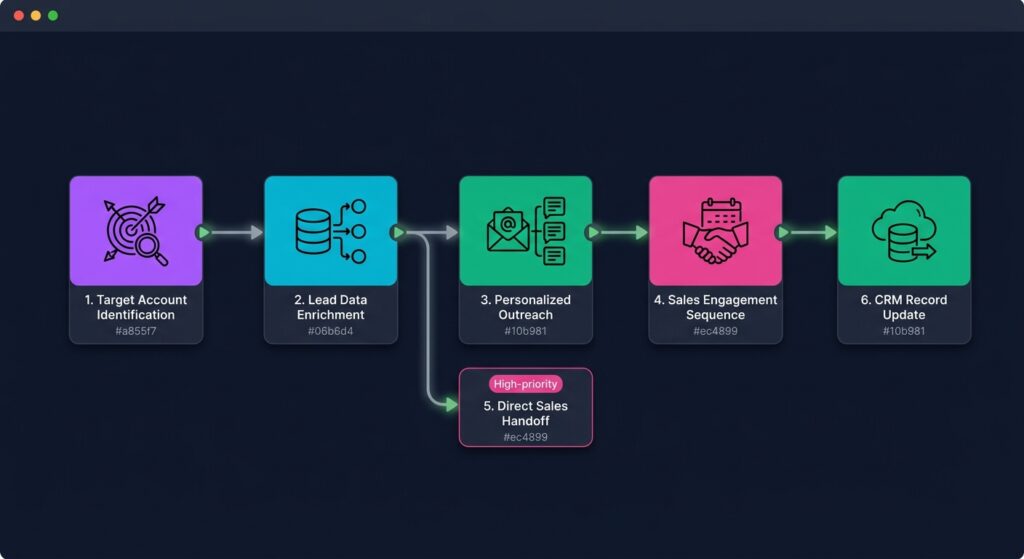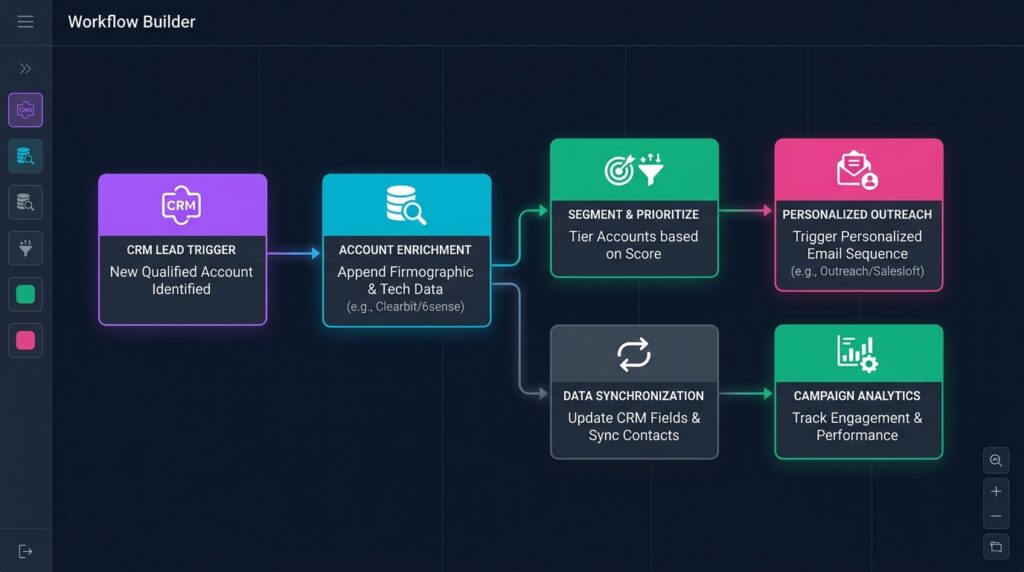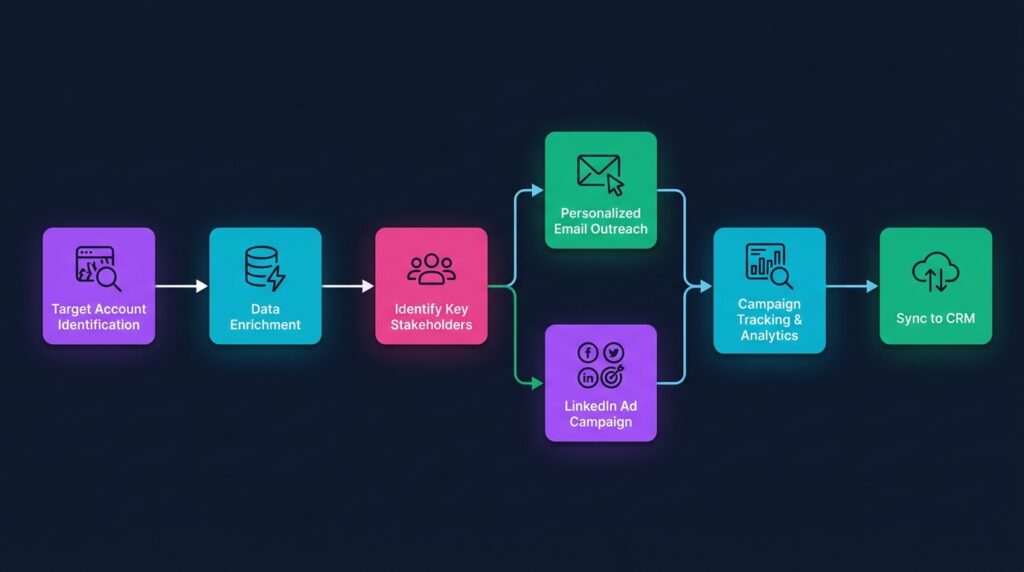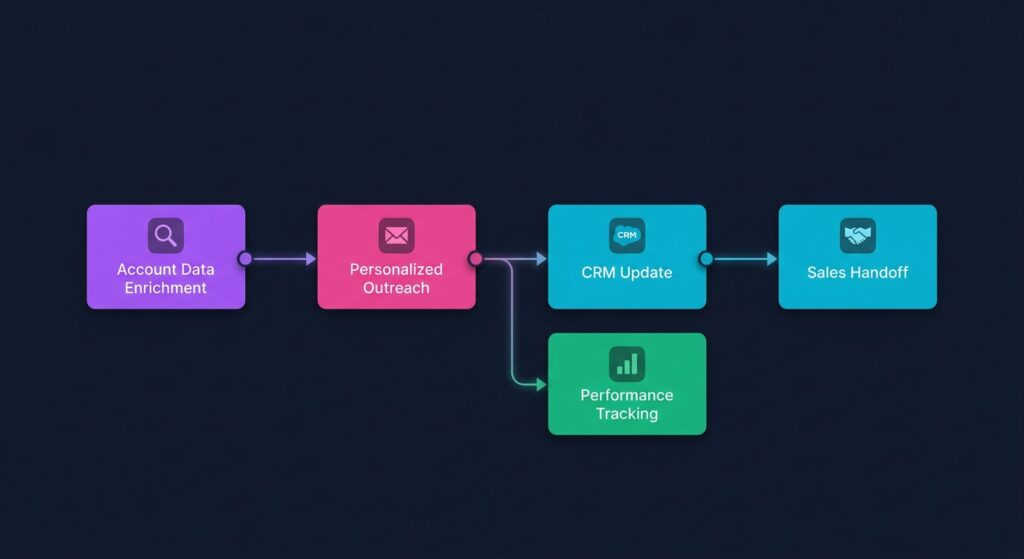
Account-Based Marketing (ABM) Automation for B2B: Low-Code Playbooks with Make & n8n

Account-Based Marketing (ABM) Automation for B2B: Low-Code Playbooks with Make & n8n
In today’s competitive B2B landscape, a one-size-fits-all marketing approach simply doesn’t cut it. Account-Based Marketing (ABM) has emerged as a powerful strategy, focusing marketing and sales efforts on a defined set of target accounts. However, executing ABM at scale can be resource-intensive. This is where low-code ABM automation for B2B services becomes a game-changer. By leveraging intuitive platforms like Make (formerly Integromat) and n8n, businesses can build sophisticated, automated ABM playbooks without requiring extensive coding expertise. This post will explore the benefits of ABM automation, introduce Make and n8n, and provide practical examples of how to implement low-code ABM playbooks to drive engagement and revenue.
The Power of ABM in B2B
Traditional B2B marketing often casts a wide net, hoping to attract a broad audience. ABM, conversely, is a highly targeted strategy. It involves identifying high-value accounts, understanding their unique needs and challenges, and then crafting personalized campaigns to engage them. The core principle is treating individual accounts as markets of one.
Why ABM is Crucial for B2B Success
- Increased ROI: By focusing resources on accounts most likely to convert, ABM campaigns typically yield higher returns than broad-stroke marketing efforts.
- Improved Sales and Marketing Alignment: ABM necessitates close collaboration between sales and marketing teams, ensuring a unified approach to target accounts.
- Enhanced Customer Experience: Personalized messaging and tailored content resonate more deeply with prospects, leading to stronger relationships.
- Shorter Sales Cycles: When marketing and sales efforts are perfectly aligned and personalized, prospects are more likely to move through the sales funnel faster.
The Challenge of ABM Execution
While the benefits of ABM are clear, its execution can be complex. Manually managing outreach, tracking engagement across multiple channels, and personalizing content for each target account requires significant time and effort. This is where automation becomes indispensable. However, building custom automation solutions often involves substantial development costs and time, which can be a barrier for many B2B companies.
Introducing Low-Code ABM Automation: Make & n8n
Low-code automation platforms bridge this gap by providing visual interfaces and pre-built connectors that allow users to design and deploy complex workflows with minimal or no traditional coding. Make and n8n are two leading platforms in this space, offering powerful capabilities for B2B ABM automation.
Make (formerly Integromat): Visual Workflow Automation
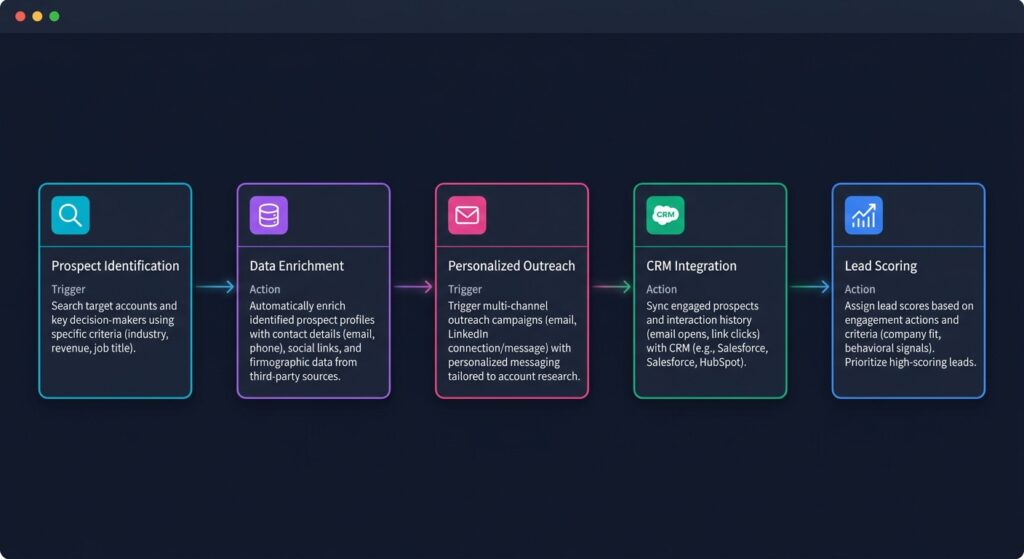
Make is a robust visual platform that allows you to connect apps and automate workflows. Its intuitive drag-and-drop interface enables users to build intricate scenarios by connecting different modules (apps) and defining the logic that governs their interaction. For ABM, Make excels at:
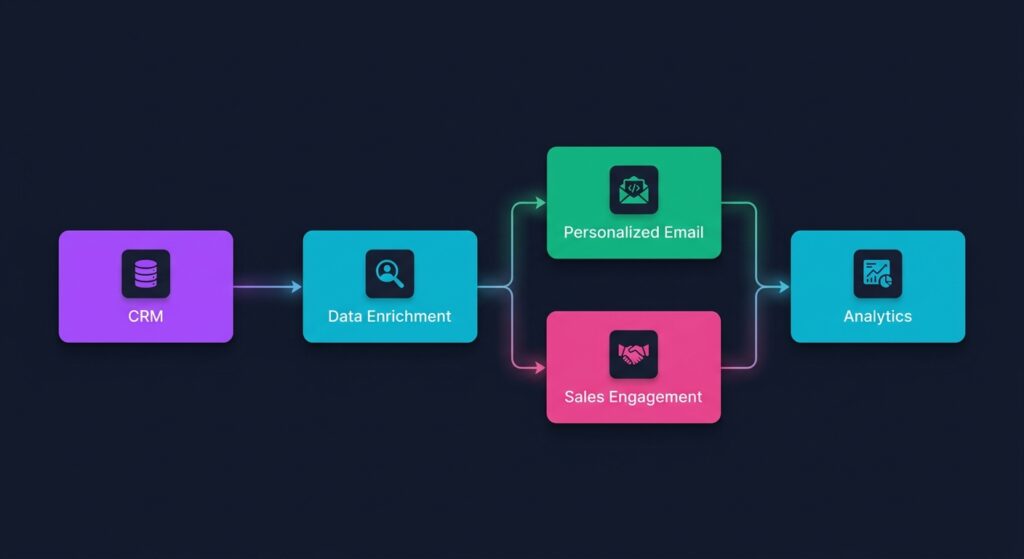
- Data Synchronization: Seamlessly sync data between your CRM, marketing automation tools, sales engagement platforms, and other essential applications.
- Personalized Outreach: Trigger personalized email sequences, social media messages, or even ad campaigns based on account activity or specific triggers.
- Lead Scoring & Routing: Automate the scoring of leads based on engagement and automatically route high-priority accounts to the appropriate sales representatives.
- Cross-Channel Engagement: Orchestrate multi-channel campaigns, ensuring consistent messaging across email, social media, and other touchpoints.
n8n: Workflow Automation for Developers and Power Users
n8n is another powerful workflow automation tool, often favored by those with a bit more technical inclination, though still firmly in the low-code/no-code realm. It offers a flexible and extensible platform for building complex automations. n8n’s strengths for ABM include:
- Customizable Workflows: Build highly customized ABM playbooks tailored to your specific business processes and target account profiles.
- Advanced Logic: Implement complex conditional logic, data transformations, and integrations with custom APIs.
- Self-Hosting Option: For organizations with strict data privacy requirements, n8n offers a self-hosting option, providing greater control over data.
- Extensive Integrations: Connect with a vast array of applications, including CRMs, marketing platforms, data enrichment tools, and more.
Why BMAIKR is Your Ideal Partner for Low-Code ABM Automation
At BMAIKR, we understand the transformative power of intelligent automation for B2B growth. Our expertise spans cutting-edge AI, robust web development, and strategic digital marketing. We leverage platforms like Make and n8n to design and implement bespoke low-code ABM automation strategies that drive tangible results for our clients.
Our Differentiators in ABM Automation:
- Strategic ABM Design: We don’t just build workflows; we help you define your ideal customer profile (ICP), identify target accounts, and map out personalized engagement journeys.
- Expert Low-Code Implementation: Our team has deep experience with Make and n8n, enabling us to build sophisticated, scalable, and reliable ABM automation playbooks tailored to your unique needs.
- AI-Powered Insights: We integrate AI capabilities to enhance your ABM strategy, from predictive account scoring to personalized content generation, ensuring your efforts are always data-driven and effective.
- Seamless Integration: We ensure your ABM automation seamlessly integrates with your existing tech stack, including CRMs, marketing automation platforms, and sales tools, for a unified view of your target accounts.
- Focus on Measurable Outcomes: Our goal is to drive measurable improvements in engagement, conversion rates, and ultimately, revenue from your target accounts.
Low-Code ABM Playbook Examples with Make & n8n
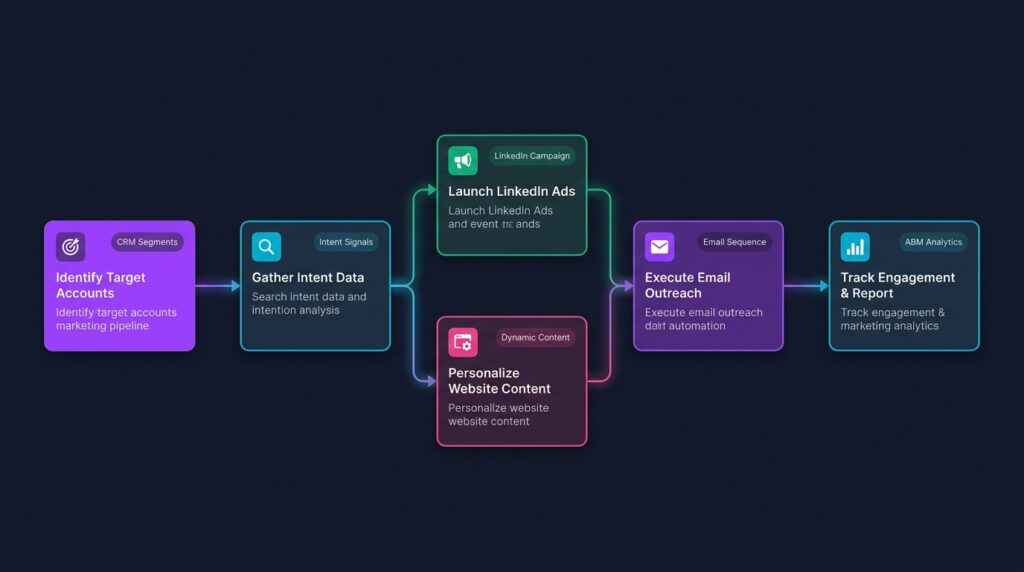
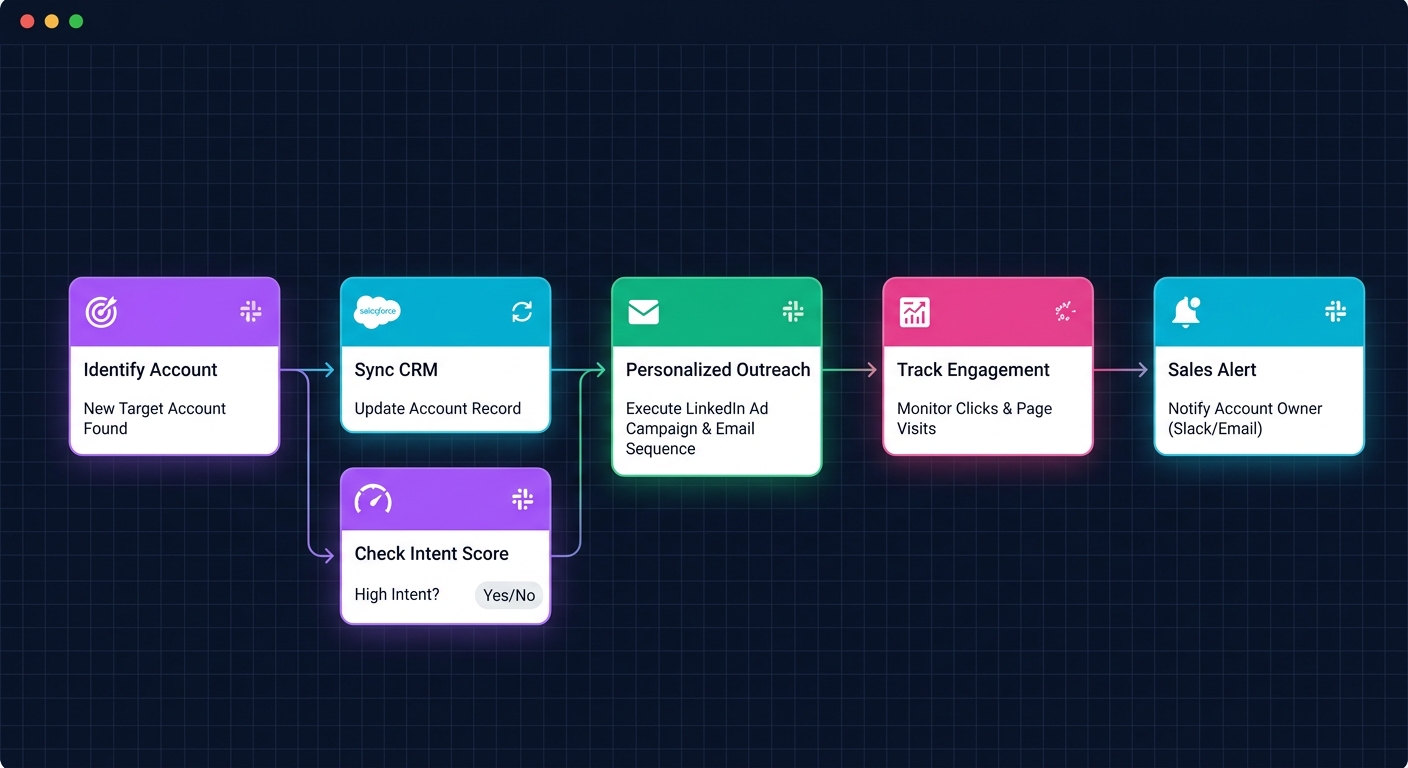
Let’s explore some practical examples of how you can implement low-code ABM automation:
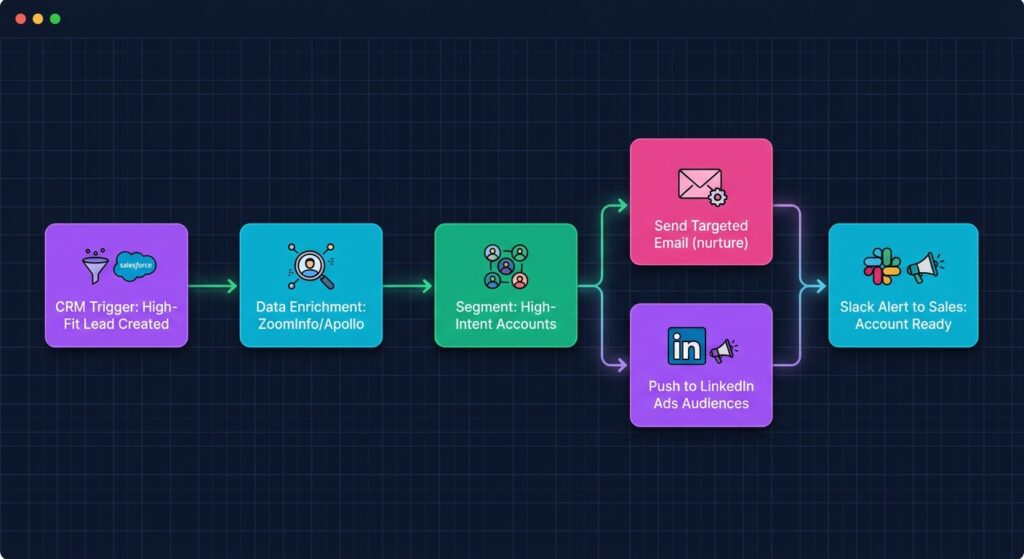
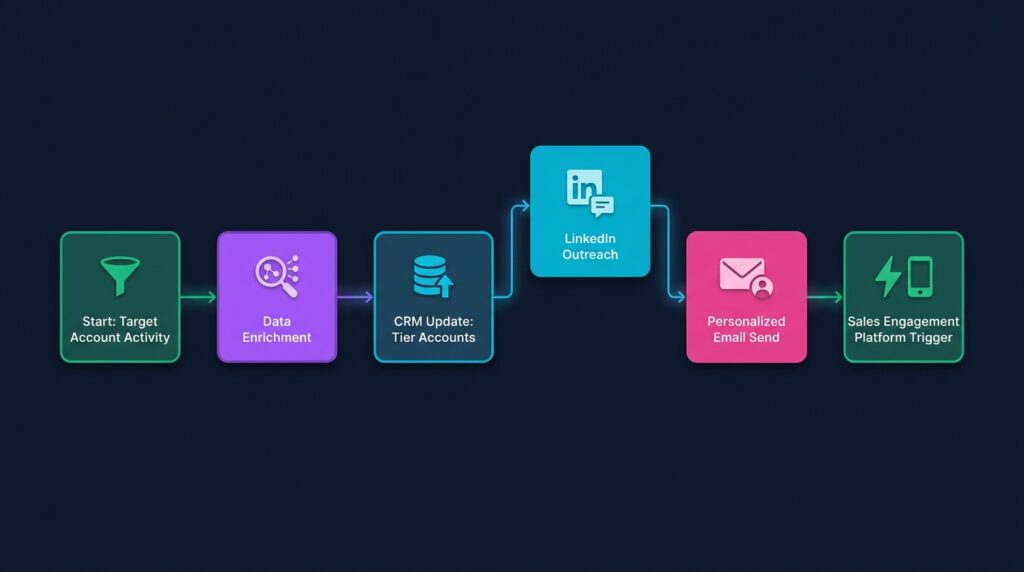
Example 1: Personalized Content Delivery Based on Website Activity
- Trigger: A target account’s representative visits a specific product page on your website (tracked via website analytics or a CRM integration).
- Automation (Make/n8n):
- Detect the website visit and identify the account and individual.
- Query your CRM for existing contact information and account details.
- Based on the product page visited, select a relevant case study or whitepaper.
- Send a personalized email to the contact, referencing their interest and offering the relevant content.
- Log the activity in the CRM and potentially trigger a task for a sales rep to follow up.
- Benefit: Delivers highly relevant content at the precise moment of interest, increasing engagement and lead qualification.
Example 2: Proactive Engagement for Key Accounts Showing Reduced Activity
- Trigger: A key target account shows a significant drop in engagement (e.g., fewer website visits, no recent email opens) over a defined period.
- Automation (Make/n8n):
- Monitor engagement metrics across various touchpoints (website, email, social).
- If engagement falls below a threshold for a key account, flag it.
- Trigger a personalized outreach from a dedicated account manager or sales rep. This could be a simple check-in email or a LinkedIn message.
- Optionally, trigger a notification to the sales team to review the account’s status.
- Benefit: Prevents churn by proactively re-engaging accounts that might be drifting away, demonstrating continued value.
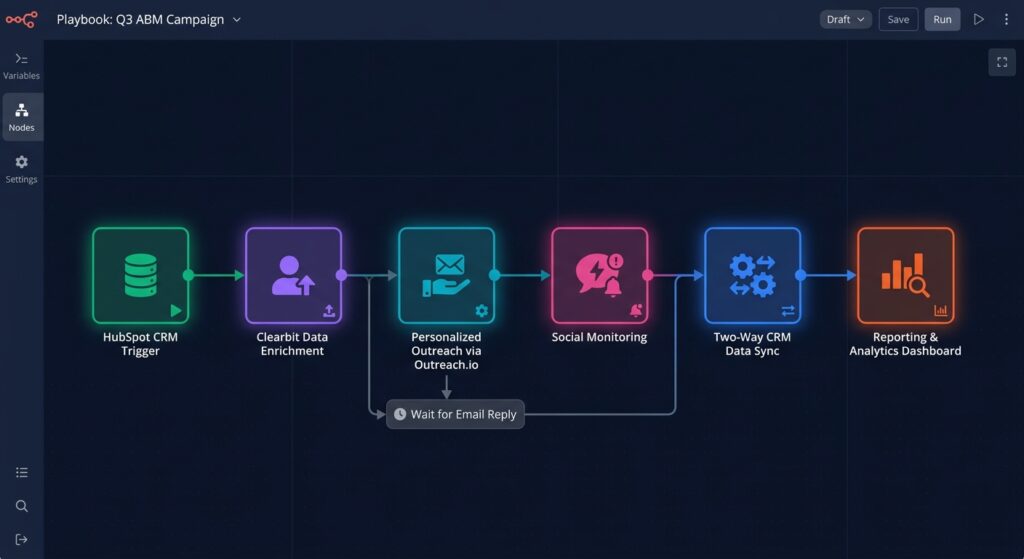
Example 3: Streamlined Data Enrichment and Sales Handoff
- Trigger: A new lead from a target account is identified or a prospect fills out a form.
- Automation (Make/n8n):
- Automatically enrich the lead’s data using tools like Clearbit or Hunter.io.
- Cross-reference the enriched data with your existing account intelligence.
- Score the lead based on firmographics, technographics, and engagement.
- If the lead meets ABM criteria, automatically create/update the contact and account in your CRM.
- Assign the lead to the appropriate sales development representative (SDR) based on territory or industry.
- Notify the SDR with a summary of the lead’s information and engagement history.
- Benefit: Ensures sales teams have up-to-date, relevant information for immediate and effective follow-up, improving conversion rates.
Choosing the Right Automation Tool: Make vs. n8n
Both Make and n8n are excellent choices for low-code ABM automation, but they cater to slightly different needs and preferences:
When to Choose Make:
- Ease of Use for Broader Teams: If your team includes individuals with less technical backgrounds, Make’s highly visual and intuitive interface might be more accessible.
- Extensive App Marketplace: Make boasts a vast library of pre-built integrations, making it easy to connect to a wide range of popular SaaS applications out-of-the-box.
- Complex Branching Logic: While both platforms handle logic, Make’s visual representation can sometimes make extremely complex branching scenarios easier to map and manage.
When to Choose n8n:
- Developer-Friendly Flexibility: If you have developers or technically proficient users who want more control over the automation logic and data manipulation, n8n offers greater depth.
- Self-Hosting Requirements: For organizations prioritizing data sovereignty and control, n8n’s self-hosting capability is a significant advantage.
- Cost-Effectiveness for High Volume: Depending on usage patterns and self-hosting capabilities, n8n can be a very cost-effective solution, especially for high-volume automation.
- Custom Node Development: n8n makes it easier to develop custom nodes if you need to integrate with proprietary or less common systems.
Ultimately, the best tool depends on your team’s technical skills, specific integration needs, budget, and infrastructure preferences. Both platforms empower you to build powerful low-code ABM automation for B2B services.
Conclusion: Automate Your Way to ABM Success
Account-Based Marketing is no longer a luxury but a necessity for B2B companies aiming for sustainable growth. By embracing low-code automation platforms like Make and n8n, you can overcome the execution challenges and unlock the full potential of ABM. These tools enable you to build sophisticated, personalized engagement strategies without the steep learning curve or high costs associated with traditional development.
Whether you’re looking to streamline data synchronization, personalize outreach at scale, or proactively engage your most valuable accounts, low-code ABM automation provides the flexibility and power you need.
Ready to Revolutionize Your ABM Strategy?
Don’t let manual processes hold your ABM efforts back. Partner with BMAIKR to design and implement intelligent, low-code automation playbooks tailored to your unique business goals. Our expert team combines deep knowledge of AI, web development, and digital marketing with proficiency in Make and n8n to deliver solutions that drive measurable results.
Contact us today for a free consultation and discover how BMAIKR can help you achieve unparalleled success with ABM automation.