Account-Based Marketing (ABM) Automation for B2B: Low-Code Playbooks with Make & n8n

Account-Based Marketing (ABM) Automation for B2B: Low-Code Playbooks with Make & n8n
In today’s competitive B2B landscape, a one-size-fits-all marketing approach simply doesn’t cut it. Account-Based Marketing (ABM) has emerged as a powerful strategy, focusing sales and marketing efforts on a defined set of target accounts. However, executing ABM at scale can be resource-intensive. This is where **low-code ABM automation for B2B services** becomes a game-changer. By leveraging intuitive platforms like Make (formerly Integromat) and n8n, businesses can streamline complex ABM workflows, personalize outreach, and drive significant revenue growth without requiring extensive coding expertise.
The Power of ABM in B2B
Traditional B2B marketing often casts a wide net, hoping to attract a broad audience. ABM, conversely, is a highly targeted strategy. It involves identifying high-value accounts, understanding their unique needs and challenges, and then crafting personalized campaigns and experiences for them. This hyper-personalization leads to:
- Increased Engagement: When prospects feel understood and see relevant content, they are more likely to engage.
- Higher Conversion Rates: By focusing on accounts that are a good fit, the sales cycle can be shorter and more effective.
- Improved Customer Lifetime Value: ABM fosters stronger relationships, leading to greater loyalty and repeat business.
- Better Sales and Marketing Alignment: ABM necessitates close collaboration between sales and marketing teams, ensuring everyone is working towards common goals.
The ABM Automation Challenge
While the benefits of ABM are clear, the operational challenges are significant. Manually identifying target accounts, researching them, segmenting them, personalizing outreach across multiple channels, and tracking engagement for each account is a monumental task. This is where automation becomes indispensable. However, building custom automation solutions often requires specialized developers and considerable time and investment.
Introducing Low-Code ABM Automation
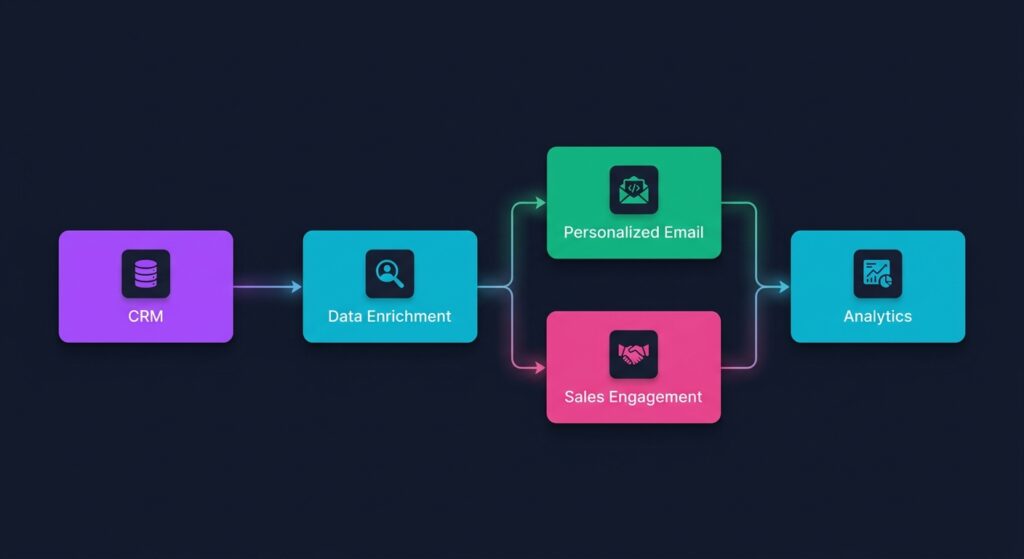
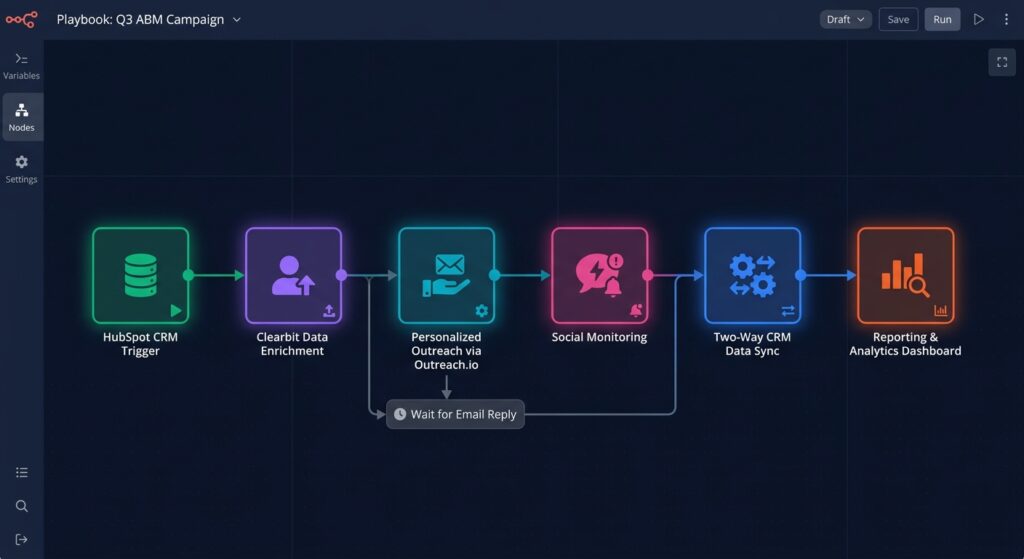
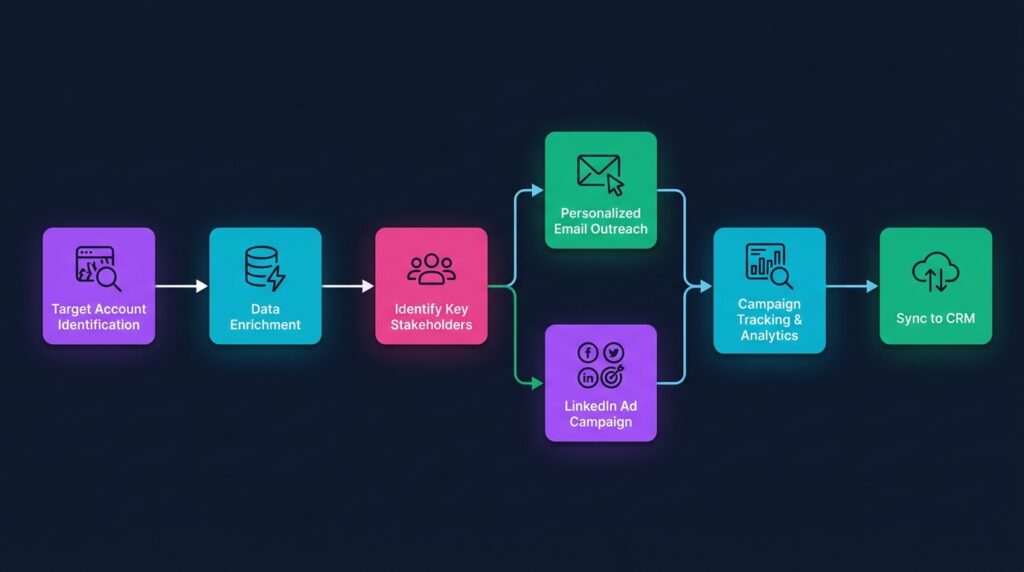
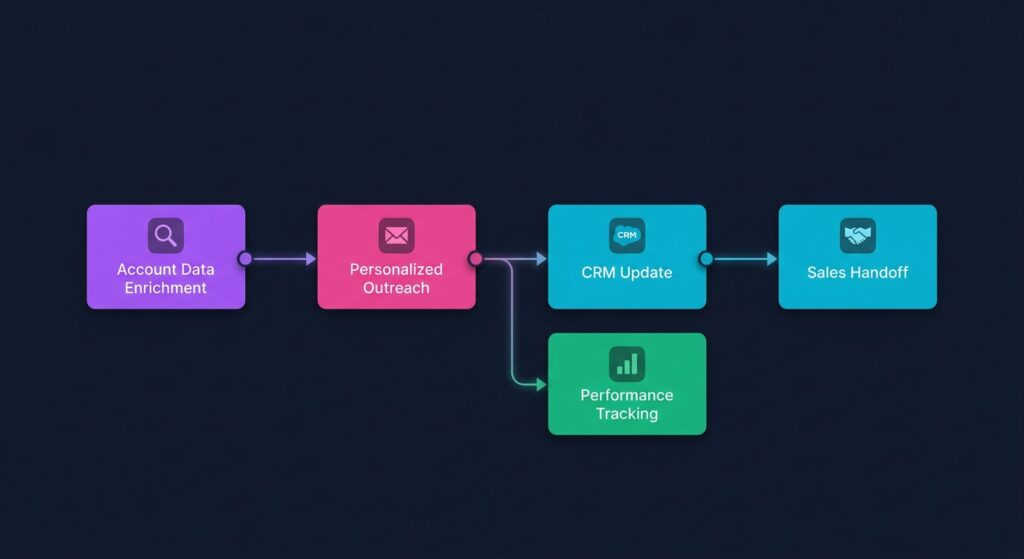
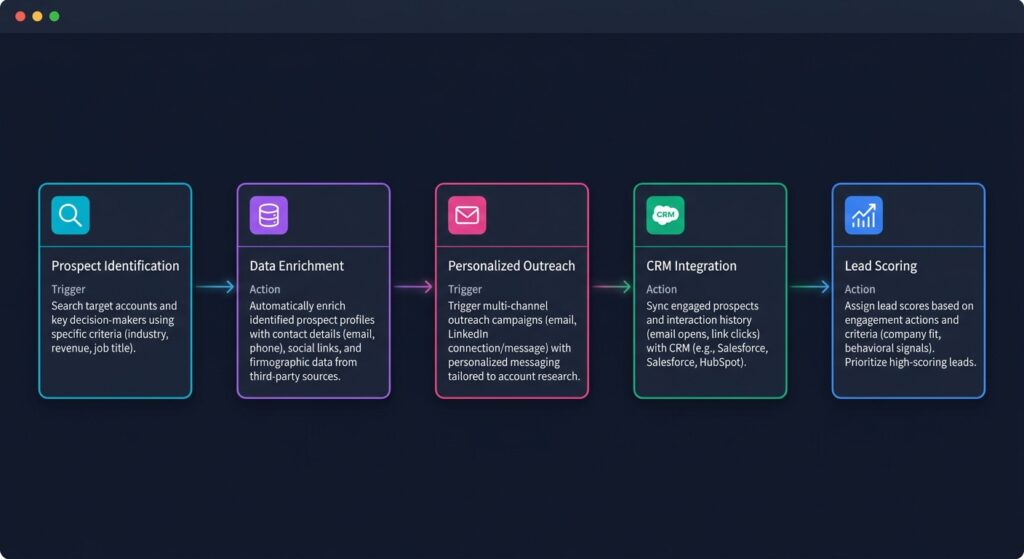
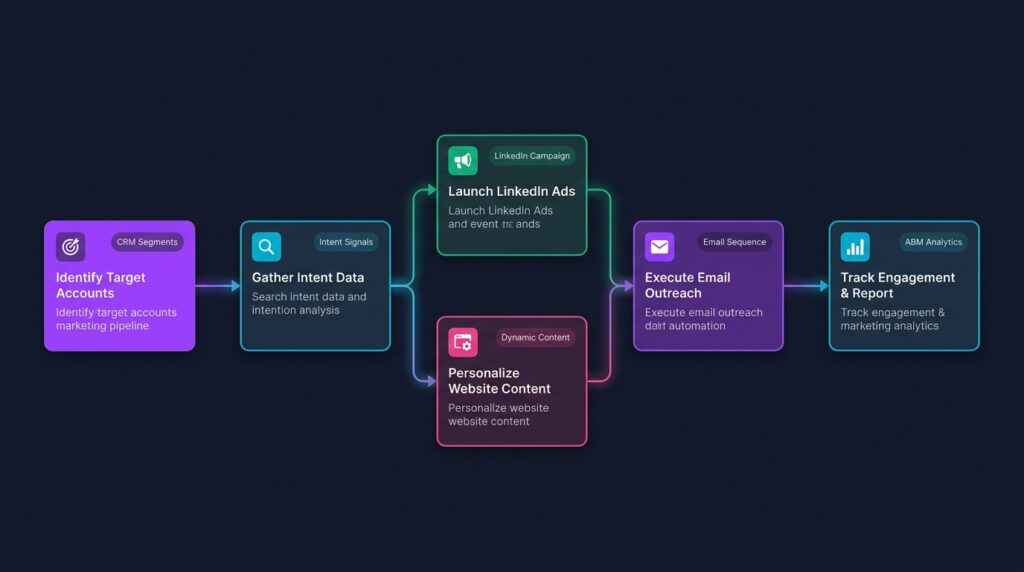
This is where the power of low-code platforms shines. Make and n8n are leading the charge in enabling businesses to build sophisticated automations with minimal to no coding. These platforms offer visual interfaces where users can connect different applications and services, define triggers and actions, and create complex workflows through a drag-and-drop experience. For ABM, this translates to the ability to:
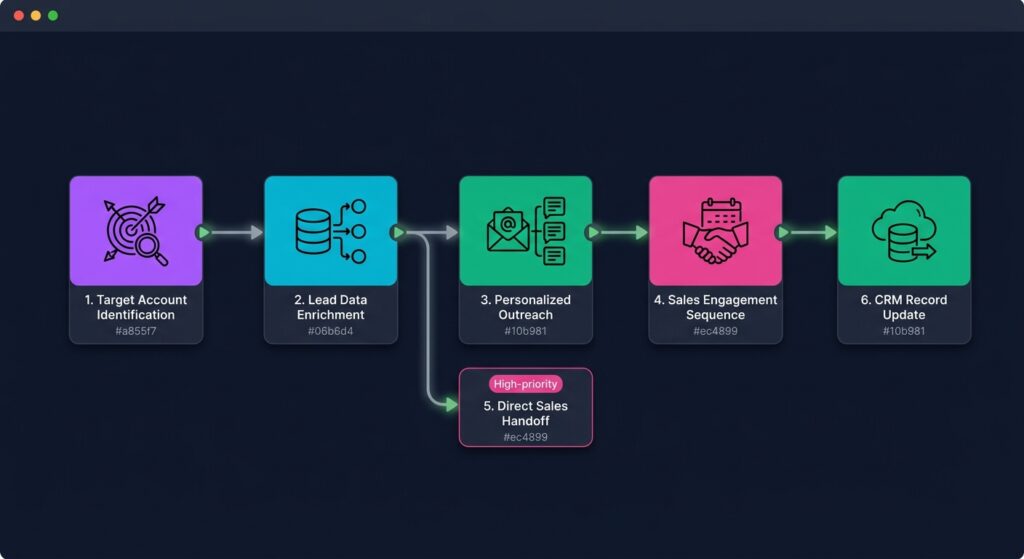
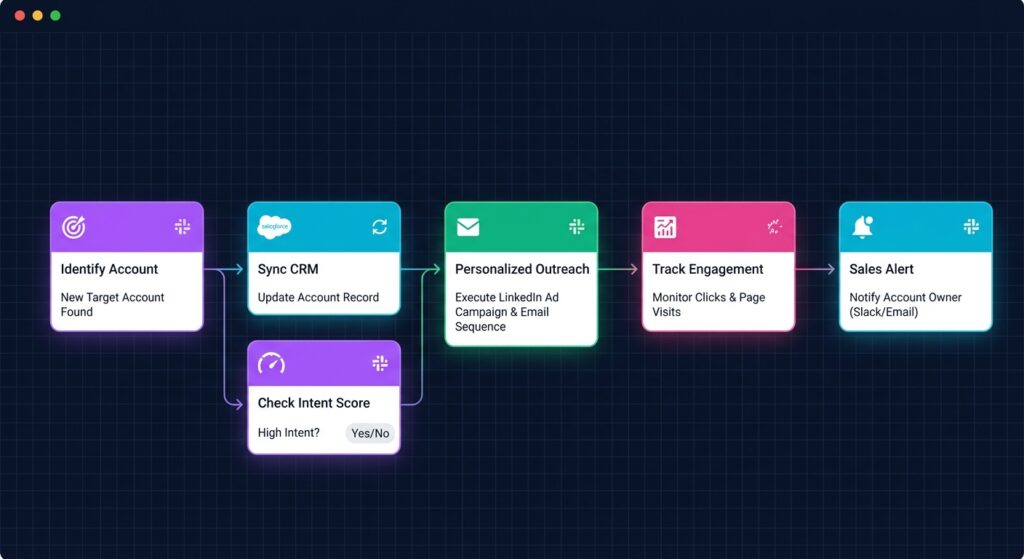
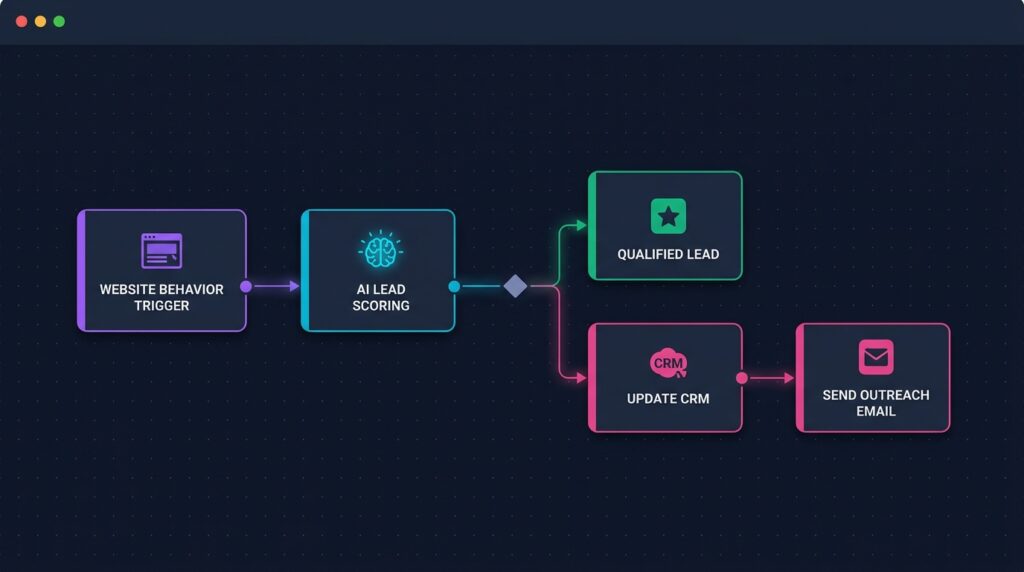
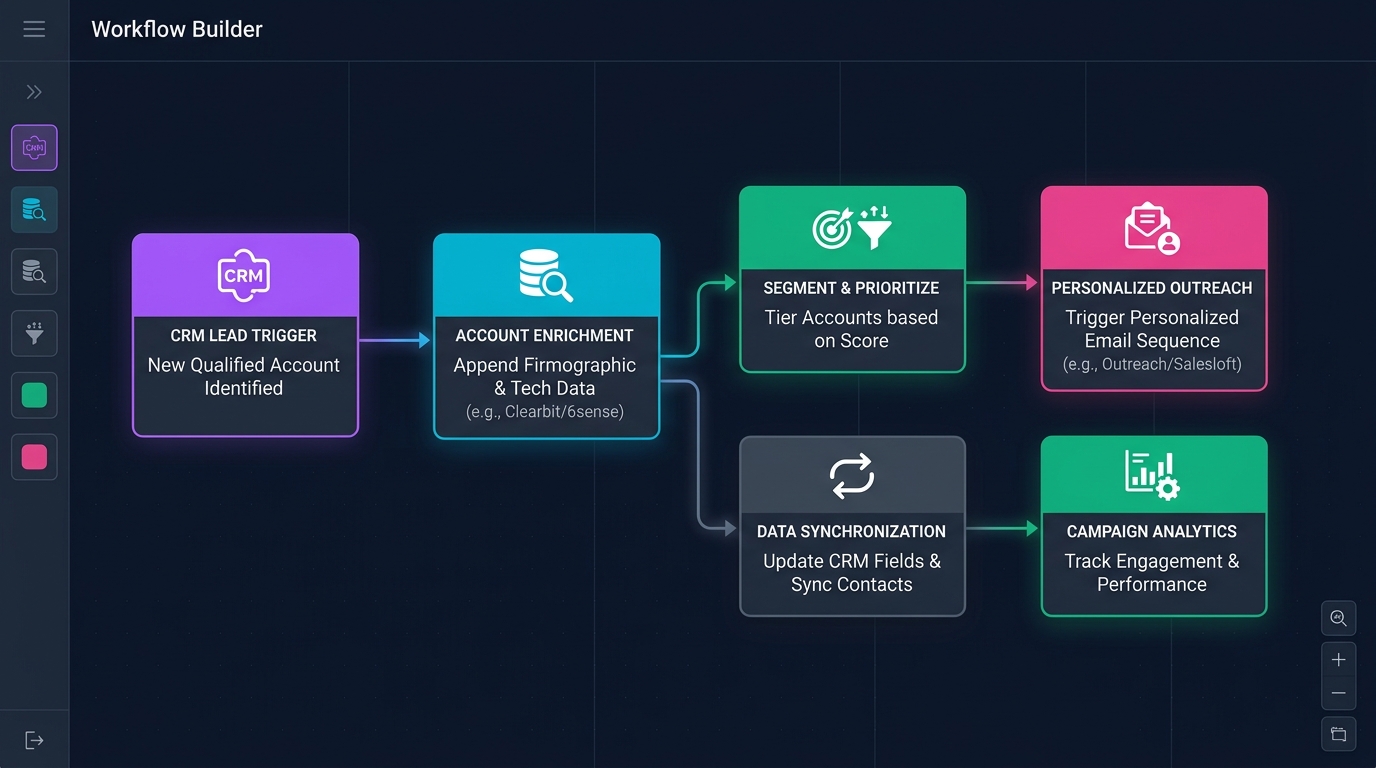
- Automate Account Identification & Scoring: Integrate data from CRM, marketing automation platforms, and other sources to automatically identify and score target accounts based on predefined criteria.
- Personalize Outreach at Scale: Trigger personalized email sequences, social media messages, or even ad campaigns based on account behavior and firmographic data.
- Streamline Sales Handoffs: Automate the process of notifying sales reps when an account shows high engagement or meets specific qualification criteria.
- Synchronize Data Across Tools: Ensure seamless data flow between your CRM, marketing automation, sales engagement platforms, and other essential tools.
- Track and Report on ABM Performance: Automate the collection of data to measure the effectiveness of ABM campaigns for specific accounts.
Why BMAIKR is Your Ideal Partner for Low-Code ABM Automation
At BMAIKR, we understand the intricate needs of B2B businesses looking to harness the power of ABM. Our expertise spans across cutting-edge technologies, enabling us to build robust and scalable automation solutions tailored to your specific ABM strategy. We don’t just implement tools; we craft intelligent workflows that drive measurable results.
Our Expertise in Action:
- Strategic ABM Workflow Design: We work closely with your team to understand your target accounts, sales process, and marketing objectives. Based on this, we design custom ABM playbooks that leverage the full potential of low-code automation.
- Make & n8n Implementation Specialists: Our team are experts in configuring and optimizing Make and n8n for complex B2B scenarios. We can build intricate workflows that connect your CRM, marketing automation tools, sales engagement platforms, data enrichment services, and more.
- Data Integration & Synchronization: Ensuring your data is clean, consistent, and flows seamlessly between all your MarTech and SalesTech stack is crucial for ABM. We build automations that guarantee data integrity.
- Personalization Engine Development: We help you create dynamic content and messaging that can be automatically tailored to individual accounts and personas, significantly boosting engagement.
- Performance Tracking & Optimization: We set up automated reporting dashboards that provide clear insights into your ABM campaign performance, allowing for continuous optimization.
Whether you’re looking to enhance your existing ABM efforts or build a new program from the ground up, BMAIKR provides the strategic guidance and technical execution to make your ABM automation a success. We empower your sales and marketing teams to focus on building relationships, not on manual, repetitive tasks.
Choosing the Right Path: Low-Code vs. Custom Development vs. Off-the-Shelf
When considering ABM automation, businesses often face a decision between several approaches. Understanding the nuances of each can help you make the most strategic choice for your organization.
1. Low-Code ABM Automation (Make & n8n)
Pros:
- Speed to Implementation: Significantly faster to deploy than custom development.
- Cost-Effectiveness: Generally more affordable than custom-built solutions.
- Flexibility & Agility: Easy to modify and adapt workflows as your strategy evolves.
- Empowers Non-Developers: Allows marketing and sales operations teams to manage and iterate on automations.
- Broad Integration Capabilities: Connects with a vast array of SaaS applications.
Cons:
- Complexity Limits: While powerful, extremely complex or highly specialized integrations might still require custom code.
- Platform Dependency: You are reliant on the features and pricing of the low-code platform.
Best For: Businesses that need to automate core ABM processes quickly, want flexibility, and have a diverse MarTech stack. This is ideal for implementing sophisticated playbooks for account engagement, data enrichment, and personalized outreach.
2. Custom Development
Pros:
- Ultimate Customization: Tailored precisely to your unique business logic and requirements.
- Scalability: Can be built to handle massive scale and complex data processing.
- Full Control: You own the codebase and have complete control over its functionality.
Cons:
- High Cost: Significantly more expensive due to developer time and resources.
- Longer Development Cycles: Takes considerable time to design, build, test, and deploy.
- Maintenance Overhead: Requires ongoing developer support for updates and bug fixes.
Best For: Large enterprises with highly unique, mission-critical ABM processes that cannot be met by existing platforms, or when integrating with legacy systems that lack modern APIs. This is often overkill for most ABM automation needs.
3. Off-the-Shelf ABM Platforms
Pros:
- Purpose-Built: Designed specifically for ABM, offering pre-built features.
- Ease of Use (for specific functions): Can be straightforward for their intended purpose.
- Integrated Functionality: Often combine account identification, engagement, and analytics in one package.
Cons:
- Vendor Lock-in: Can be difficult to integrate with other tools outside their ecosystem.
- Limited Customization: May not perfectly fit your unique workflows or data structures.
- High Subscription Costs: Can be very expensive, especially for advanced features.
- Potential Overlap: May duplicate functionality you already have in other tools.
Best For: Companies that want a dedicated ABM solution and have the budget for it, and whose workflows align closely with the platform’s capabilities. However, these platforms often still require integration with your broader tech stack, where low-code tools excel.
The BMAIKR Advantage: Integrating Your Stack for Seamless ABM
At BMAIKR, we often find that the most effective ABM automation strategies involve a hybrid approach. We leverage the power and flexibility of low-code platforms like Make and n8n to connect your existing best-of-breed tools, including your CRM, marketing automation software, and sales engagement platforms. This allows you to:
- Maximize Your Existing Investments: We build automations that enhance the capabilities of the tools you already use, rather than forcing you to replace them.
- Create Unified Workflows: We bridge the gaps between different platforms, ensuring data flows seamlessly and triggers actions across your entire tech stack.
- Achieve True Personalization: By integrating data from multiple sources, we enable hyper-personalized messaging and experiences for your target accounts.
Our deep understanding of AI and Business Automation allows us to build intelligent workflows that go beyond simple task automation. We can incorporate AI-driven insights into your ABM playbooks, such as predicting account propensity to buy or identifying optimal engagement times. Furthermore, our expertise in Web Development ensures that any custom landing pages or microsites required for your ABM campaigns are seamlessly integrated and perform optimally.
Unlock Your ABM Potential with BMAIKR
Don’t let manual processes hinder your ABM success. Embrace the efficiency and power of low-code automation. BMAIKR is here to guide you every step of the way, from strategy and implementation to ongoing optimization.
Ready to transform your B2B sales and marketing with intelligent ABM automation?
Contact BMAIKR today for a free consultation and let’s build your custom low-code ABM playbooks!