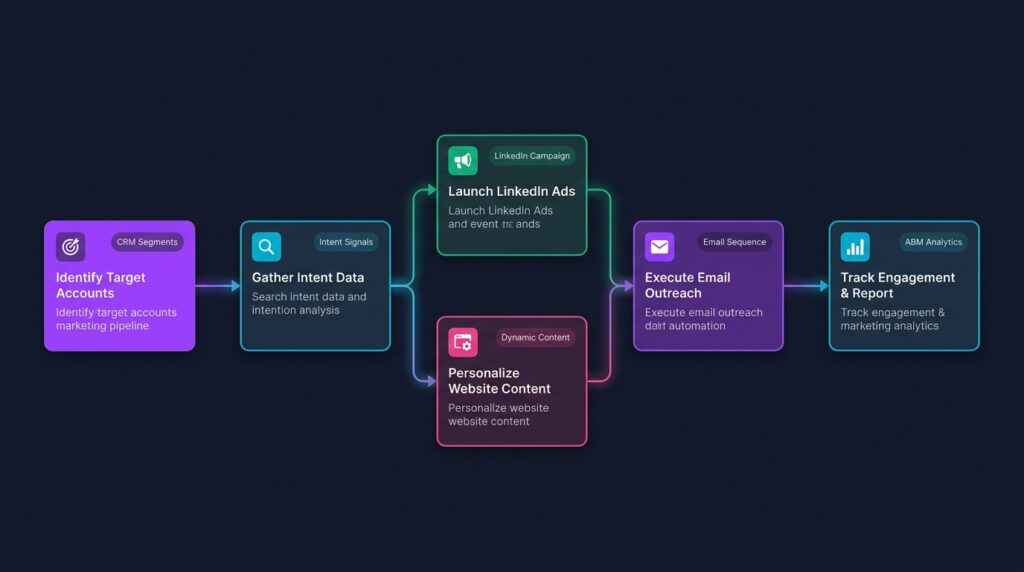
Account-Based Marketing (ABM) Automation for B2B: Low-Code Playbooks with Make & n8n

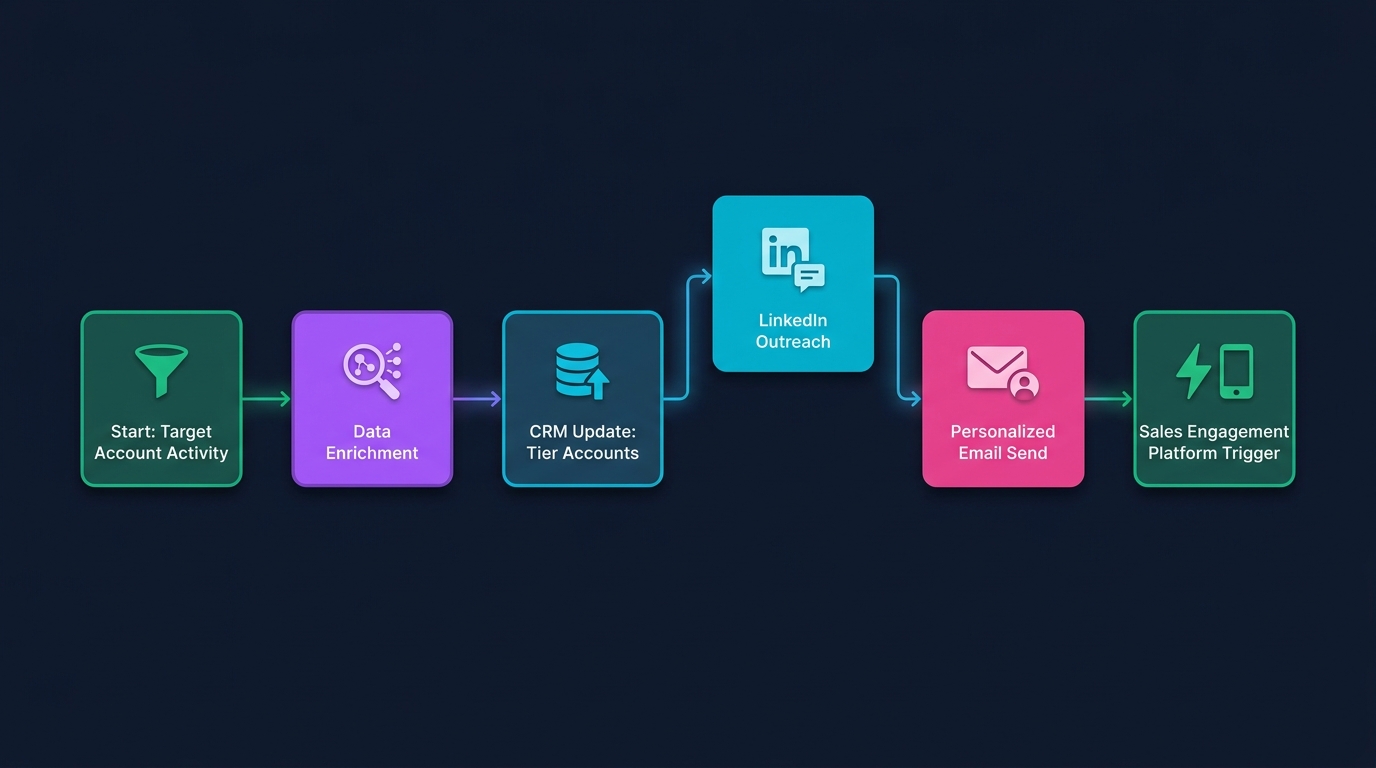
Account-Based Marketing (ABM) Automation for B2B: Low-Code Playbooks with Make & n8n
In today’s competitive B2B landscape, a one-size-fits-all marketing approach simply doesn’t cut it. Account-Based Marketing (ABM) has emerged as a powerful strategy, focusing marketing and sales efforts on a defined set of target accounts. However, executing ABM at scale can be resource-intensive. This is where the transformative power of low-code ABM automation for B2B services comes into play. By leveraging intuitive platforms like Make (formerly Integromat) and n8n, businesses can streamline complex ABM workflows, personalize outreach, and drive significant revenue growth without requiring extensive coding expertise.
The Power of ABM in B2B
Traditional B2B marketing often casts a wide net, hoping to attract a broad audience. ABM, conversely, is a highly targeted strategy that treats individual accounts as markets of one. This means understanding the unique needs, challenges, and buying committees of your most valuable prospective and existing customers. The benefits are substantial:
- Increased ROI: By focusing resources on high-value accounts, marketing and sales efforts become more efficient and effective, leading to a higher return on investment.
- Improved Sales and Marketing Alignment: ABM necessitates close collaboration between sales and marketing teams, ensuring a unified message and consistent customer experience.
- Enhanced Personalization: Tailoring messages and offers to specific account needs resonates more deeply, fostering stronger relationships and increasing conversion rates.
- Shorter Sales Cycles: By engaging the right people with the right message at the right time, ABM can help accelerate the decision-making process.
The Challenge: Scaling ABM Without Overwhelming Resources
While the benefits of ABM are clear, the operational complexities can be daunting. Manually identifying target accounts, researching their needs, personalizing outreach across multiple channels, and tracking engagement for each account requires significant time and effort. This is where automation becomes not just a convenience, but a necessity. However, building custom automation solutions often demands specialized developers and considerable investment, which can be a barrier for many B2B companies.
Enter Low-Code ABM Automation: Make & n8n
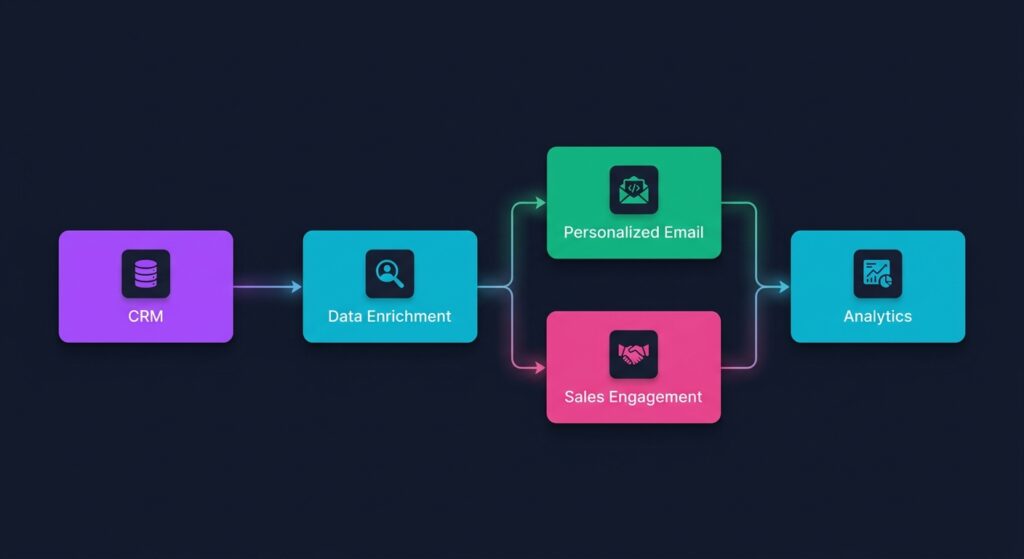
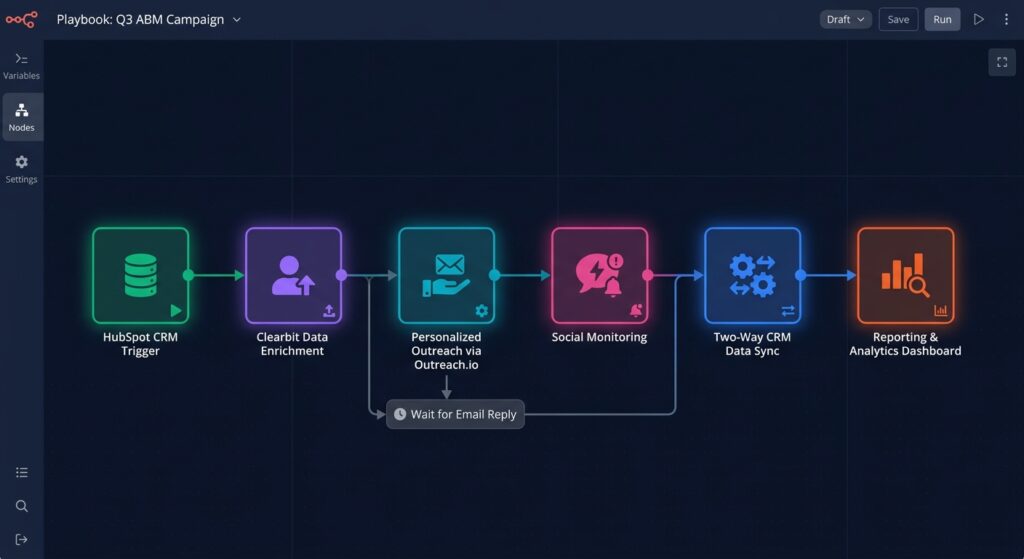
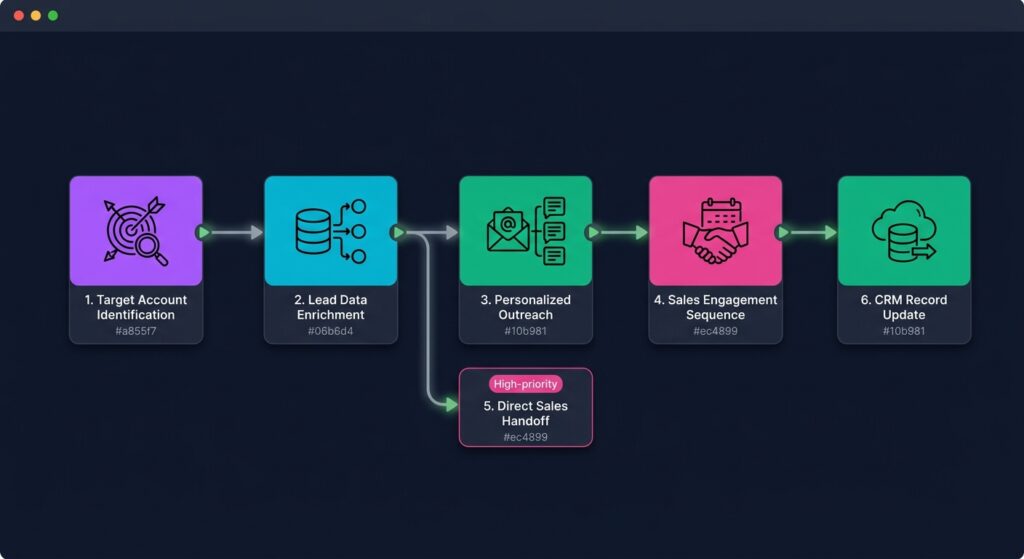
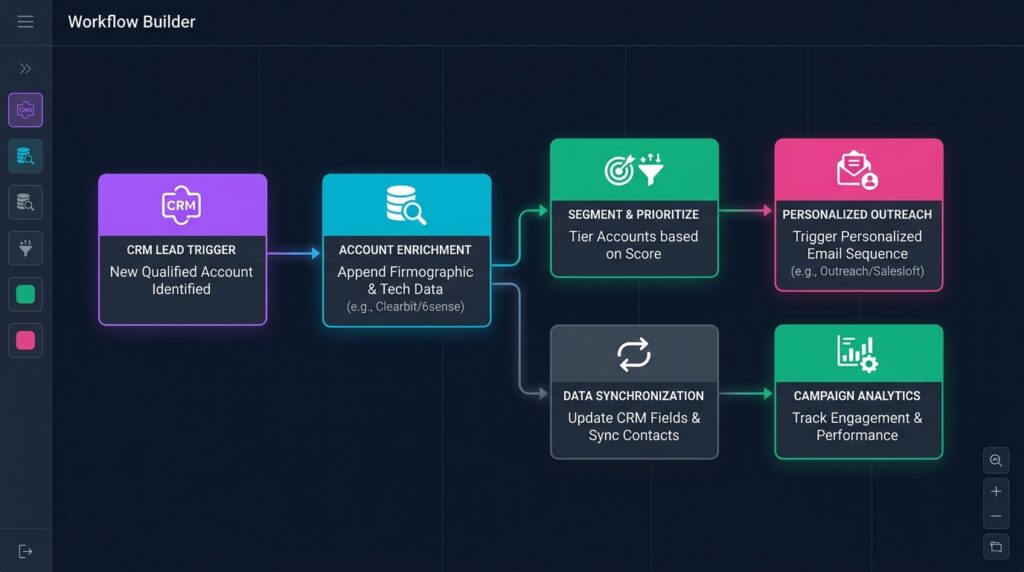
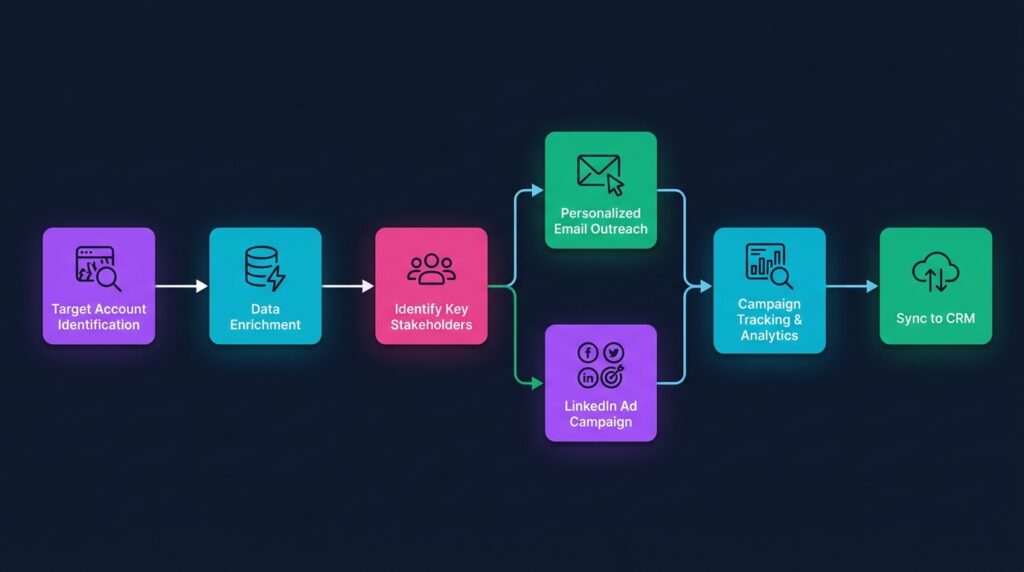
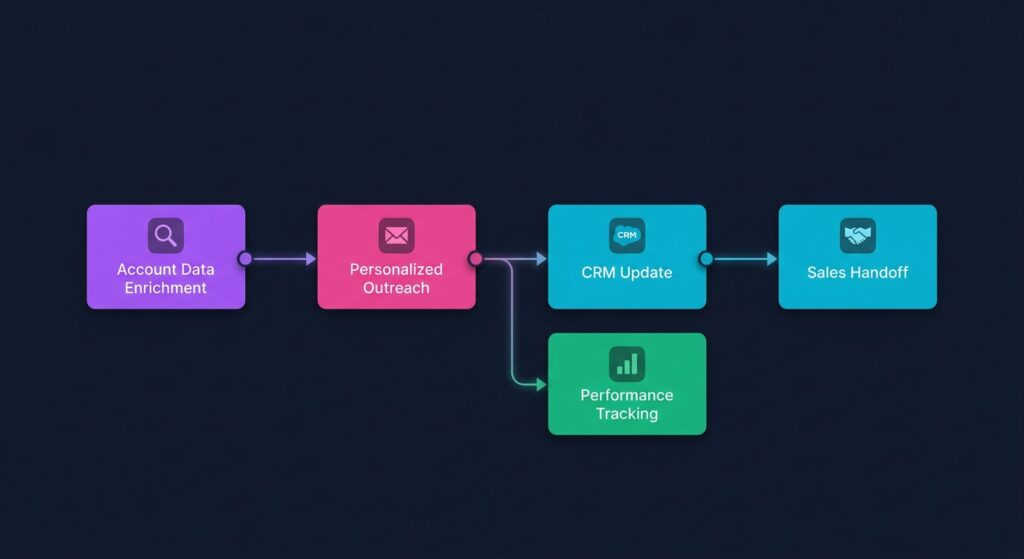
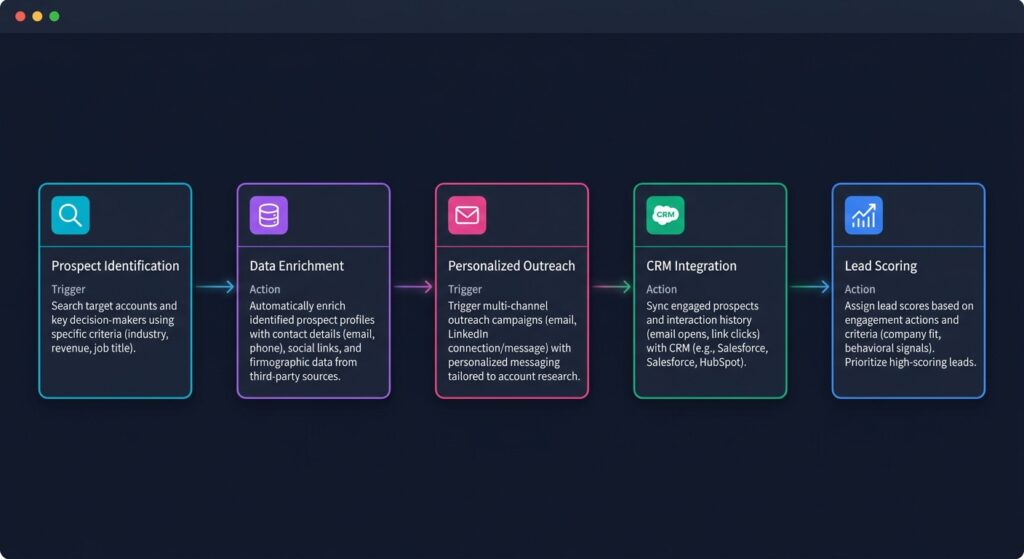
This is precisely where low-code automation platforms like Make and n8n shine. These tools empower marketing and sales teams to build sophisticated automation workflows using visual interfaces, drag-and-drop modules, and pre-built integrations. You don’t need to be a seasoned programmer to connect your CRM, marketing automation tools, sales engagement platforms, and data sources to create powerful ABM playbooks.
Why BMAIKR Recommends Low-Code for ABM
At BMAIKR, we understand the intricate needs of B2B businesses looking to leverage cutting-edge strategies like ABM. Our expertise in AI and Business Automation allows us to identify and implement the most effective solutions for our clients. We’ve seen firsthand how low-code platforms can democratize powerful automation, making sophisticated ABM strategies accessible and manageable.
1. Speed and Agility: Rapid Deployment of ABM Campaigns
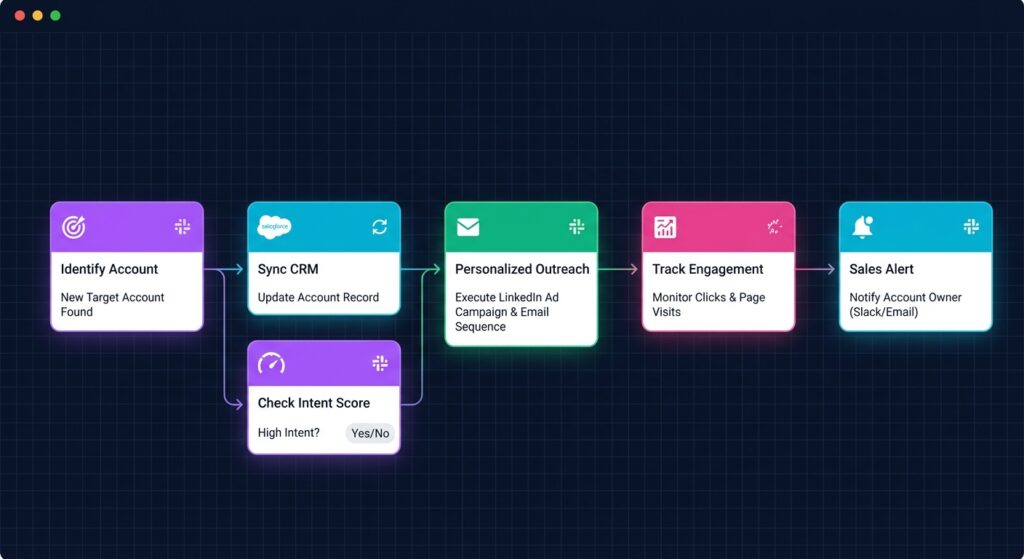
Traditional custom development can take months. With Make and n8n, you can design, build, and deploy ABM playbooks in days or weeks. This agility is crucial in a dynamic market, allowing you to quickly adapt your strategies based on account engagement and market shifts. Imagine setting up an automated workflow that triggers personalized email sequences and LinkedIn outreach when a target account visits your pricing page – this can be built visually and deployed rapidly.
2. Cost-Effectiveness: Maximize Your Marketing Budget
Hiring dedicated developers for every automation need can be prohibitively expensive. Low-code platforms offer a more cost-effective solution. You can achieve complex integrations and automated processes without the hefty price tag of custom coding. This allows you to allocate more of your budget towards high-impact ABM activities and content creation, rather than development overhead.
3. Empowering Your Teams: Bridging the Gap Between Marketing, Sales, and IT
Low-code tools are designed for accessibility. Marketing and sales professionals can often build and manage their own automations, reducing reliance on IT departments and speeding up project timelines. This fosters greater autonomy and allows teams to be more proactive in optimizing their ABM efforts. For instance, a marketing manager can create a workflow to automatically enrich lead data from LinkedIn Sales Navigator into their CRM, flagging high-priority accounts for sales follow-up.
4. Seamless Integration with Your Existing Stack
Make and n8n boast extensive libraries of pre-built connectors for hundreds of popular B2B applications, including CRMs (Salesforce, HubSpot), marketing automation platforms (Marketo, Pardot), sales engagement tools (Outreach, SalesLoft), communication apps (Slack, Gmail), and data sources. This means you can easily connect your existing tools to build comprehensive ABM workflows without complex API integrations.
5. Scalability for Growth: Grow Your ABM Efforts as Your Business Expands
As your business grows and your target account list expands, your ABM automation needs will evolve. Low-code platforms are designed to scale. You can start with simple automations and gradually build more complex, multi-step playbooks as your requirements increase. This flexibility ensures that your automation strategy remains relevant and effective as your business scales.
Low-Code ABM Playbook Examples with Make & n8n
Let’s explore some practical low-code ABM playbooks you can build:
Playbook 1: Automated Account Scoring & Prioritization
Goal: Automatically identify and prioritize high-intent accounts based on website activity and firmographic data.
Tools: Website analytics (e.g., Google Analytics), CRM, Make/n8n, Data enrichment tool (optional).
Workflow:
- Trigger: A visitor from a known target account (identified via IP lookup or CRM integration) visits specific high-value pages (e.g., pricing, case studies, product demos).
- Action: The platform logs this activity and checks the account’s existing score in the CRM.
- Enrichment (Optional): If available, enrich the account data with firmographics or technographics.
- Scoring: Increment the account’s score based on the pages visited and engagement level.
- Notification: If the score crosses a predefined threshold, notify the assigned sales rep via Slack or email, and update the account status in the CRM to ‘High Priority’.
Playbook 2: Personalized Content Delivery for Target Accounts
Goal: Deliver relevant content to key stakeholders within target accounts based on their industry and role.
Tools: CRM, Marketing Automation Platform, Make/n8n, Content Management System (CMS) or shared drive.
Workflow:
- Trigger: A new contact is added to a target account in the CRM, or an existing contact engages with a specific campaign.
- Data Retrieval: Fetch the contact’s industry, role, and account details from the CRM.
- Content Selection: Based on the retrieved data, select the most relevant piece of content (e.g., a case study for their industry, a whitepaper for their role).
- Personalized Outreach: Trigger an email via your marketing automation platform or directly via Gmail, including the personalized content recommendation. The email can be sent by the assigned sales rep or a marketing persona.
- Tracking: Log the email send and any subsequent engagement (opens, clicks) back into the CRM.
Playbook 3: Streamlined Follow-up for Target Account Engagement
Goal: Ensure timely and consistent follow-up from sales when target accounts show engagement.
Tools: CRM, Sales Engagement Platform, Make/n8n, Email/Calendar.
Workflow:
- Trigger: A contact at a target account clicks a link in a sales email, downloads a resource, or attends a webinar.
- Data Sync: Update the contact and account record in the CRM with the engagement activity.
- Task Creation: Automatically create a follow-up task for the assigned sales rep in their CRM or sales engagement platform, with context about the engagement.
- SLA Reminder: If the task is not completed within a defined Service Level Agreement (SLA) timeframe (e.g., 24 hours), send a reminder notification to the sales rep and their manager.
Choosing the Right Low-Code Platform: Make vs. n8n
Both Make and n8n are excellent low-code automation platforms, but they cater to slightly different needs and preferences. Understanding these differences can help you choose the best fit for your organization.
Make (formerly Integromat)
Strengths:
- User-Friendly Interface: Make is renowned for its intuitive, visual drag-and-drop interface, making it very accessible for beginners.
- Extensive App Integrations: It boasts a vast library of pre-built app modules, covering a wide range of popular SaaS tools.
- Robust Error Handling and Logging: Offers detailed tools for monitoring, debugging, and managing your automation scenarios.
- Scalability: Can handle complex, multi-step scenarios efficiently.
Consider Make if: You prioritize ease of use, have a diverse tech stack with many SaaS applications, and need a platform with strong visual workflow building and detailed monitoring capabilities.
n8n.io
Strengths:
- Open-Source & Self-Hostable: n8n is open-source, offering greater flexibility, control, and potential cost savings if you have the infrastructure to self-host.
- Developer-Friendly: While low-code, it offers more flexibility for developers to extend functionality with custom nodes and JavaScript.
- Fair Pricing: Its pricing model is generally considered competitive, especially for smaller teams or those who can leverage the self-hosted option.
- Growing Community: Benefits from an active and growing open-source community.
Consider n8n if: You value open-source flexibility, have in-house technical expertise for potential self-hosting or custom node development, or are looking for a cost-effective solution with a strong community backing.
Ultimately, the best platform depends on your team’s technical skills, budget, infrastructure, and specific integration needs. Both platforms can effectively power your low-code ABM automation for B2B services.
The BMAIKR Advantage: Expert Implementation of ABM Automation
While low-code platforms empower you to build automations, designing and implementing a truly effective ABM strategy requires deep expertise. At BMAIKR, we combine our proficiency in AI, Web Development, and Digital Marketing to offer comprehensive ABM solutions.
Our team can help you:
- Identify and segment your ideal customer profiles (ICPs).
- Develop sophisticated ABM playbooks tailored to your business goals.
- Integrate Make or n8n seamlessly with your existing MarTech and SalesTech stack.
- Leverage AI for advanced account insights and personalization.
- Optimize your workflows for maximum efficiency and ROI.
We understand that effective ABM isn’t just about automation; it’s about strategic alignment, personalized engagement, and continuous optimization. Our approach ensures that your ABM automation efforts are not just technically sound but also strategically impactful.
Conclusion: Unlock Your ABM Potential with Low-Code Automation
Account-Based Marketing is no longer a niche strategy; it’s a critical component of successful B2B growth. By embracing low-code automation platforms like Make and n8n, you can overcome the operational hurdles of ABM, enabling you to execute highly personalized, targeted campaigns at scale. This approach not only enhances efficiency and reduces costs but also fosters stronger relationships with your most valuable accounts, driving significant revenue growth.
Don’t let complex workflows hold your ABM strategy back. Explore the power of low-code automation and transform how you engage with your key accounts.
Ready to supercharge your ABM strategy with intelligent automation? Contact BMAIKR today for a consultation and let us help you build powerful, low-code ABM playbooks tailored to your business.