Account-Based Marketing (ABM) Automation for B2B: Low-Code Playbooks with Make & n8n

Account-Based Marketing (ABM) Automation for B2B: Low-Code Playbooks with Make & n8n
In today’s competitive B2B landscape, a one-size-fits-all marketing approach is no longer effective. Account-Based Marketing (ABM) has emerged as a powerful strategy, focusing marketing and sales efforts on a defined set of target accounts. However, executing ABM at scale can be resource-intensive. This is where low-code ABM automation for B2B services, powered by platforms like Make (formerly Integromat) and n8n, becomes a game-changer. These tools empower businesses to streamline complex ABM workflows, personalize outreach, and drive measurable results without requiring extensive coding expertise.
The Power of ABM in B2B
Traditional B2B marketing often casts a wide net, hoping to attract a broad audience. ABM, conversely, flips this model. It’s a strategic approach where marketing and sales teams collaborate to target specific, high-value accounts. The core idea is to treat individual accounts as markets of one, tailoring messaging, content, and campaigns to their unique needs, challenges, and buying journeys. This hyper-personalization leads to:
- Increased engagement with key decision-makers.
- Shorter sales cycles due to more relevant interactions.
- Higher average deal sizes as you focus on high-value targets.
- Improved customer retention and expansion opportunities.
While the benefits are clear, the operational complexity of ABM can be daunting. Identifying target accounts, researching their needs, personalizing outreach across multiple channels, and coordinating sales and marketing efforts requires significant manual effort. This is precisely where automation, particularly low-code automation, steps in to bridge the gap.
Why Low-Code ABM Automation is Essential for B2B Success
At BMAIKR, we understand the transformative potential of intelligent automation for B2B operations. Low-code platforms like Make and n8n are revolutionizing how businesses implement ABM by democratizing access to powerful automation capabilities. Instead of relying on expensive, custom-built solutions or overburdening development teams, these platforms allow marketing and sales professionals to build sophisticated workflows visually.
Streamlining Your ABM Workflows with Make & n8n
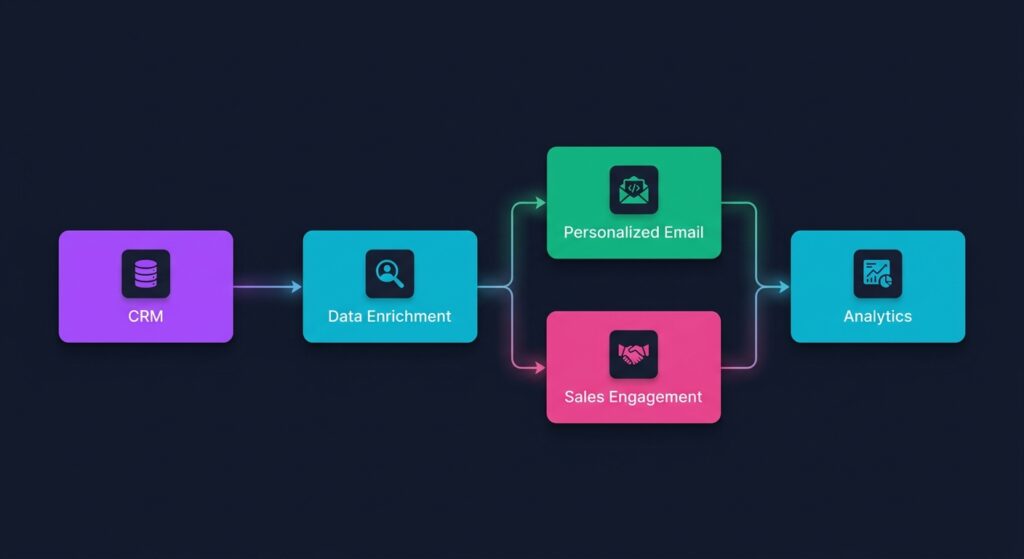
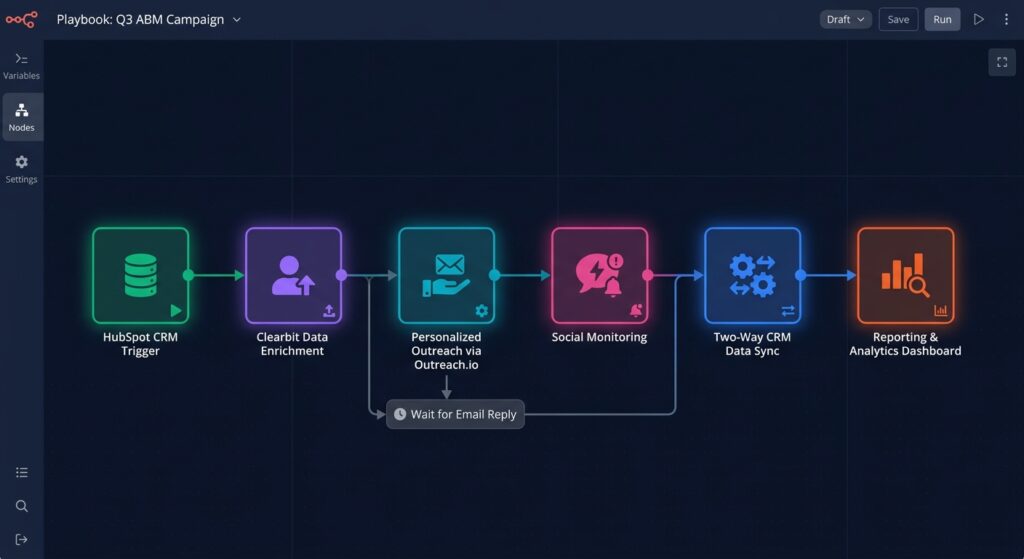
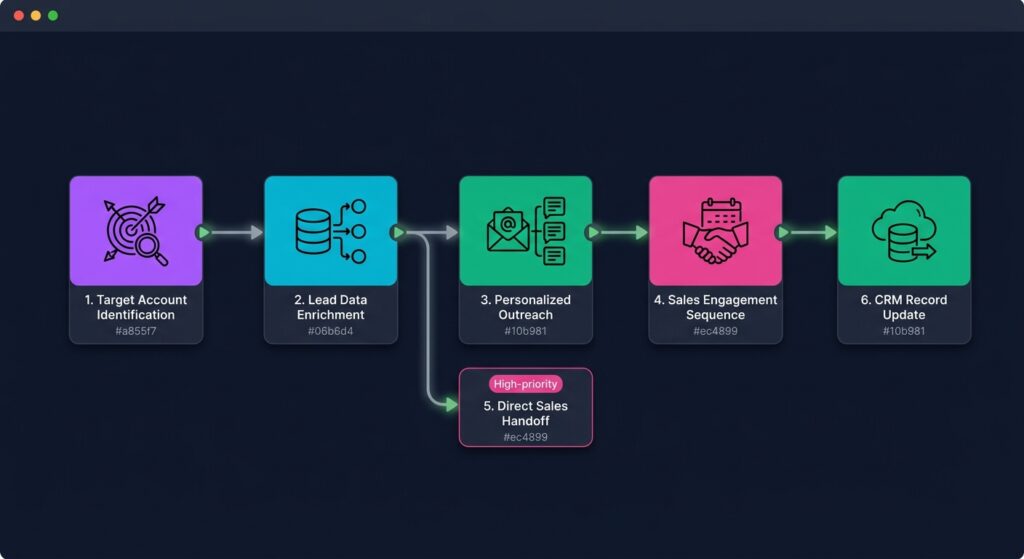
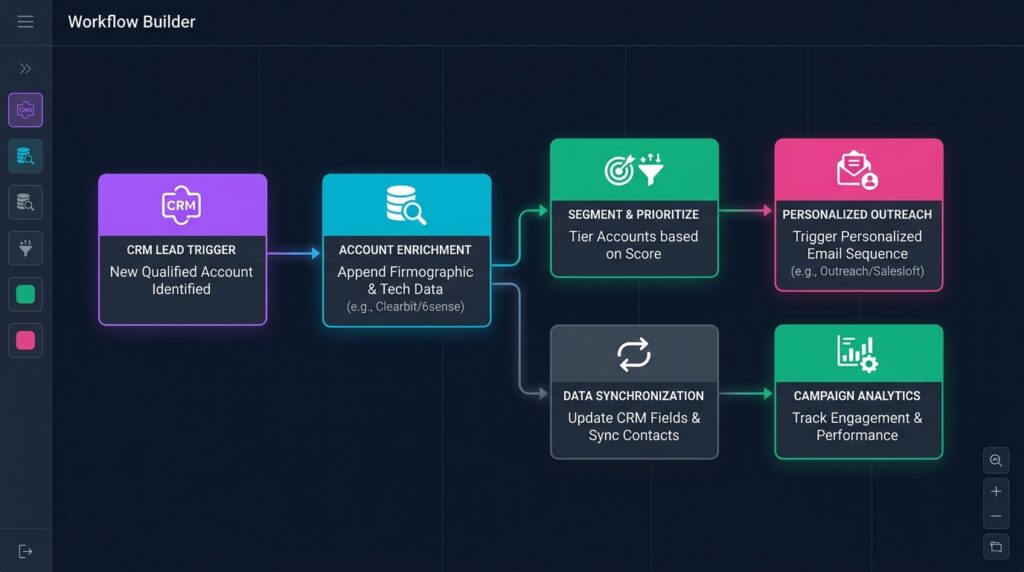
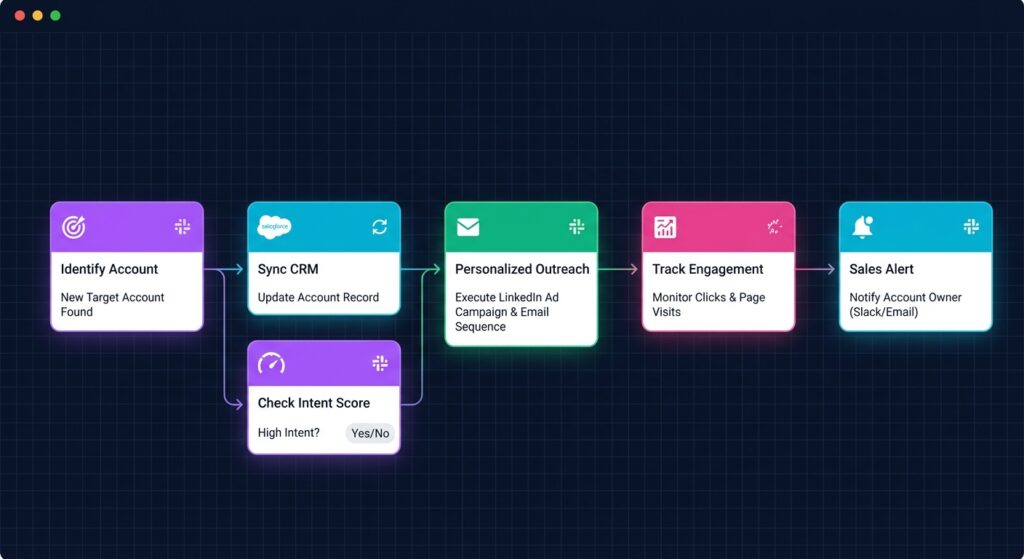
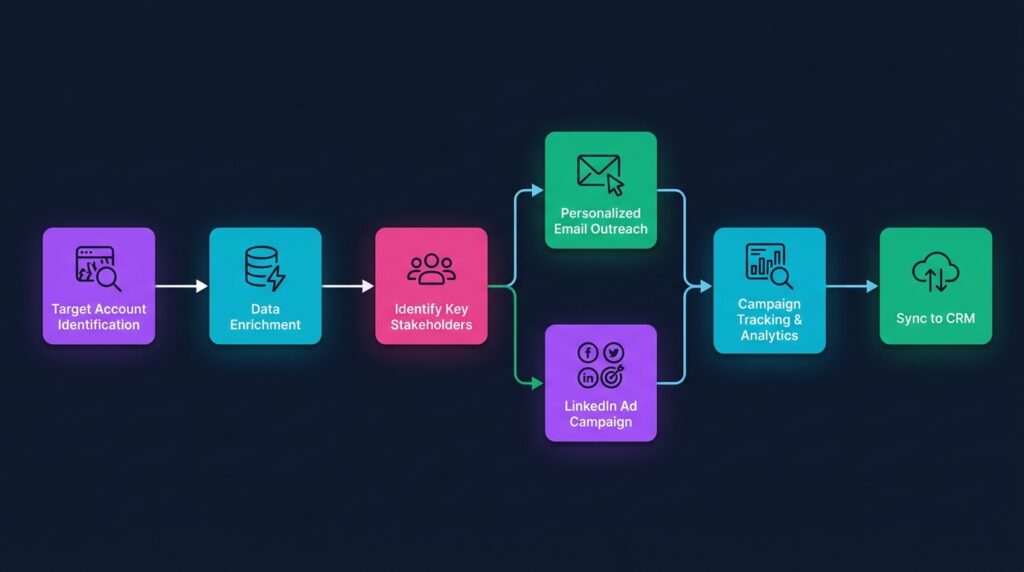
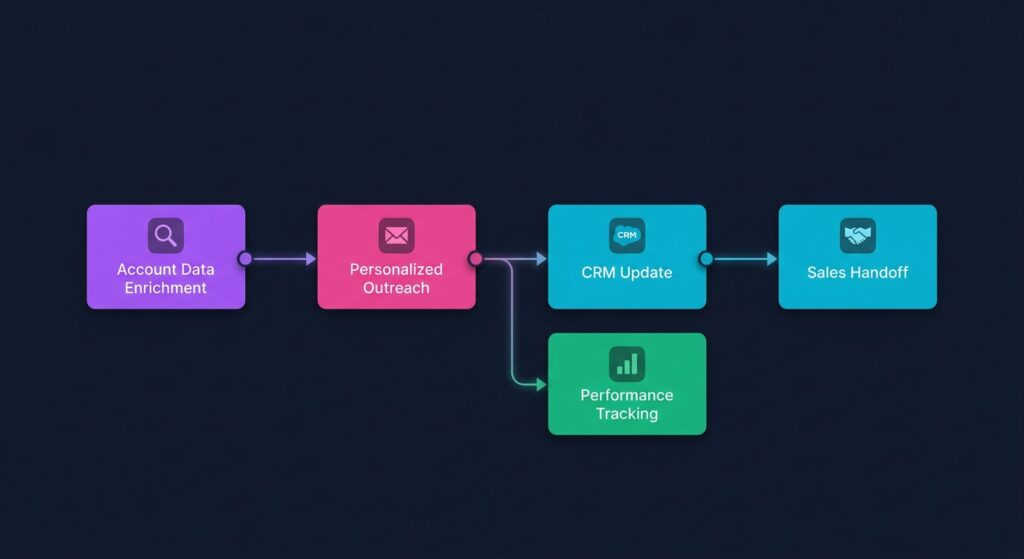
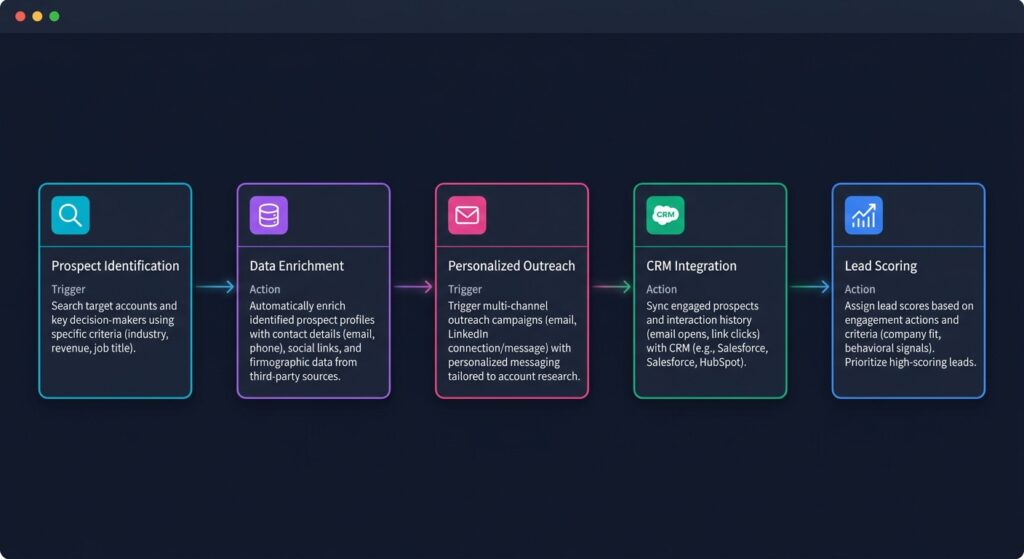
Make and n8n offer intuitive, drag-and-drop interfaces that enable users to connect various applications and automate multi-step processes. For ABM, this translates into the ability to:
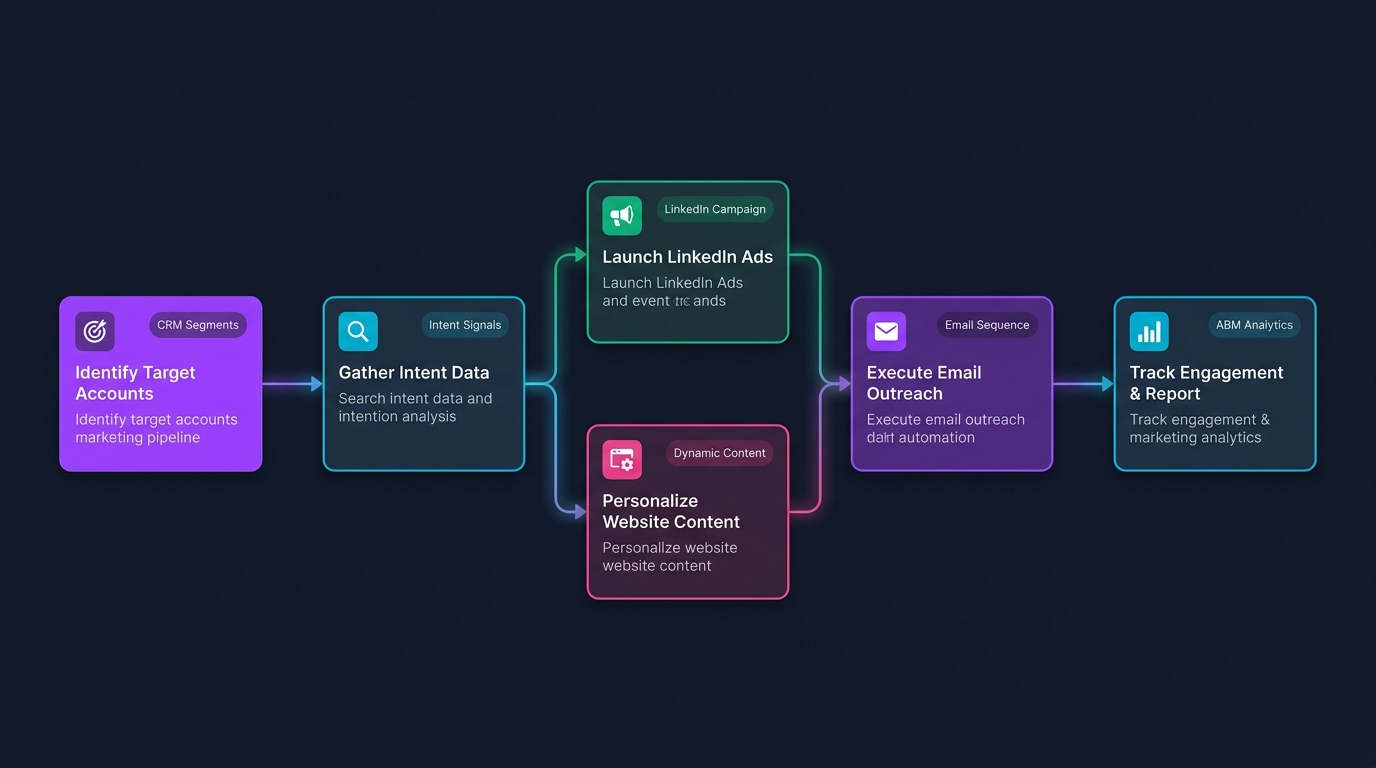
- Automated Data Enrichment: Automatically pull data from CRM, marketing automation platforms, and other sources to build comprehensive profiles of target accounts. This ensures your outreach is informed and relevant.
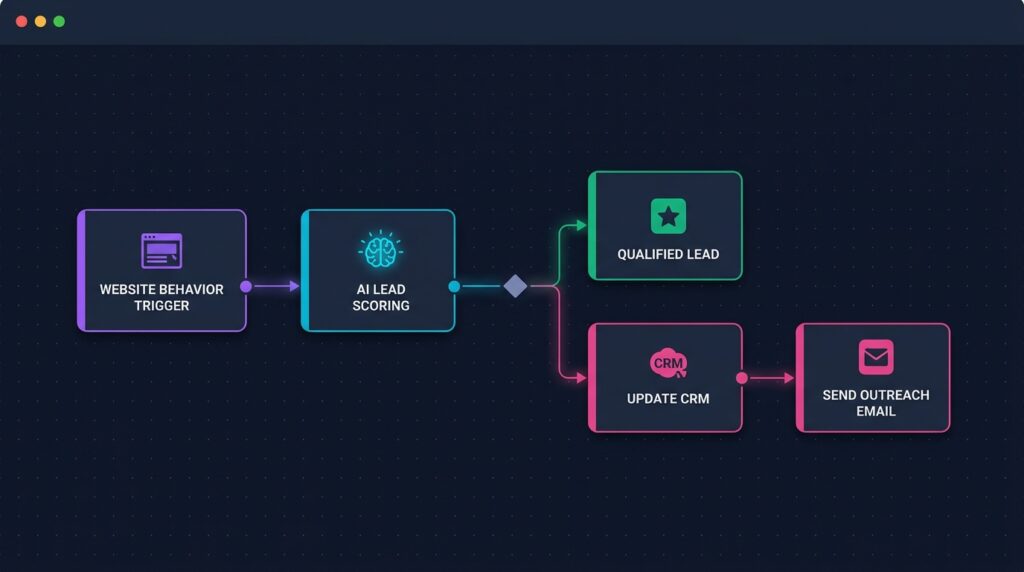
- Personalized Outreach Sequences: Trigger personalized email sequences, social media messages, or even ad campaigns based on account activity, firmographic data, or specific triggers. Imagine sending a tailored case study to a prospect the moment they visit a key page on your website.
- Sales & Marketing Alignment: Seamlessly pass lead information and engagement insights between sales and marketing tools. When a target account shows high engagement, a notification can be automatically sent to the assigned sales rep, along with relevant context.
- Dynamic Content Personalization: Integrate with content management systems or personalization engines to serve dynamic content on your website or in emails based on the visitor’s account affiliation.
- Performance Tracking & Reporting: Automate the collection and aggregation of ABM campaign performance data, providing clear insights into what’s working and where optimizations are needed.
The beauty of low-code is its flexibility and speed. You can rapidly prototype and deploy ABM playbooks, test different approaches, and iterate based on real-time feedback. This agility is crucial in the fast-paced B2B environment.
BMAIKR’s Expertise in Driving ABM Automation
BMAIKR specializes in leveraging cutting-edge technologies to solve complex business challenges. Our expertise in AI and Business Automation allows us to design and implement bespoke ABM automation strategies that align perfectly with your business objectives. We go beyond simply connecting apps; we help you architect intelligent workflows that:
- Identify and Prioritize High-Value Accounts: Utilizing AI-driven insights and data analysis to pinpoint the accounts most likely to convert and provide the highest ROI.
- Develop Sophisticated Personalization Engines: Crafting dynamic content and messaging strategies that resonate deeply with individual target accounts.
- Integrate Seamlessly Across Your Tech Stack: Ensuring that your ABM automation works harmoniously with your existing CRM, marketing automation, sales enablement, and other critical tools.
- Build Scalable and Maintainable Playbooks: Designing automation workflows that are not only effective today but also adaptable to future growth and evolving market dynamics.
Our approach ensures that your ABM automation is not just a set of disconnected tasks but a cohesive, intelligent system that drives predictable revenue growth. We understand that effective ABM requires more than just technology; it demands a strategic vision and meticulous execution. Our team brings both to the table, helping you unlock the full potential of your target accounts.
Choosing the Right Path: ABM Automation vs. Traditional Methods
When considering how to implement ABM, businesses often face a choice between investing in extensive custom development, relying solely on built-in features of existing platforms, or embracing low-code automation. Each has its merits, but the landscape is shifting.
The Case for Low-Code Automation (Make & n8n)
Agility and Speed to Market: Low-code platforms allow for rapid development and deployment of ABM playbooks. You can build and test workflows in days or weeks, rather than months, giving you a competitive edge.
Cost-Effectiveness: Compared to custom development, low-code solutions are significantly more affordable. They reduce the need for highly specialized developers and allow your existing marketing and sales teams to contribute to automation building.
Empowerment of Non-Technical Teams: Marketing and sales professionals can directly build and manage their own ABM workflows, fostering innovation and reducing reliance on IT departments.
Flexibility and Integration: Make and n8n excel at connecting a vast array of applications, allowing you to create highly customized ABM processes that integrate seamlessly with your entire tech stack. This is crucial for comprehensive low-code ABM automation for B2B services.
Scalability: As your ABM strategy evolves and your target account list grows, low-code platforms can scale with your needs, allowing you to add more complex workflows and integrations as required.
Considerations for Custom Development
Unparalleled Customization: For highly unique or complex requirements that cannot be met by off-the-shelf or low-code solutions, custom development offers ultimate flexibility.
Deep Integration Capabilities: Custom solutions can achieve very deep, bespoke integrations with legacy systems or highly specialized internal tools.
Higher Cost and Time Investment: Custom development is typically the most expensive and time-consuming option, requiring significant resources and specialized expertise.
Maintenance Overhead: Custom-built solutions often come with a higher ongoing maintenance burden.
When to Rely on Platform-Native Features
Simplicity and Basic Needs: If your ABM strategy is relatively straightforward and your existing marketing automation platform offers sufficient built-in ABM features, leveraging these can be a good starting point.
Limited Budget or Resources: Utilizing native features is often the most budget-friendly option for businesses with very limited resources for automation.
Standardized Workflows: For common ABM tasks that are well-supported by your platform, native features can be efficient.
However, many businesses find that native features alone are insufficient for sophisticated ABM execution. This is where the power of integrating these platforms with low-code tools like Make and n8n becomes apparent, extending their capabilities significantly.
Unlock Your ABM Potential with BMAIKR
The future of B2B marketing is personalized, data-driven, and automated. Account-Based Marketing, when powered by intelligent low-code automation, offers a clear path to engaging your most valuable prospects and driving significant revenue growth. Whether you’re looking to refine your existing ABM efforts or build a new strategy from the ground up, BMAIKR is your trusted partner.
Our team of experts in AI and Business Automation, coupled with our deep understanding of Web Development and Digital Marketing, allows us to create holistic solutions that drive tangible results. We help you harness the power of platforms like Make and n8n to build efficient, scalable, and highly effective ABM playbooks tailored to your unique business needs.
Ready to transform your ABM strategy and achieve predictable revenue growth?
Contact BMAIKR today for a consultation and discover how low-code ABM automation can revolutionize your business.