Account-Based Marketing (ABM) Automation for B2B: Low-Code Playbooks with Make & n8n

Account-Based Marketing (ABM) Automation for B2B: Low-Code Playbooks with Make & n8n
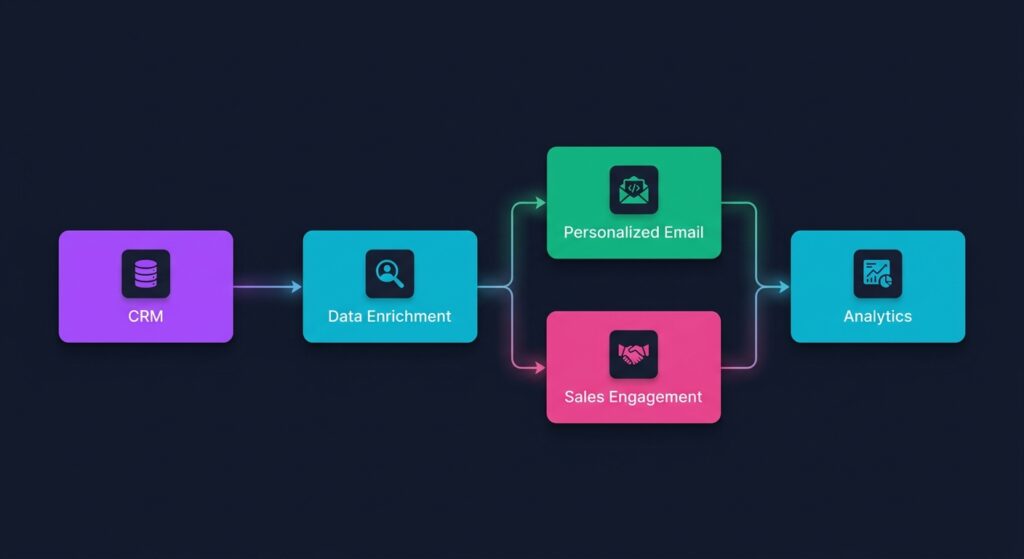
In the competitive B2B landscape, traditional broad-stroke marketing often falls short. Account-Based Marketing (ABM) has emerged as a powerful strategy, focusing resources on high-value target accounts. However, executing ABM at scale can be resource-intensive. This is where low-code ABM automation for B2B services becomes a game-changer. By leveraging intuitive platforms like Make (formerly Integromat) and n8n, B2B companies can streamline complex ABM workflows, personalize outreach, and drive significant ROI without requiring extensive coding expertise. This post will explore how to build effective ABM playbooks using these powerful automation tools.
The Power of ABM and the Need for Automation
Account-Based Marketing shifts the focus from individual leads to specific, high-value accounts. Instead of casting a wide net, ABM involves identifying key target companies and then tailoring marketing and sales efforts to resonate with their unique needs, challenges, and stakeholders. This personalized approach leads to higher engagement rates, shorter sales cycles, and increased deal sizes.
However, the very nature of ABM—personalization and deep account understanding—can make it incredibly time-consuming. Manually researching accounts, segmenting contacts, customizing messaging, and coordinating outreach across multiple channels is a monumental task. This is precisely why low-code ABM automation for B2B services is not just a convenience, but a necessity for scalable success.
Why ABM Automation is Crucial for B2B Growth
- Scalability: Automate repetitive tasks to manage a larger number of target accounts effectively.
- Personalization at Scale: Deliver highly tailored messages and experiences to each account based on their specific data.
- Improved Sales & Marketing Alignment: Ensure seamless data flow and coordinated actions between sales and marketing teams.
- Enhanced Data Utilization: Integrate data from various sources (CRM, marketing automation platforms, social media) to gain deeper account insights.
- Faster Response Times: Automate triggers for sales follow-ups based on account engagement.
Introducing Make & n8n: Your Low-Code ABM Automation Toolkit
Make and n8n are leading low-code integration and automation platforms that empower businesses to connect different applications and automate complex workflows with visual interfaces. They abstract away much of the underlying code, allowing users to build sophisticated automations by dragging, dropping, and configuring modules.
Make (formerly Integromat): Visual Workflow Mastery
Make offers a highly visual and intuitive drag-and-drop interface for building complex scenarios. Its strength lies in its extensive library of pre-built app integrations and its powerful logic capabilities, allowing for intricate data manipulation and conditional routing. For ABM, Make excels at orchestrating multi-step campaigns that involve various marketing and sales tools.
Key Make Features for ABM Automation:
- Visual Scenario Builder: Easily map out your ABM workflows.
- Extensive App Integrations: Connect your CRM, marketing automation, email, social media, and data enrichment tools.
- Powerful Data Handling: Filter, sort, aggregate, and transform data to personalize outreach.
- Scheduling and Triggers: Automate actions based on time or events.
n8n: Open-Source Flexibility and Power
n8n is an open-source workflow automation tool that provides a robust and flexible platform for building integrations and automating tasks. Its visual editor is powerful, and its open-source nature offers greater control and customization possibilities, especially for companies with specific technical requirements or a preference for self-hosted solutions.
Key n8n Features for ABM Automation:
- Node-Based Workflow Editor: Build complex workflows by connecting nodes representing different operations.
- Vast Integration Library: Connect to a wide array of services, with the ability to create custom nodes.
- Self-Hosting Option: Maintain full control over your data and infrastructure.
- Advanced Logic and Expressions: Implement sophisticated decision-making within your workflows.
Building Your Low-Code ABM Playbooks: Practical Examples
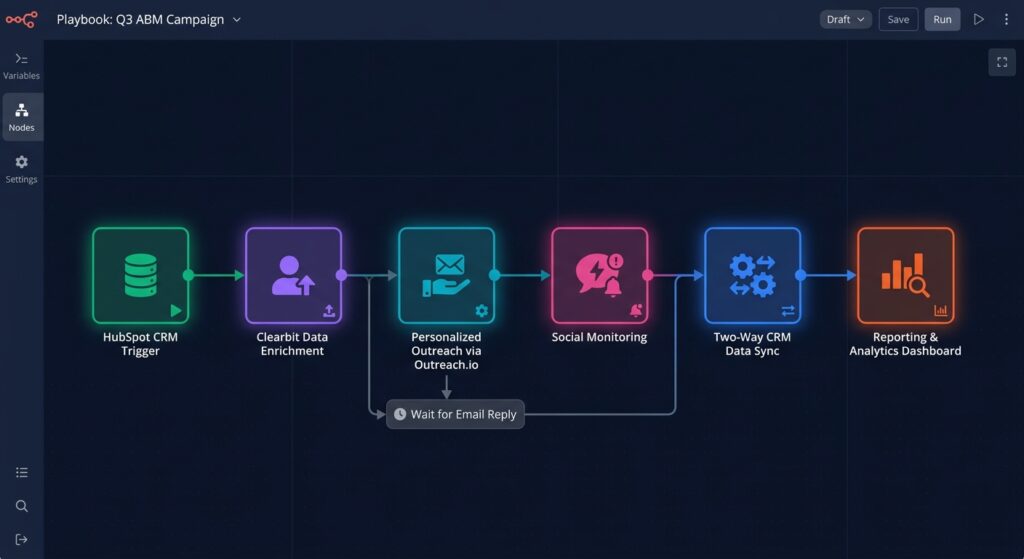
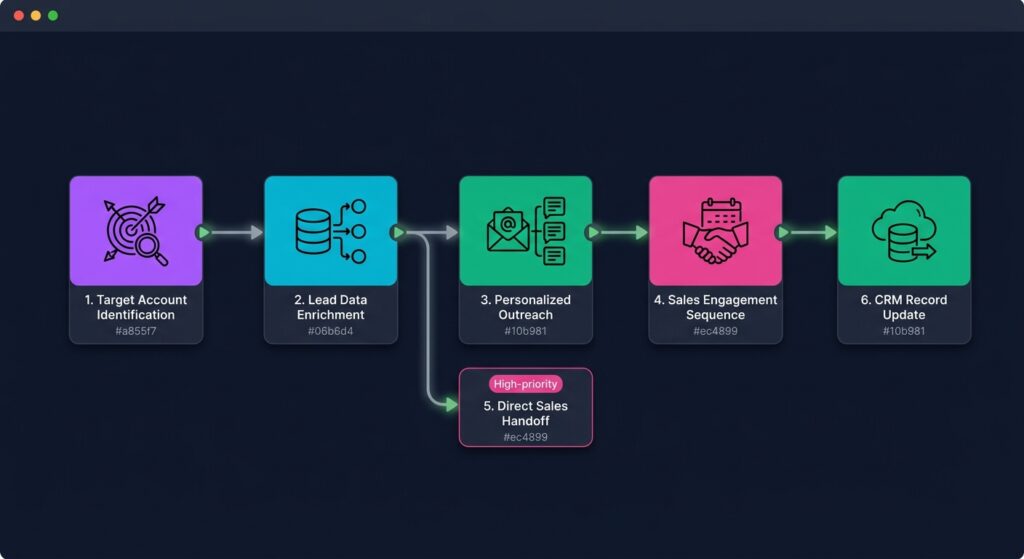
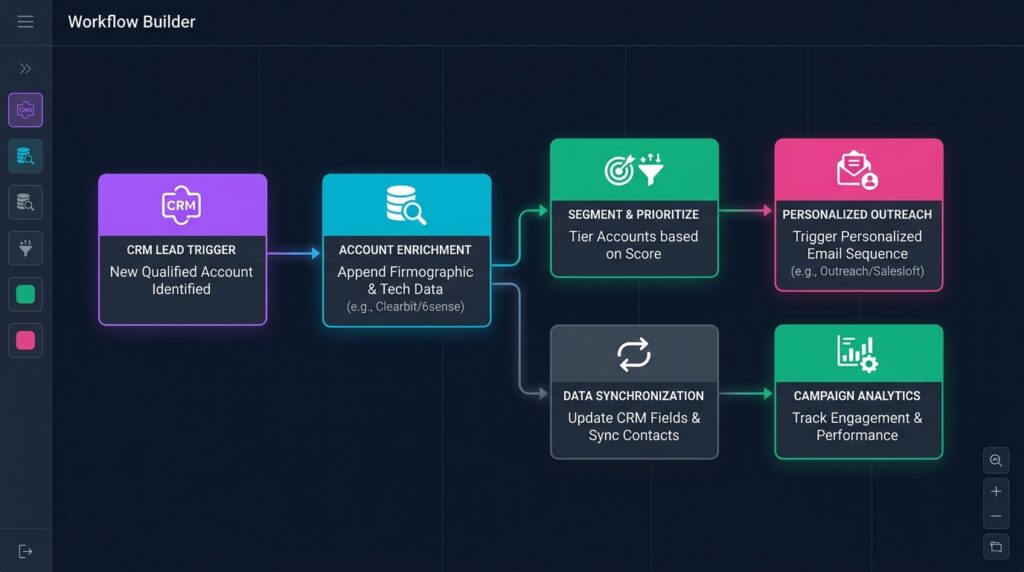
Let’s dive into practical examples of how you can leverage Make or n8n to automate key ABM processes. The principles are similar across both platforms, focusing on connecting data and triggering actions.
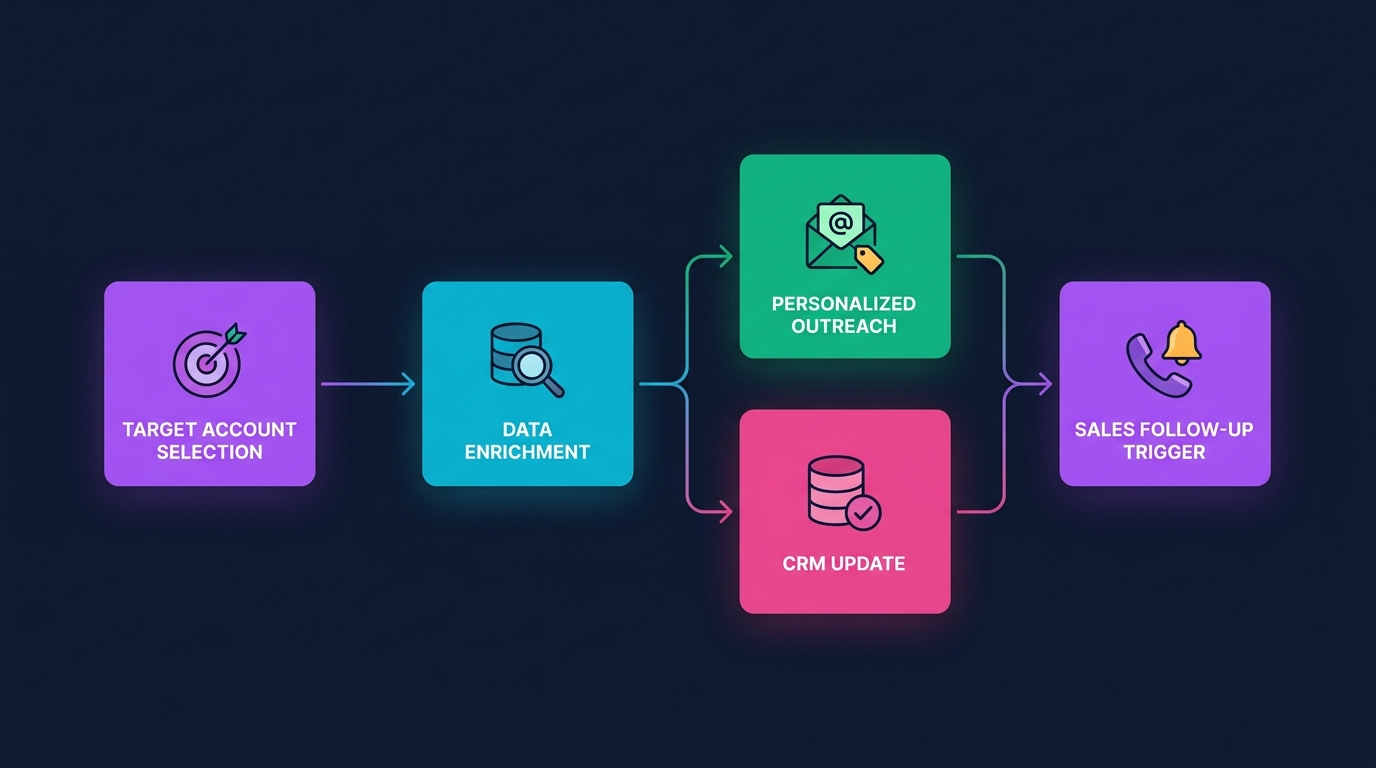
Playbook 1: Targeted Content Delivery Based on Account Firmographics
Goal: Automatically send relevant case studies or whitepapers to contacts within target accounts based on their industry or company size.
Workflow:
- Trigger: A new contact is added to your CRM or a specific account is flagged as a target.
- Data Enrichment: Use a tool like Clearbit or ZoomInfo (integrated via Make/n8n) to pull firmographic data (industry, employee count, revenue) for the account.
- Logic Branching: Based on the firmographic data, determine which content piece is most relevant (e.g., if industry is ‘Technology’ and employee count > 500, select Case Study A; if industry is ‘Healthcare’ and employee count < 100, select Whitepaper B).
- Personalized Email: Use your email marketing platform (e.g., Mailchimp, HubSpot) to send a personalized email to the contact, including the relevant content and referencing their industry.
- CRM Update: Log the sent email and content type in your CRM for sales visibility.
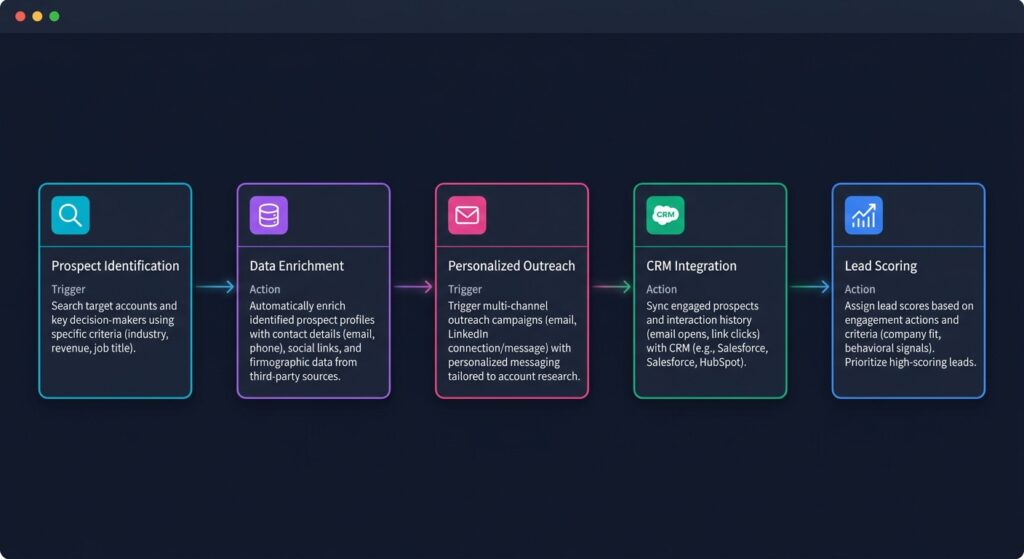
This playbook demonstrates how to use low-code ABM automation for B2B services to ensure the right message reaches the right person at the right time, significantly improving engagement.
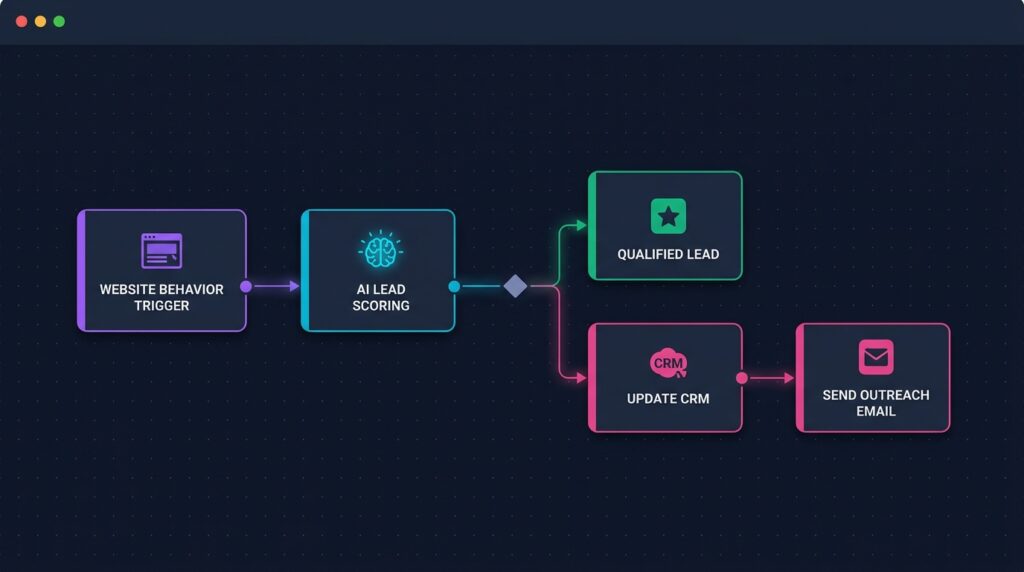
Playbook 2: Proactive Sales Outreach Triggered by Website Activity
Goal: Alert sales reps to follow up when a contact from a target account visits key pages on your website.
Workflow:
- Trigger: A visitor from a known target account (identified via IP lookup or cookie tracking) visits specific high-intent pages (e.g., pricing page, product demo request, specific solution pages).
- Identify Account & Contact: Match the visitor’s activity to a known account and contact in your CRM.
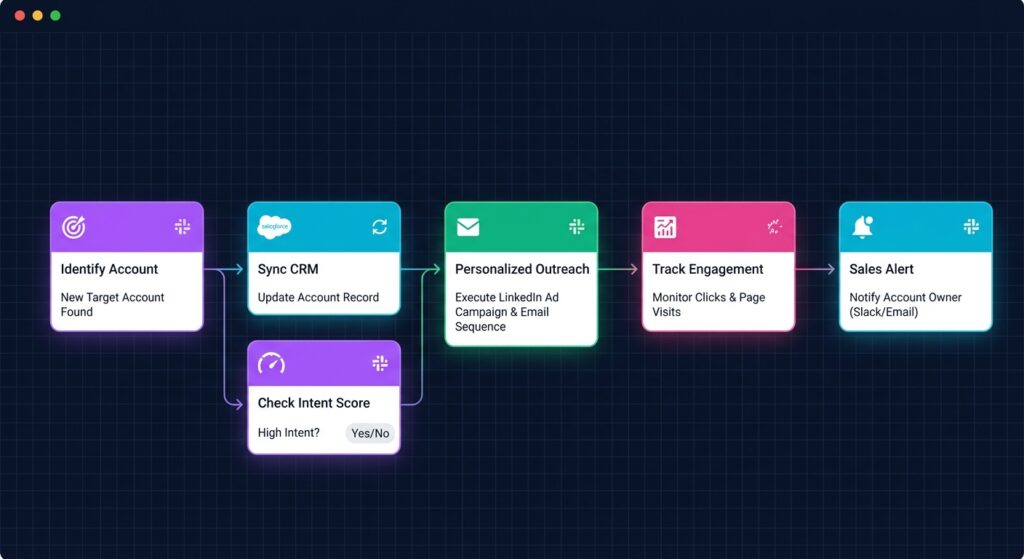
- Create Task/Notification: Generate a task in your CRM for the assigned Account Executive or send a Slack/email notification to the sales team, including the contact’s name, account, and the pages they visited.
- Update Engagement Score: Increment the account’s engagement score in your CRM or marketing automation platform.
This automation ensures your sales team can act on buying signals immediately, a critical advantage in B2B sales.
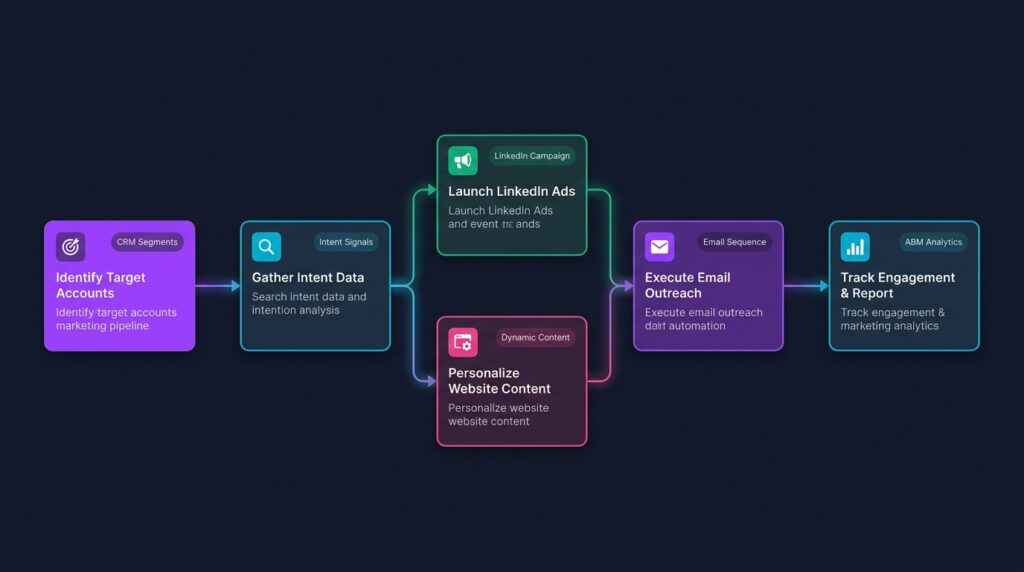
Playbook 3: Orchestrating Multi-Channel ABM Campaigns
Goal: Coordinate personalized outreach across email, LinkedIn, and targeted ads for a specific account.
Workflow:
- Trigger: An account is identified as a high-priority target or enters a specific stage in the sales funnel.
- Personalization Data Gathering: Pull key information about the account and its stakeholders from CRM and other sources.
- Sequence Execution:
- Step 1 (Email): Send a highly personalized email referencing a recent company announcement or challenge.
- Step 2 (LinkedIn): If the email isn’t opened within 2 days, send a personalized LinkedIn connection request or InMail to a key stakeholder.
- Step 3 (Ads): If the account shows further engagement (e.g., website visit), add them to a targeted LinkedIn or Google Ads campaign showcasing relevant solutions.
- Progress Tracking: Update the account’s status in the CRM as the campaign progresses.
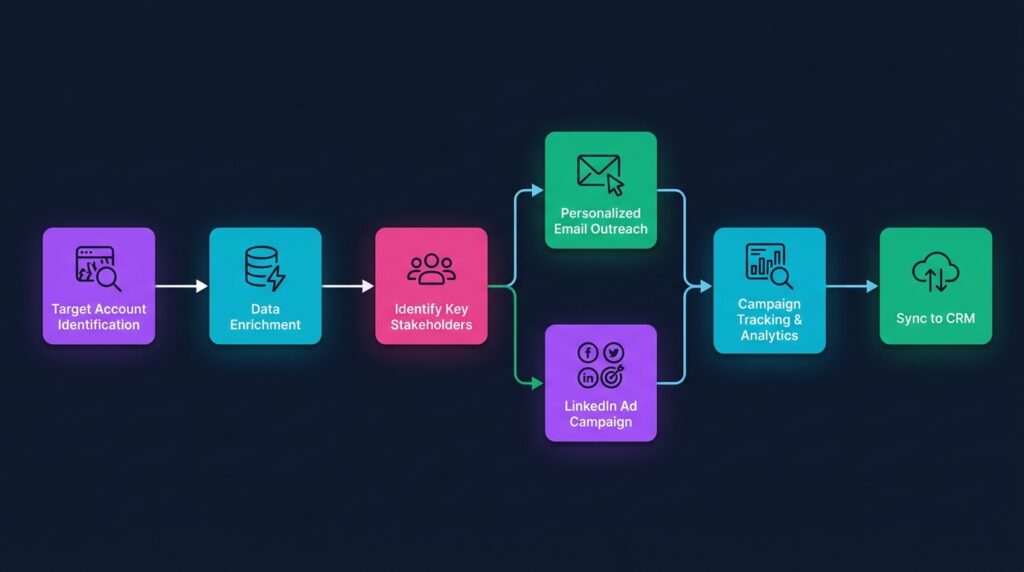
This playbook highlights the power of integrating multiple touchpoints for a cohesive ABM strategy, made possible by low-code ABM automation for B2B services.
Choosing the Right Tool: Make vs. n8n for Your ABM Needs
Both Make and n8n are excellent choices for implementing low-code ABM automation. The best option for your business depends on your specific requirements, existing tech stack, and team expertise.
When to Choose Make:
- Ease of Use & Visual Appeal: If your team prefers a highly intuitive, visual interface and rapid scenario building.
- Extensive Pre-built Integrations: If you rely heavily on a wide range of popular SaaS applications that Make already supports out-of-the-box.
- Complex Data Transformations: Make’s visual tools for data manipulation can be very powerful for intricate logic.
- Managed Cloud Service: If you prefer a fully managed cloud solution without the overhead of self-hosting.
When to Choose n8n:
- Open-Source Preference & Control: If you value the flexibility, transparency, and control offered by an open-source solution, especially for data privacy and security.
- Self-Hosting Requirements: If your organization mandates or prefers to host critical automation infrastructure in-house.
- Custom Integrations: If you anticipate needing to build custom nodes or have unique integration needs not covered by standard connectors.
- Cost-Effectiveness at Scale: For very high volumes of operations, the open-source model can potentially be more cost-effective if you have the infrastructure to support it.
Ultimately, both platforms enable sophisticated low-code ABM automation for B2B services. Consider running pilot projects on both if possible to see which best fits your team’s workflow and technical environment.
The BMAIKR Advantage: Expert ABM Automation Implementation
While Make and n8n provide the tools, realizing the full potential of ABM automation requires strategic planning, deep understanding of ABM principles, and expert implementation. At BMAIKR, we specialize in helping B2B companies harness the power of AI and automation to drive their growth initiatives.
Our expertise in AI and Business Automation allows us to design and implement custom ABM playbooks tailored to your unique target accounts and business objectives. We understand the nuances of B2B sales cycles and marketing funnels, ensuring that your automation strategies are not just technically sound but also strategically aligned with your revenue goals.
Whether you need to integrate your CRM with marketing platforms, build complex data enrichment workflows, or orchestrate multi-channel outreach campaigns, BMAIKR has the skills and experience to deliver. We help you leverage low-code tools like Make and n8n to achieve:
- Hyper-Personalized Customer Journeys: Deliver tailored experiences that resonate deeply with your ideal customer profile.
- Increased Sales Efficiency: Equip your sales team with timely insights and automated follow-ups.
- Improved Marketing ROI: Focus your efforts on high-value accounts and measure the impact of your ABM strategy effectively.
- Seamless Integration: Connect disparate systems for a unified view of your accounts and prospects.
Conclusion: Unlock Your ABM Potential with Low-Code Automation
Account-Based Marketing is no longer a niche strategy; it’s a fundamental approach for B2B companies aiming for sustainable growth. By embracing low-code ABM automation for B2B services with platforms like Make and n8n, you can overcome the scalability and personalization challenges inherent in ABM. These tools empower your teams to build sophisticated, data-driven playbooks that engage target accounts more effectively, shorten sales cycles, and ultimately drive revenue.
Don’t let manual processes hold back your ABM success. It’s time to automate, personalize, and win.
Ready to transform your ABM strategy with powerful, low-code automation?
Contact BMAIKR today for a consultation and let us help you build your custom ABM playbooks.