Account-Based Marketing (ABM) Automation for B2B: Low-Code Playbooks with Make & n8n

Account-Based Marketing (ABM) Automation for B2B: Low-Code Playbooks with Make & n8n
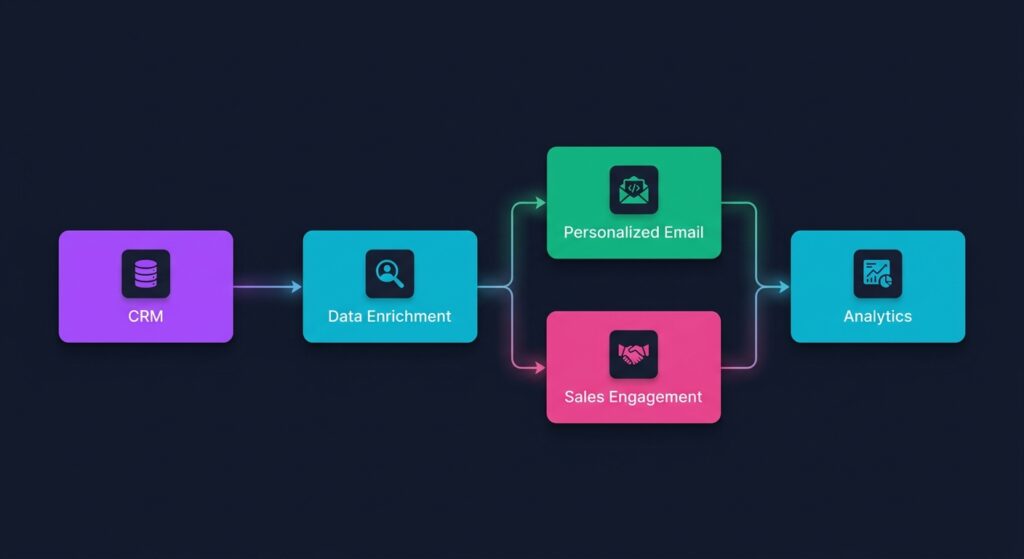
In today’s competitive B2B landscape, generic marketing approaches are no longer sufficient. Businesses are increasingly turning to Account-Based Marketing (ABM) to target high-value accounts with personalized campaigns. However, executing ABM at scale can be a significant challenge, often requiring extensive manual effort. This is where low-code ABM automation for B2B services emerges as a game-changer. By leveraging powerful low-code platforms like Make (formerly Integromat) and n8n, B2B companies can streamline their ABM processes, enhance personalization, and drive measurable results. This article will explore the power of low-code ABM automation, demonstrate its benefits, and provide actionable playbooks you can implement.
The Evolution of B2B Marketing: Why ABM is Essential
Traditional B2B marketing often involves casting a wide net, hoping to attract a broad audience. While this can generate leads, it often leads to wasted resources on accounts that are unlikely to convert. Account-Based Marketing flips this model on its head. ABM focuses on identifying and engaging with specific, high-value target accounts as individual markets. This approach allows for hyper-personalization, ensuring that your messaging resonates deeply with the unique needs and challenges of each prospective client.
The benefits of ABM are well-documented:
- Increased ROI: By focusing resources on the most promising accounts, ABM typically yields higher conversion rates and a better return on investment.
- Improved Sales and Marketing Alignment: ABM necessitates close collaboration between sales and marketing teams, ensuring a unified approach to target accounts.
- Enhanced Customer Experience: Personalized outreach and tailored content create a more positive and relevant experience for prospects.
- Shorter Sales Cycles: By addressing specific pain points and offering relevant solutions, ABM can help accelerate the decision-making process.
The Bottleneck: Manual ABM Execution
Despite its clear advantages, implementing ABM effectively can be resource-intensive. Manually:
- Identifying and segmenting target accounts.
- Researching key stakeholders within those accounts.
- Crafting personalized messaging and content.
- Coordinating outreach across multiple channels (email, social media, ads).
- Tracking engagement and measuring campaign performance.
can quickly become overwhelming, especially for growing B2B businesses. This is where automation becomes not just beneficial, but essential.
Introducing Low-Code ABM Automation: The Power of Make & n8n
Low-code platforms have democratized automation, making sophisticated workflows accessible to a wider range of users, including marketing professionals. Make and n8n are two leading low-code integration platforms that excel at connecting various applications and automating complex processes without requiring extensive coding knowledge.
What is Low-Code ABM Automation?
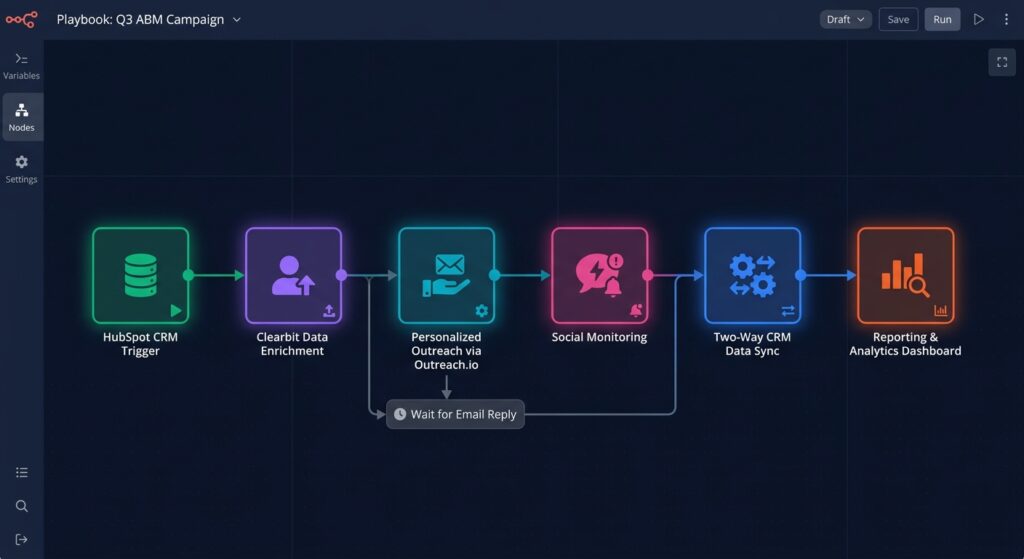
Low-code ABM automation involves using visual interfaces and pre-built connectors to design, build, and deploy automated workflows that support your ABM strategy. Instead of writing lines of code, you drag and drop modules, connect them, and configure their settings to achieve your desired outcomes. This approach significantly reduces development time and allows for rapid iteration and optimization of your ABM playbooks.
Why Make and n8n for ABM?
Both Make and n8n offer robust features ideal for ABM automation:
Make (formerly Integromat)
Make is renowned for its intuitive visual builder, extensive library of app integrations, and powerful logic capabilities. It allows you to create complex, multi-step scenarios that can automate tasks across your entire MarTech stack.
n8n
n8n is an open-source workflow automation tool that offers a high degree of flexibility and control. It’s particularly well-suited for users who need to build custom integrations or have specific data privacy requirements. Its node-based interface makes it easy to visualize and manage intricate workflows.
The BMAIKR Advantage: Expertise in Automation for B2B Growth
At BMAIKR, we understand the transformative power of automation for B2B success. Our expertise spans across cutting-edge technologies, including AI and business automation, enabling us to build bespoke solutions that drive efficiency and growth. We leverage platforms like Make and n8n to create sophisticated ABM automation playbooks tailored to your unique business needs. Whether you’re looking to enhance your lead nurturing, personalize customer journeys, or optimize your sales outreach, our team can help you harness the full potential of low-code automation. Explore our AI and Business Automation services to see how we can elevate your operations.
Key ABM Automation Playbooks with Low-Code Tools
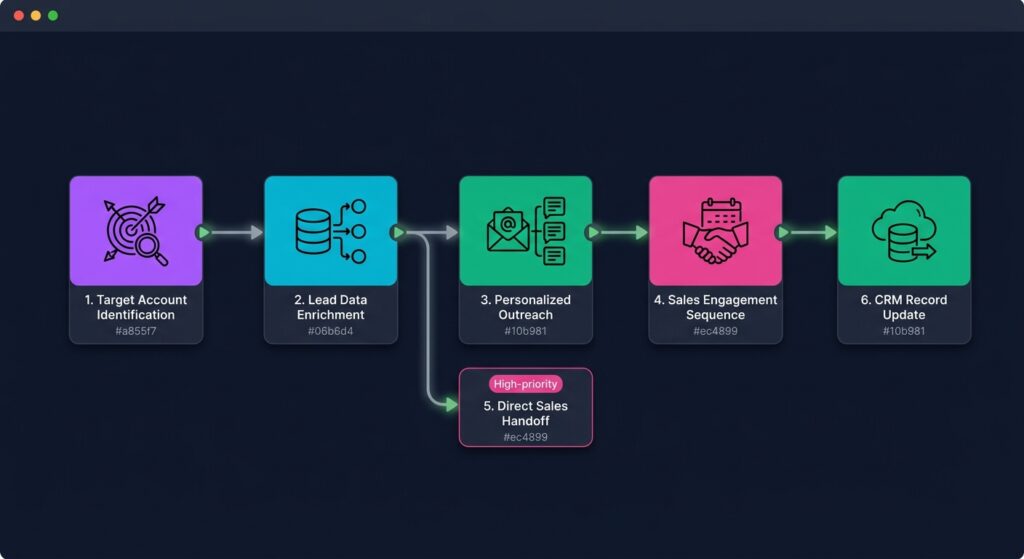
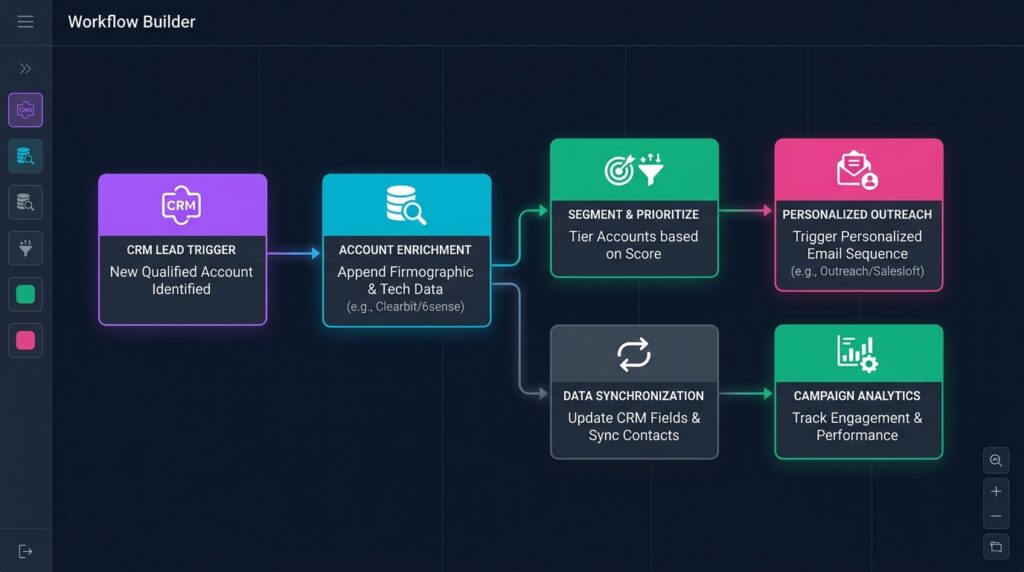
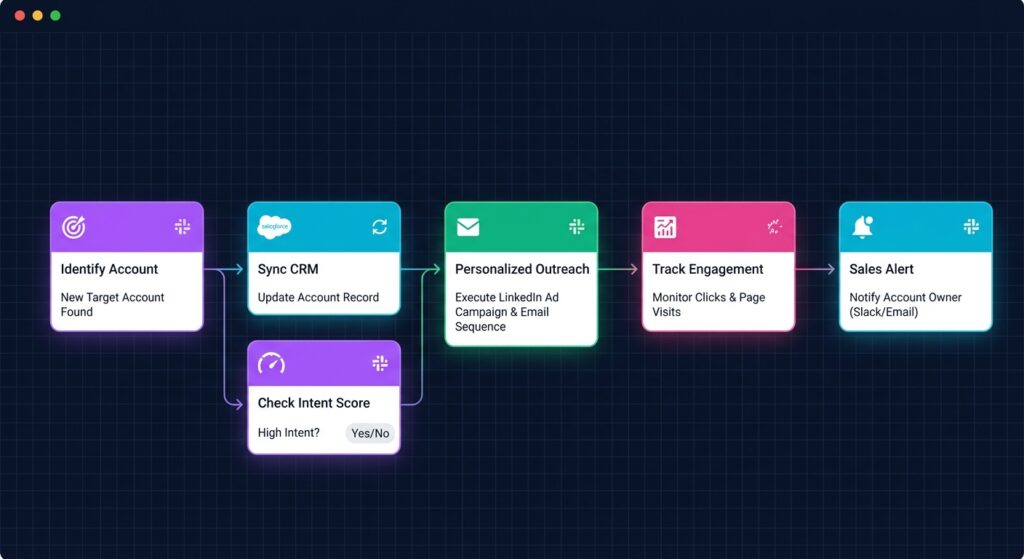
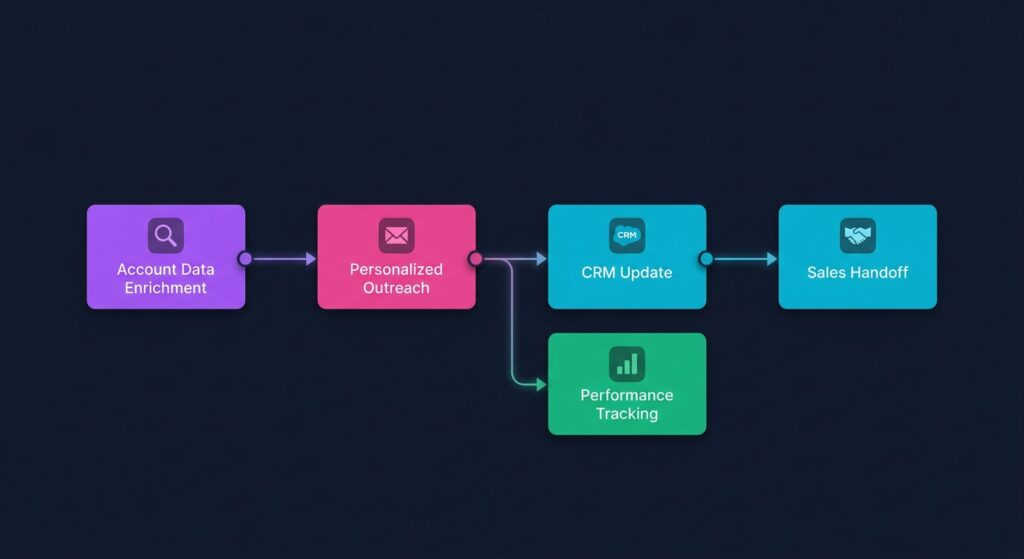
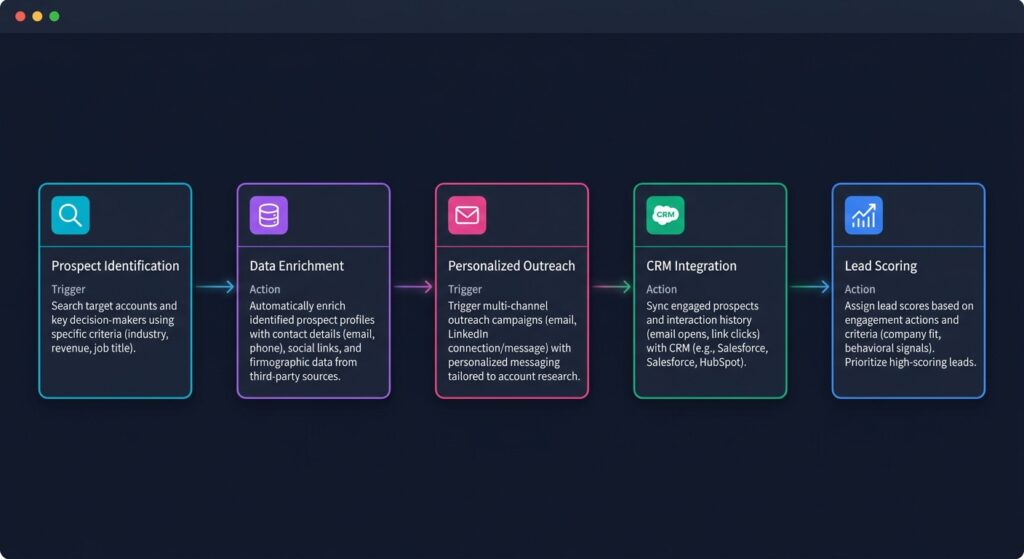
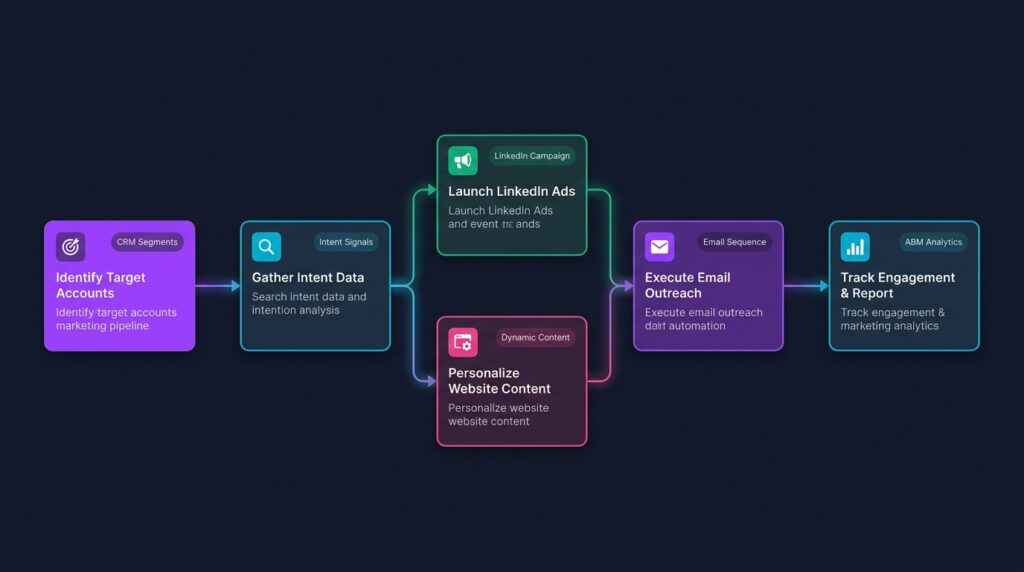
Let’s dive into some practical low-code ABM automation playbooks you can implement using Make or n8n:
Playbook 1: Intelligent Lead Enrichment and Account Scoring
Goal: Automatically enrich lead and account data and assign scores to prioritize outreach.
Workflow:
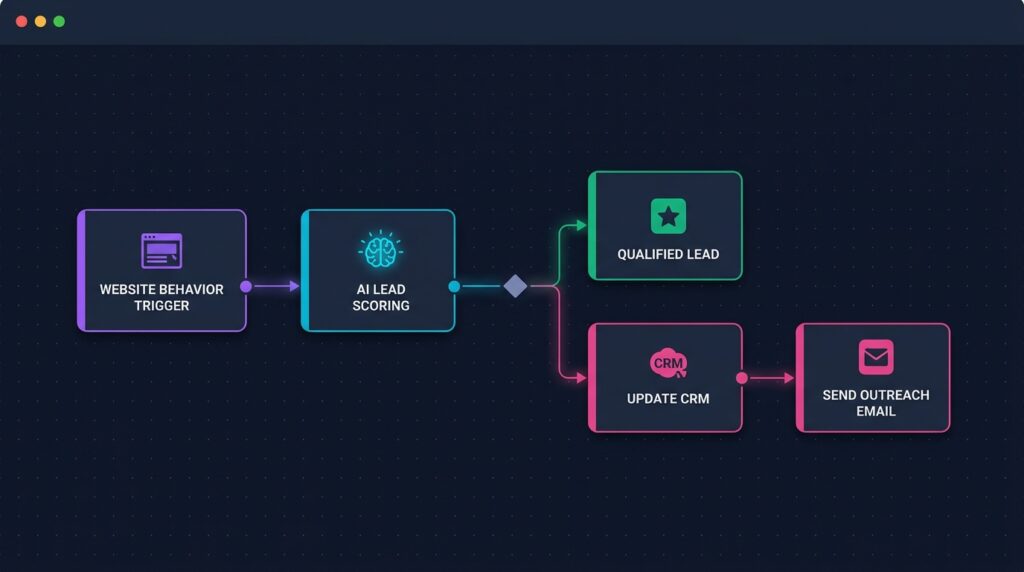
- Trigger: A new lead is added to your CRM (e.g., HubSpot, Salesforce) or a new contact is identified on a target account’s website.
- Enrichment: Use tools like Clearbit, Hunter.io, or Apollo.io via their respective Make/n8n integrations to find additional company and contact information (e.g., industry, employee count, job titles, email addresses).
- Data Normalization: Standardize data formats across different sources.
- Account Scoring: Based on predefined criteria (e.g., industry fit, firmographic data, engagement level), assign a score to the lead and their associated account.
- Action: Update the lead/account record in your CRM with the enriched data and score. If the score meets a certain threshold, flag it for sales team review or trigger a personalized marketing campaign.
Tools: CRM (HubSpot, Salesforce), Enrichment tools (Clearbit, Hunter.io), Make/n8n.
Playbook 2: Personalized Content Delivery Based on Account Intent
Goal: Deliver highly relevant content to target accounts based on their demonstrated interests and engagement.
Workflow:
- Trigger: A contact from a target account visits specific pages on your website (e.g., product pages, case studies relevant to their industry). This can be tracked via website analytics tools or intent data platforms.
- Identify Account & Stakeholders: Use the contact’s email or company domain to identify their account and relevant stakeholders in your CRM.
- Content Recommendation: Based on the pages visited, determine the most relevant content assets (e.g., a case study for their industry, a whitepaper on a specific pain point).
- Automated Outreach: Trigger an email via your marketing automation platform (e.g., Mailchimp, ActiveCampaign) or CRM to the relevant stakeholder, including a personalized message and a link to the recommended content.
- Track Engagement: Monitor opens, clicks, and subsequent website visits to refine future outreach.
Tools: Website Analytics (Google Analytics), CRM, Marketing Automation Platform, Make/n8n.
Playbook 3: Multi-Channel ABM Campaign Orchestration
Goal: Coordinate personalized outreach across email, social media, and advertising platforms for target accounts.
Workflow:
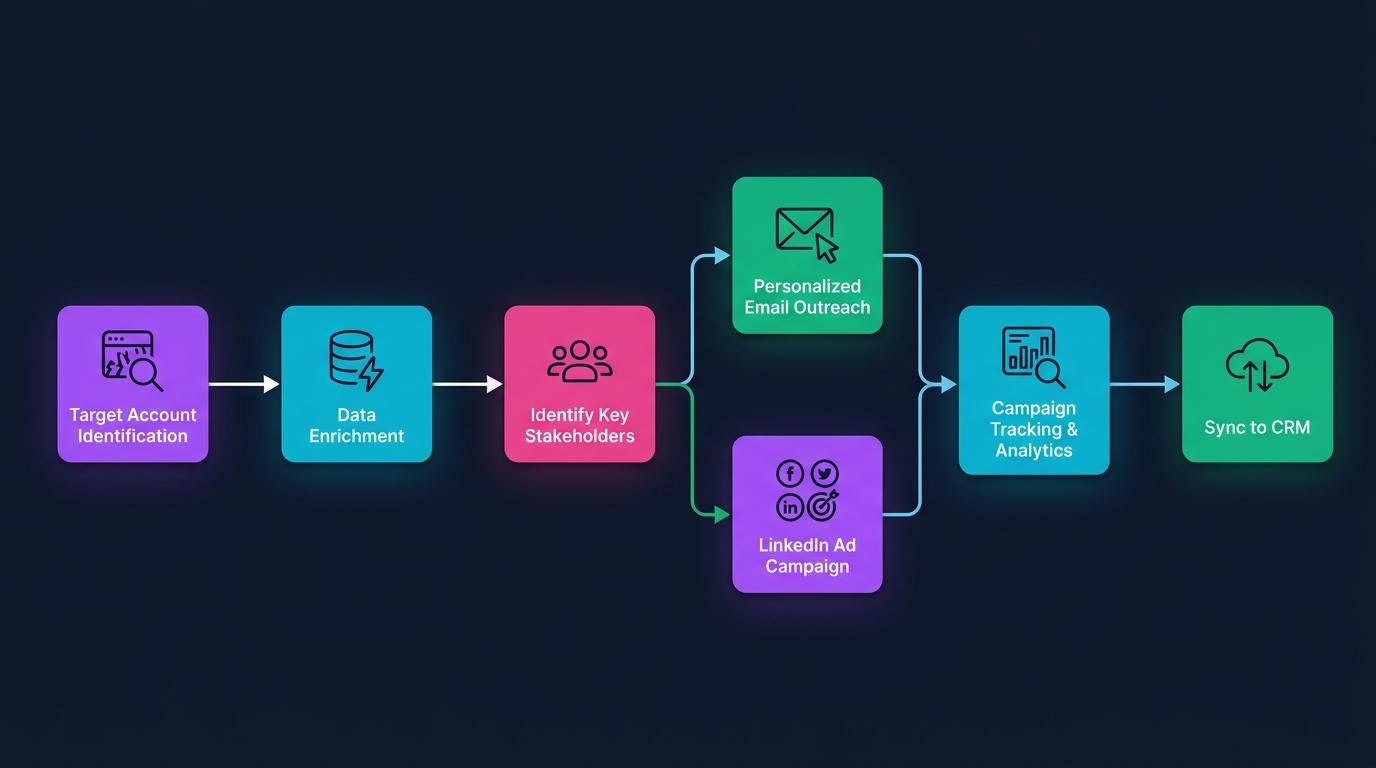
- Trigger: A target account meets specific qualification criteria (e.g., high score, recent engagement, identified as a strategic priority).
- Audience Creation: Automatically create or update custom audiences in advertising platforms (e.g., LinkedIn Ads, Google Ads) with contacts from the target account.
- Personalized Email Sequence: Initiate a tailored email sequence to key stakeholders within the account, referencing their industry or specific needs.
- LinkedIn Outreach: If applicable, send a connection request or InMail on LinkedIn to key decision-makers, potentially referencing shared connections or recent company news.
- Ad Retargeting: Serve highly relevant ads to individuals within the target account’s company when they browse other websites.
- Centralized Tracking: Consolidate engagement data from all channels back into your CRM for a unified view of account engagement.
Tools: CRM, Marketing Automation Platform, Advertising Platforms (LinkedIn Ads, Google Ads), Make/n8n.
Choosing the Right Tools for Your B2B Needs
When deciding between Make and n8n, consider these factors:
Make (formerly Integromat) Considerations:
- Ease of Use: Its visual interface is highly intuitive, making it accessible for marketers with less technical background.
- Extensive Integrations: A vast library of pre-built connectors simplifies connecting to popular SaaS applications.
- Scalability: Handles complex, high-volume scenarios efficiently.
- Pricing: Subscription-based, with costs scaling based on the number of operations and scenarios.
n8n Considerations:
- Open-Source Flexibility: Offers greater control and customization, especially for unique integration needs.
- Self-Hosting Option: Provides enhanced data privacy and security if you prefer to host it on your own servers.
- Community Support: Benefits from an active open-source community for troubleshooting and development.
- Pricing: Free for self-hosted instances; paid plans available for cloud hosting and enhanced features.
Both platforms are powerful, and the best choice often depends on your team’s technical expertise, budget, and specific integration requirements. For many B2B companies focused on digital marketing and web development, integrating various platforms to create seamless customer journeys is paramount. Our expertise at BMAIKR extends to both these platforms, ensuring we can recommend and implement the optimal solution for your ABM automation needs.
The Future of ABM: AI-Powered Personalization
As ABM continues to evolve, the integration of Artificial Intelligence (AI) will play an increasingly crucial role. AI can further enhance low-code ABM automation by:
- Predictive Lead Scoring: More accurately identifying accounts most likely to convert.
- Hyper-Personalized Content Generation: Crafting even more tailored messaging and content variations.
- Optimized Channel Selection: Determining the best channels and timing for outreach to specific accounts.
- Sentiment Analysis: Understanding prospect sentiment from communications to adjust strategy.
By combining the efficiency of low-code automation with the intelligence of AI, B2B companies can achieve unprecedented levels of personalization and effectiveness in their ABM efforts.
Ready to Automate Your ABM Strategy?
Implementing effective Account-Based Marketing automation can seem daunting, but with the right tools and expertise, it’s an achievable and highly rewarding endeavor. Low-code platforms like Make and n8n provide the power and flexibility to build sophisticated ABM playbooks that drive engagement, shorten sales cycles, and boost revenue.
At BMAIKR, we specialize in helping B2B companies harness the power of automation and digital transformation. Whether you need to build custom web applications, optimize your digital marketing campaigns, or implement advanced AI-driven automation solutions, our expert team is here to guide you.
Don’t let manual processes hold your ABM strategy back. Contact BMAIKR today to discuss how we can help you build powerful, low-code ABM automation playbooks tailored to your business goals and unlock your company’s full growth potential.