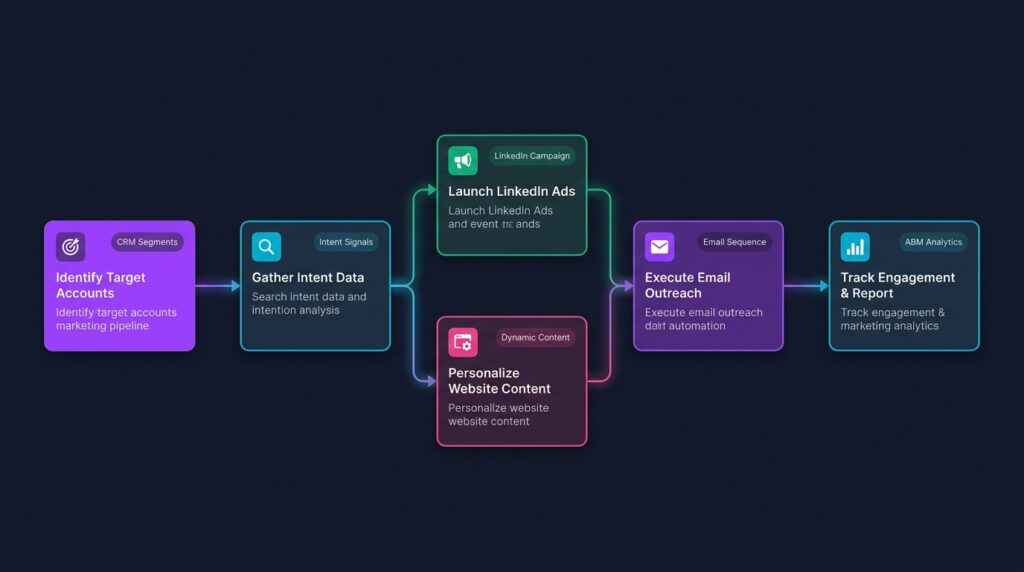
Account-Based Marketing (ABM) Automation for B2B: Low-Code Playbooks with Make & n8n

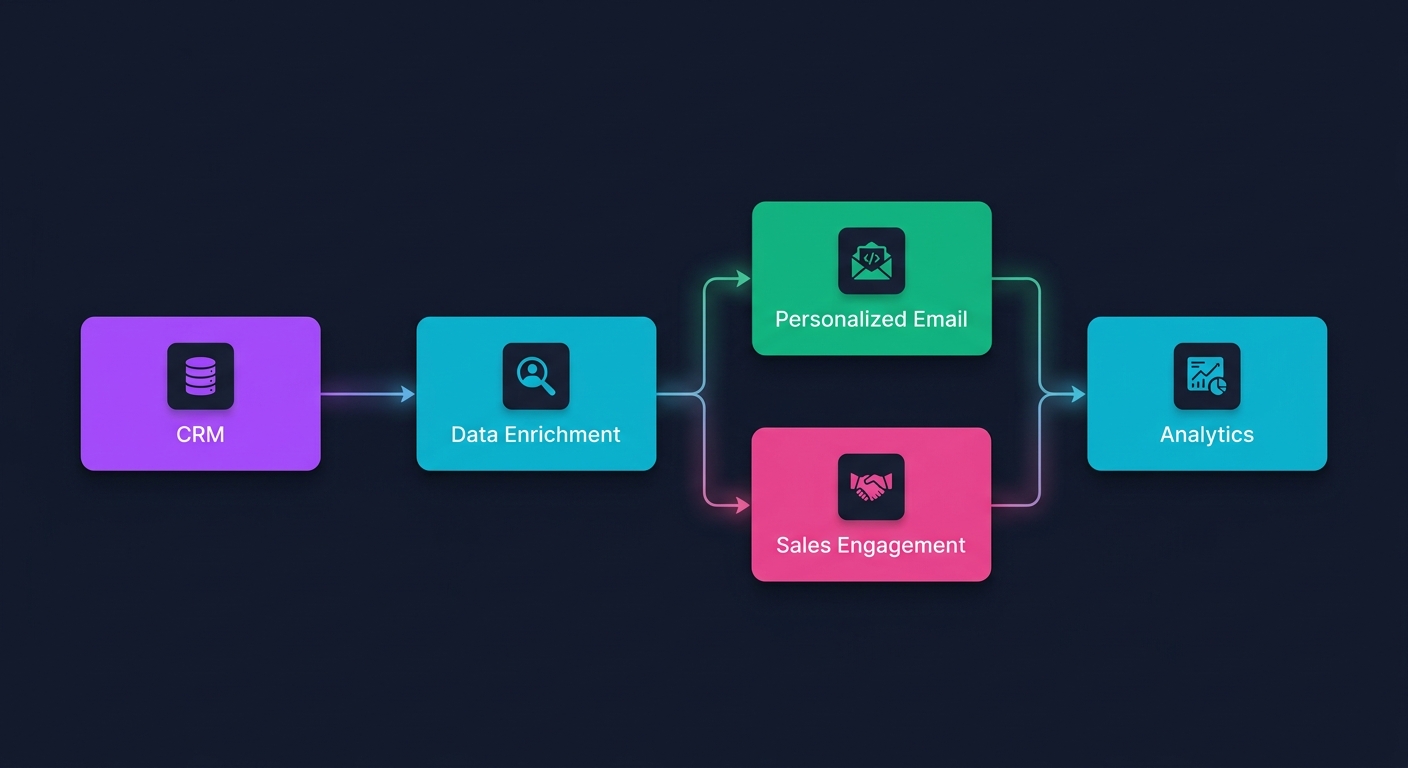
Account-Based Marketing (ABM) Automation for B2B: Low-Code Playbooks with Make & n8n
In today’s competitive B2B landscape, a one-size-fits-all marketing approach is no longer effective. Account-Based Marketing (ABM) has emerged as a powerful strategy, focusing marketing and sales efforts on a defined set of target accounts. However, executing ABM at scale can be resource-intensive. This is where low-code ABM automation for B2B services, powered by platforms like Make (formerly Integromat) and n8n, becomes a game-changer. By leveraging these intuitive tools, businesses can streamline complex ABM workflows, personalize outreach, and drive significant revenue growth without requiring extensive coding expertise.
The Power of ABM in B2B
Traditional B2B marketing often casts a wide net, hoping to attract a broad audience. ABM, conversely, is a highly targeted strategy that treats individual accounts as markets of one. This approach offers several key advantages:
- Increased Relevance: By understanding the specific needs, challenges, and goals of each target account, marketing and sales teams can deliver highly personalized messages and offers.
- Improved Sales Alignment: ABM fosters closer collaboration between marketing and sales teams, ensuring a unified approach to engaging target accounts.
- Higher ROI: Focusing resources on high-value accounts typically leads to shorter sales cycles, larger deal sizes, and a better return on marketing investment.
- Enhanced Customer Experience: Personalized engagement throughout the buyer’s journey creates a more positive and memorable experience for prospects.
Despite its benefits, implementing ABM manually is a monumental task. It requires meticulous data management, coordinated outreach across multiple channels, and continuous monitoring of account engagement. This is precisely why automation is not just beneficial, but essential for successful ABM.
Why Low-Code ABM Automation is the Future
The complexity of ABM workflows often deters businesses from fully embracing its potential. This is where low-code automation platforms like Make and n8n step in, democratizing ABM execution. These platforms allow users to visually design and automate intricate processes using drag-and-drop interfaces and pre-built connectors, significantly reducing the need for custom coding.
BMAIKR: Your Partner in Intelligent Automation
At BMAIKR, we understand the transformative power of automation for B2B success. Our expertise spans across cutting-edge AI solutions, robust Web Development, and strategic Digital Marketing. We specialize in helping businesses harness the power of automation to optimize their ABM strategies. Our team can help you design, implement, and manage sophisticated low-code playbooks that integrate seamlessly with your existing tech stack, ensuring your ABM efforts are both efficient and effective.
The Advantages of Make and n8n for ABM
Make and n8n are leading low-code integration and automation platforms that empower businesses to build custom workflows without deep technical knowledge. Here’s why they are ideal for ABM automation:
1. Visual Workflow Building
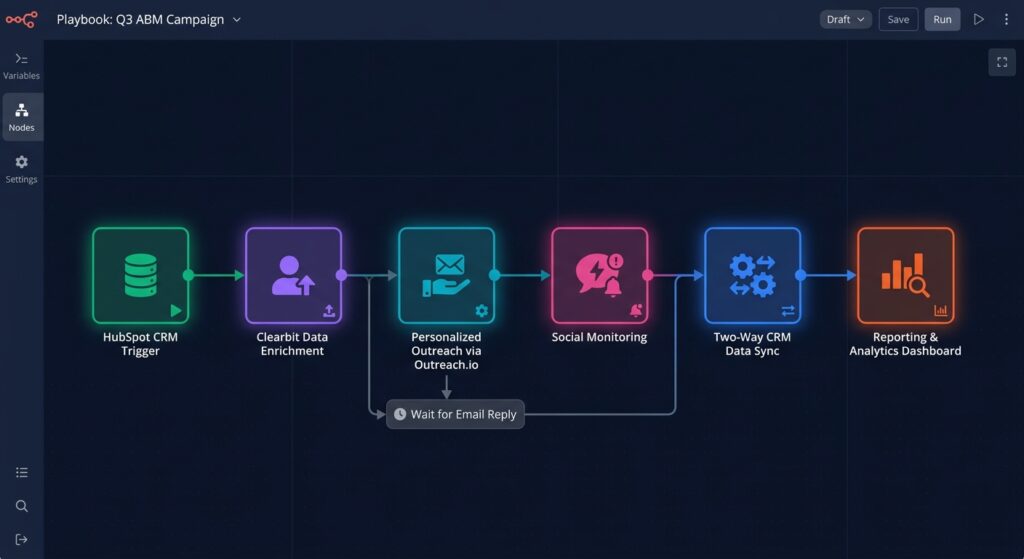
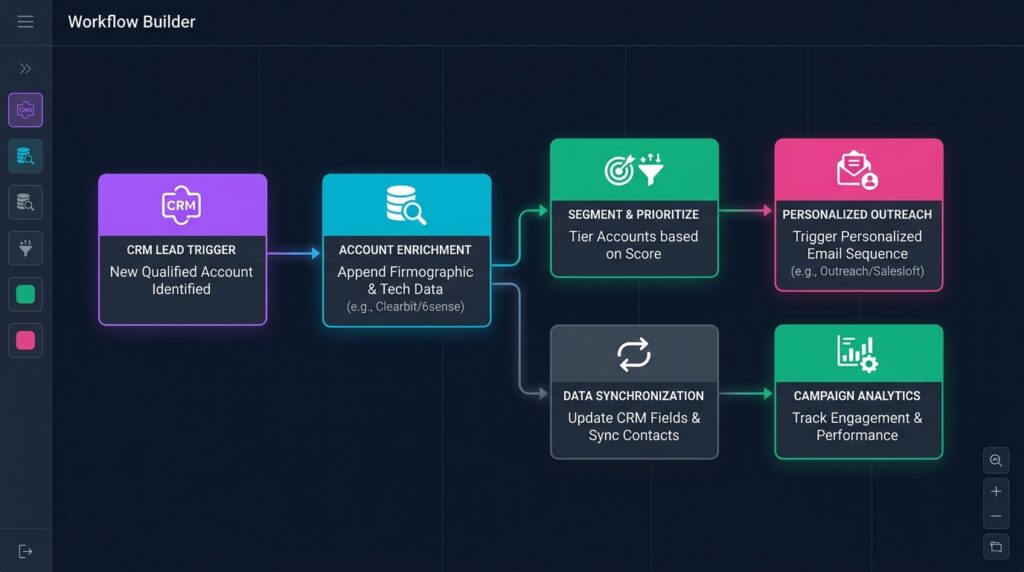
Both Make and n8n offer intuitive visual interfaces where you can map out your ABM processes. You can drag and drop modules, connect them logically, and define the triggers and actions for each step. This visual approach makes complex automation accessible to marketers and sales professionals.
2. Extensive Integration Capabilities
ABM relies on data flowing seamlessly between various tools. Make and n8n boast hundreds of pre-built connectors for popular CRM systems (Salesforce, HubSpot), marketing automation platforms (Marketo, Pardot), sales engagement tools (Outreach, SalesLoft), data enrichment services, and communication platforms (Slack, Email). This allows for end-to-end automation of your ABM playbooks.
3. Customization and Flexibility
While low-code, these platforms offer significant customization. You can add custom code snippets when needed, manipulate data, and build complex conditional logic to ensure your automation precisely matches your ABM strategy. This flexibility is crucial for tailoring campaigns to specific account segments.
4. Scalability and Efficiency
Automating repetitive tasks frees up your sales and marketing teams to focus on high-value activities like strategic account planning and personalized engagement. These platforms can handle large volumes of data and complex sequences, allowing your ABM program to scale effectively as your business grows.
5. Cost-Effectiveness
Compared to custom-built enterprise solutions, low-code platforms offer a more cost-effective way to achieve sophisticated automation. They reduce the reliance on expensive developer resources and accelerate the time-to-value for your ABM initiatives.
Building Your Low-Code ABM Playbooks: Key Scenarios
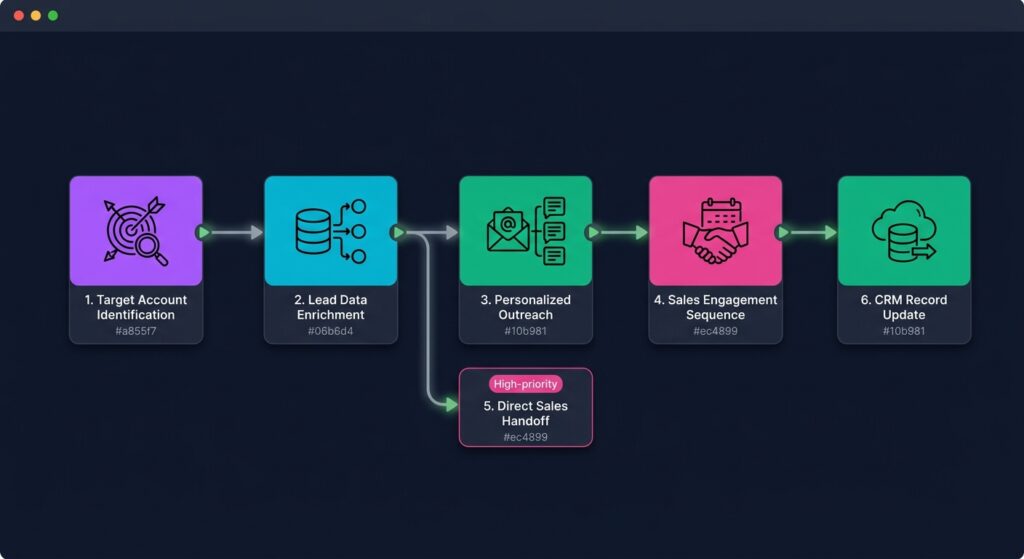
Let’s explore some practical ABM automation playbooks you can build using Make or n8n:
Scenario 1: Personalized Content Delivery Based on Account Engagement
Goal: Deliver relevant content to target accounts based on their website activity or engagement with previous campaigns.
Workflow:
- Trigger: A contact from a target account visits a specific high-intent page on your website (e.g., pricing page, product demo request).
- Action 1: Look up the account details in your CRM.
- Action 2: Identify the account’s industry and pain points.
- Action 3: Based on the page visited and account profile, select the most relevant case study or whitepaper.
- Action 4: Send a personalized email to the account’s primary contact (or assigned sales rep) with a link to the content and a suggestion for a follow-up call.
- Action 5: Log the activity in the CRM.
Scenario 2: Automated Ideal Customer Profile (ICP) Enrichment and Scoring
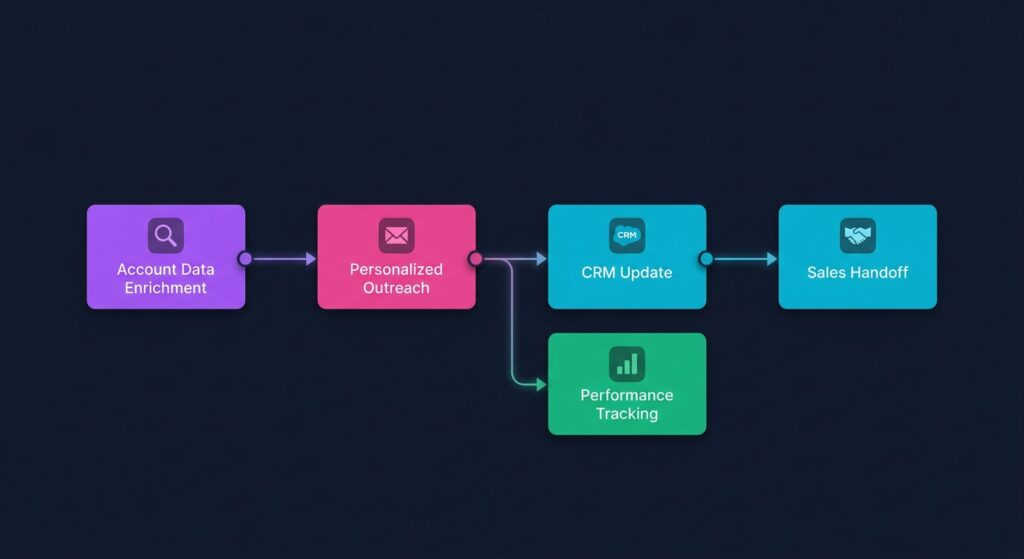
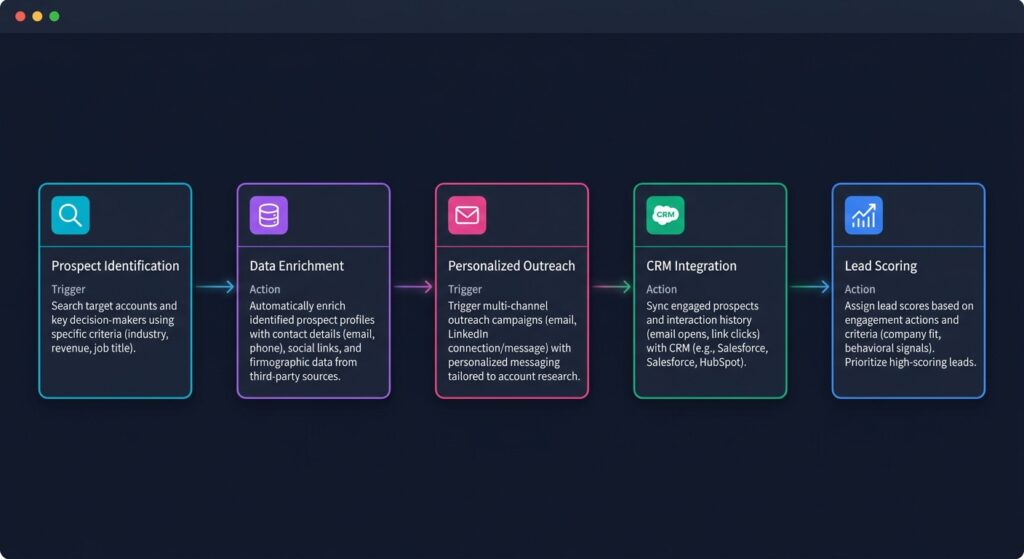
Goal: Continuously enrich and score target accounts to identify those ready for sales engagement.
Workflow:
- Trigger: New lead or contact is added to the CRM, or an existing contact’s information is updated.
- Action 1: Use a data enrichment tool (e.g., Clearbit, ZoomInfo via API) to gather firmographic and technographic data for the associated account.
- Action 2: Compare the enriched data against your defined ICP criteria.
- Action 3: Calculate an ICP score for the account.
- Action 4: If the score meets a certain threshold, trigger a notification to the assigned sales development representative (SDR) via Slack or email.
- Action 5: Update the account record in the CRM with the enrichment data and ICP score.
Scenario 3: Multi-Channel Outreach Orchestration for New Target Accounts
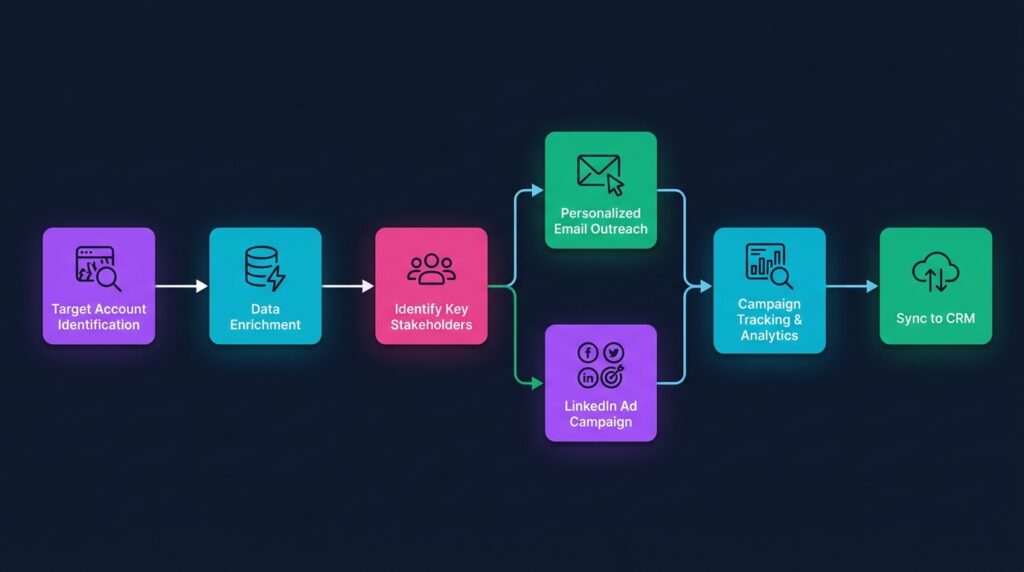
Goal: Initiate a coordinated, multi-touchpoint outreach sequence when a new high-value account is added to the target list.
Workflow:
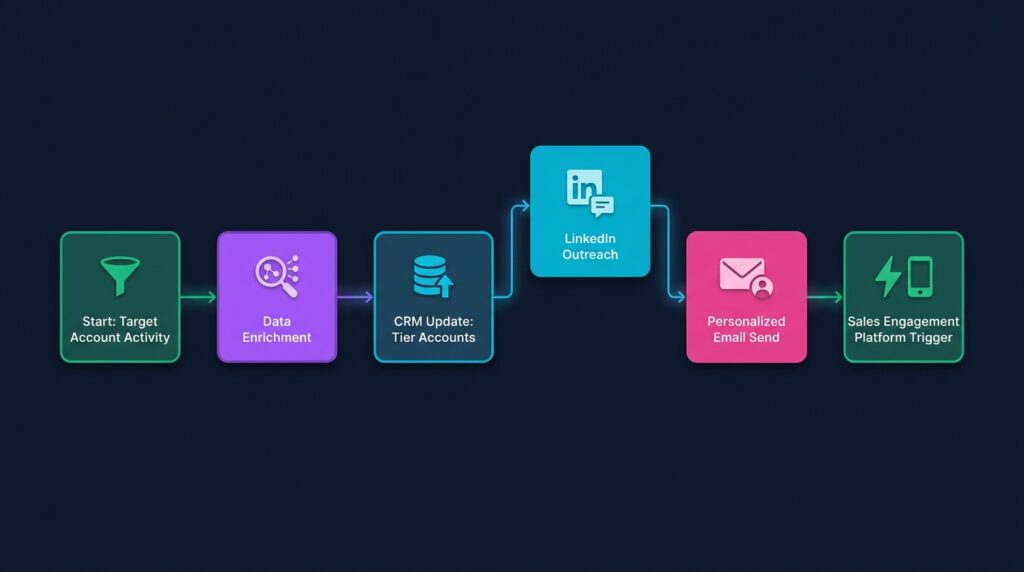
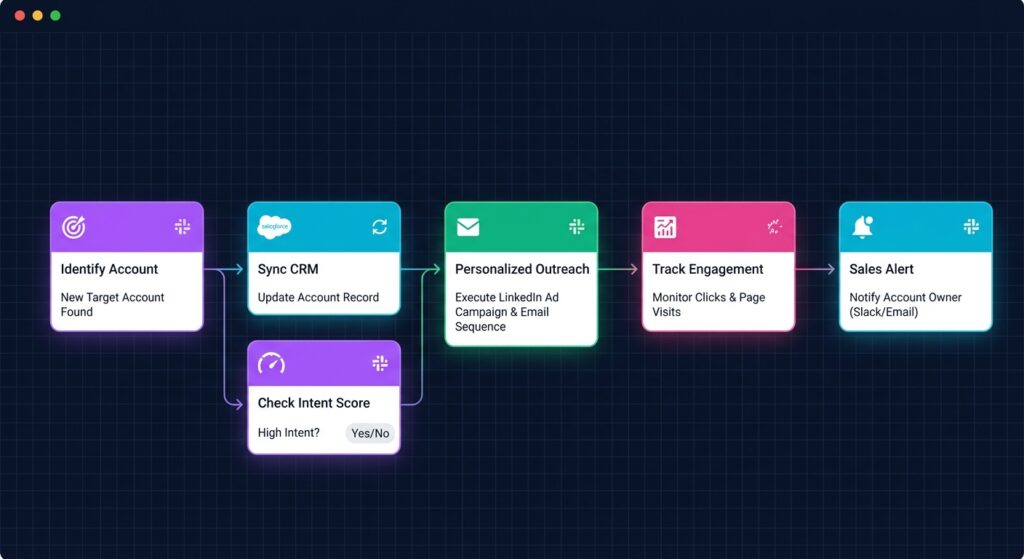
- Trigger: A new account is added to a specific “Target Account” list in your CRM.
- Action 1: Identify key contacts within the account using a sales intelligence tool.
- Action 2: Send a personalized LinkedIn connection request to the primary contact.
- Action 3: After a set delay (e.g., 2 days), send a personalized introductory email from the sales rep.
- Action 4: If no response after another delay (e.g., 3 days), trigger a follow-up email or a social media mention.
- Action 5: Schedule a task in the CRM for the sales rep to review account engagement and plan the next steps.
Choosing the Right Tool: Make vs. n8n
Both Make and n8n are powerful low-code automation platforms, but they have distinct strengths that might make one a better fit for your specific needs:
Make (formerly Integromat)
- Strengths: Highly visual and intuitive interface, extensive library of pre-built apps and templates, robust error handling and logging, strong community support, and a well-established platform. Excellent for complex, multi-step integrations and workflows.
- Best For: Businesses that prioritize ease of use, visual workflow design, and a wide range of integrations out-of-the-box. Ideal for teams with varying technical skill levels.
n8n
- Strengths: Open-source, offering greater flexibility and control, especially for self-hosting and advanced customization. Strong focus on developer experience with a powerful API and CLI. Can be more cost-effective for high-volume usage if self-hosted.
- Best For: Businesses that require deep customization, have in-house development resources, or prefer an open-source solution for greater control and potential cost savings. Excellent for integrating with custom applications or internal tools.
Ultimately, the best choice depends on your team’s technical expertise, budget, hosting preferences, and the specific complexity of your ABM automation requirements. Many businesses find value in experimenting with both to see which platform aligns best with their operational style.
The BMAIKR Advantage in ABM Automation
While low-code platforms empower you to build your own playbooks, the strategic design and implementation are crucial for success. BMAIKR offers a comprehensive suite of services to ensure your ABM automation initiatives deliver maximum impact:
- Strategic Consultation: We help you define your ABM strategy, identify target accounts, and map out the most effective automation playbooks.
- Platform Expertise: Our team has deep expertise in both Make and n8n, allowing us to recommend and implement the best platform for your needs.
- Custom Workflow Development: We build and optimize complex, end-to-end automation workflows tailored to your unique business processes.
- Integration Services: We ensure seamless integration between your ABM automation tools and your existing CRM, marketing automation, and sales tech stack.
- AI-Powered Insights: We leverage AI to enhance your ABM data enrichment, predictive scoring, and personalization efforts, making your campaigns smarter and more effective.
By partnering with BMAIKR, you gain access to a team of experts dedicated to transforming your ABM strategy through intelligent automation. We help you move beyond manual processes and unlock the full potential of targeted marketing and sales engagement.
Conclusion: Automate Your Way to ABM Success
Account-Based Marketing is no longer a niche strategy; it’s a necessity for B2B growth. By embracing low-code ABM automation for B2B services with platforms like Make and n8n, you can execute sophisticated, personalized campaigns at scale, driving deeper engagement with your most valuable accounts. These tools democratize automation, making powerful ABM strategies accessible to a wider range of businesses.
Whether you’re looking to streamline lead enrichment, personalize content delivery, or orchestrate multi-channel outreach, low-code automation provides the flexibility and power to achieve your goals. Don’t let manual processes hold your ABM strategy back. Embrace the future of targeted marketing and sales.
Ready to supercharge your ABM efforts with intelligent automation? Contact BMAIKR today for a free consultation and discover how our expert services can help you build and implement powerful low-code ABM playbooks tailored to your business.