Account-Based Marketing (ABM) Automation for B2B: Low-Code Playbooks with Make & n8n

Account-Based Marketing (ABM) Automation for B2B: Low-Code Playbooks with Make & n8n
In today’s competitive B2B landscape, a one-size-fits-all marketing approach simply doesn’t cut it. Account-Based Marketing (ABM) has emerged as a powerful strategy, focusing marketing and sales efforts on a defined set of target accounts. However, executing ABM at scale can be resource-intensive. This is where low-code ABM automation for B2B services becomes a game-changer. By leveraging intuitive platforms like Make (formerly Integromat) and n8n, businesses can build sophisticated, automated ABM playbooks without requiring extensive coding expertise. This post will explore how to harness the power of low-code automation to supercharge your ABM efforts, making them more efficient, personalized, and effective.
Why ABM Automation is Crucial for B2B Success
Traditional marketing often casts a wide net, hoping to catch a few valuable leads. ABM, conversely, is about precision. It involves identifying high-value target accounts and tailoring campaigns specifically to their needs, pain points, and business objectives. This personalized approach leads to higher engagement, shorter sales cycles, and increased customer lifetime value. However, the manual execution of ABM can be a significant bottleneck:
- Data Silos: Information about target accounts is often scattered across CRM, marketing automation platforms, sales engagement tools, and other data sources.
- Manual Personalization: Crafting unique messages and offers for each account and contact is time-consuming and prone to errors.
- Coordination Challenges: Aligning sales and marketing efforts across multiple touchpoints and accounts requires seamless communication and execution.
- Scalability Issues: As the number of target accounts grows, manual processes become unsustainable.
This is precisely why low-code ABM automation for B2B services is not just a luxury, but a necessity for businesses aiming for sustained growth. Automation bridges these gaps, enabling personalized engagement at scale.
The Power of Low-Code Automation Platforms: Make & n8n
Make and n8n are leading low-code integration platforms that allow users to connect different applications and automate workflows visually. They operate on a principle of “if this, then that,” enabling you to build complex automations by dragging and dropping modules and defining triggers and actions. This visual approach democratizes automation, making it accessible to marketers, sales operations professionals, and business analysts.
Make (formerly Integromat) for ABM
Make offers a powerful visual builder where you can create intricate scenarios connecting hundreds of popular applications. Its strengths lie in its flexibility, extensive app library, and robust error handling capabilities. For ABM, Make can be used to:
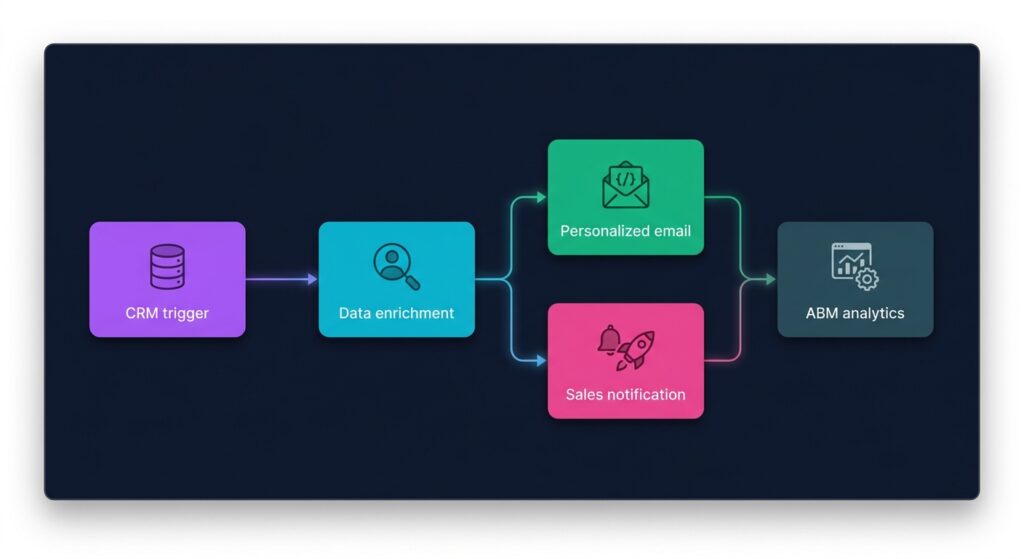
- Synchronize Data: Automatically pull account data from your CRM (e.g., Salesforce, HubSpot) and enrich it with information from other sources like LinkedIn Sales Navigator or company databases.
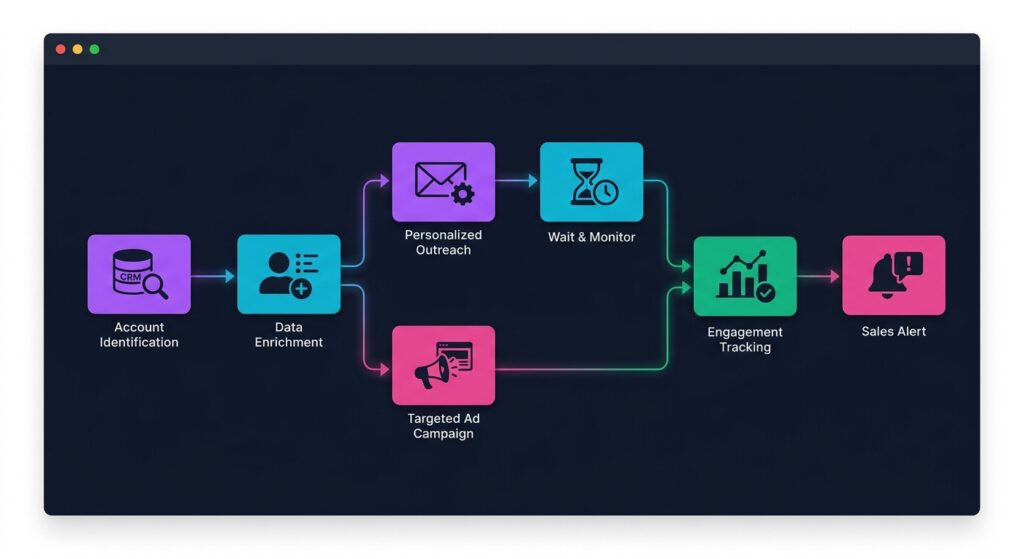
- Trigger Personalized Campaigns: When an account meets specific criteria (e.g., a new executive joins, a funding round is announced), trigger personalized email sequences or ad campaigns.
- Automate Sales Outreach: Create sequences of tasks for sales reps, like sending personalized LinkedIn messages or scheduling follow-up calls based on account engagement.
- Monitor Account Activity: Set up alerts for significant changes in target account behavior, such as website visits, content downloads, or social media mentions.
n8n for ABM
n8n is an open-source workflow automation tool that offers a similar visual interface. It’s particularly appealing for its self-hosting capabilities, giving businesses greater control over their data and workflows. n8n excels at:
- Custom Integrations: Easily connect to internal tools or niche applications that might not have pre-built connectors in other platforms.
- Complex Logic: Build sophisticated branching logic and conditional workflows to handle nuanced ABM scenarios.
- Data Transformation: Process and transform data between different systems to ensure consistency and accuracy for your ABM efforts.
- Cost-Effectiveness: The open-source nature can offer significant cost savings, especially for larger deployments.
Building Your Low-Code ABM Playbooks: Practical Examples
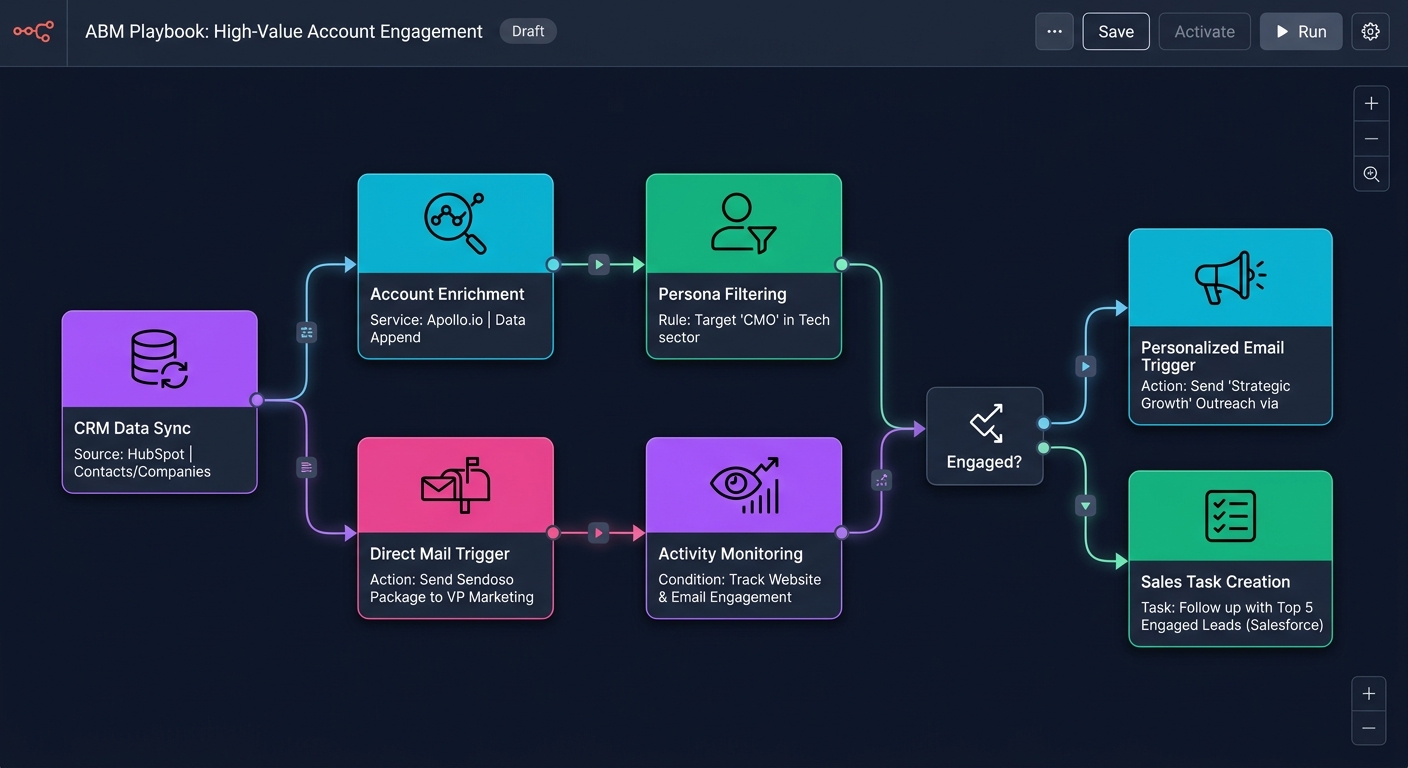
Let’s dive into some concrete examples of how you can implement low-code ABM automation for B2B services using Make or n8n. These playbooks can be adapted to fit various business models and target industries.
Playbook 1: Ideal Customer Profile (ICP) Identification & Enrichment
Goal: Automatically identify and enrich new leads that fit your ICP, flagging them for sales attention.
Tools: CRM (e.g., HubSpot), LinkedIn Sales Navigator, Clearbit/ZoomInfo (for data enrichment), Make/n8n.
Workflow:
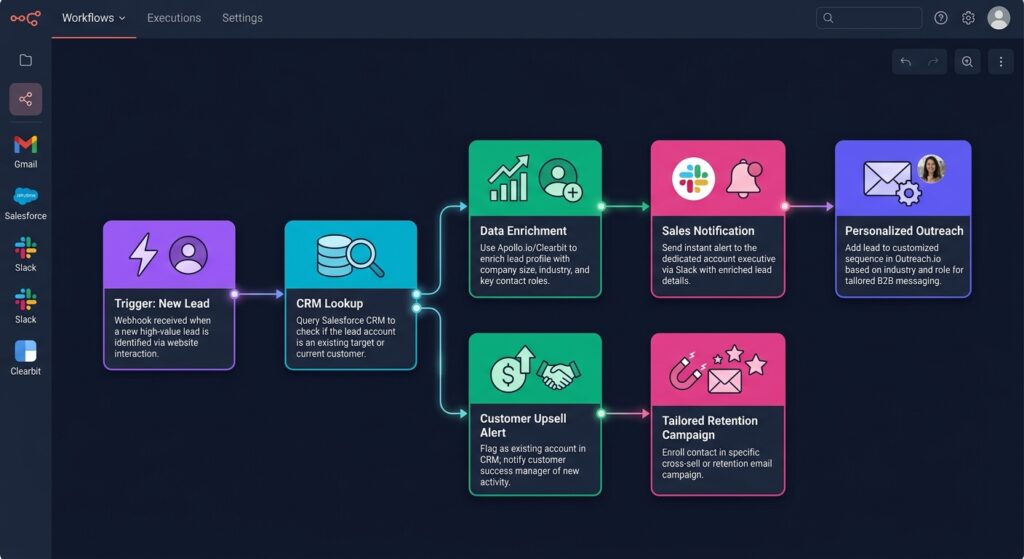
- Trigger: A new lead is created in your CRM.
- Action: Use LinkedIn Sales Navigator integration to search for contacts within that lead’s company.
- Action: If the company matches your ICP criteria (industry, size, location), use a data enrichment tool (like Clearbit) to gather more firmographic and technographic data.
- Action: Update the lead record in your CRM with the enriched data and assign a score based on ICP fit.
- Action: If the score exceeds a certain threshold, create a task for the assigned sales rep in your CRM or project management tool to follow up.
This playbook ensures that your sales team focuses on the most promising accounts, saving valuable time and resources.
Playbook 2: Triggered Content Personalization & Engagement
Goal: Deliver highly relevant content to target accounts based on their specific needs or recent activities.
Tools: CRM, Marketing Automation Platform (e.g., Marketo, Pardot), Website Analytics (e.g., Google Analytics), Make/n8n.
Workflow:
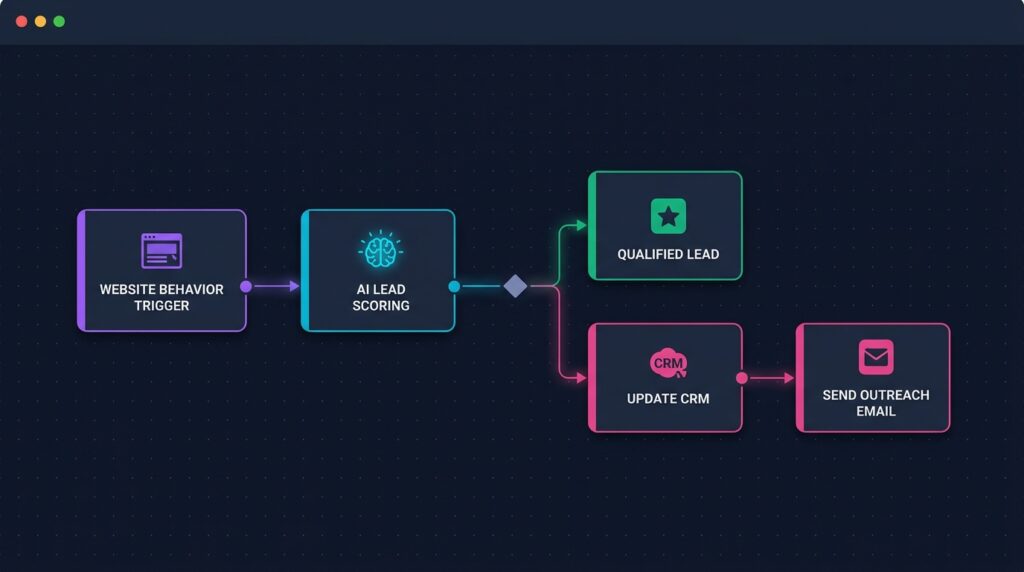
- Trigger: A target account’s website activity shows interest in a specific product or service (e.g., multiple visits to a particular product page).
- Action: Retrieve account and contact information from your CRM.
- Action: Based on the product page visited, select a relevant piece of content (e.g., a case study, whitepaper, webinar recording).
- Action: Use your marketing automation platform to send a personalized email to key contacts within that account, featuring the relevant content.
- Action: Log the engagement in the CRM and potentially trigger a follow-up task for sales if engagement is high.
This approach ensures that your messaging is always timely and relevant, increasing the likelihood of conversion. For businesses looking to enhance their online presence and reach, robust web development is foundational, ensuring seamless user experiences that complement these marketing efforts.
Playbook 3: Post-Event Follow-Up & Nurturing
Goal: Automate personalized follow-ups and nurturing sequences for leads generated from industry events or webinars.
Tools: Event Management Platform (e.g., Cvent), CRM, Email Marketing Tool, Make/n8n.
Workflow:
- Trigger: New leads are exported from an event platform.
- Action: Import leads into your CRM, segmenting them based on event attendance and interest level.
- Action: For high-priority leads, trigger a personalized email from a sales rep, referencing their specific interest shown at the event.
- Action: For other attendees, enroll them in a relevant nurture sequence based on their expressed interests.
- Action: Schedule follow-up reminders for sales reps to check in at appropriate intervals.
This ensures no lead falls through the cracks and that engagement remains high post-event.
Why BMAIKR is Your Ideal Partner for ABM Automation
Implementing effective ABM automation requires a strategic blend of marketing expertise, technical know-how, and the right tools. At BMAIKR, we specialize in helping B2B companies like yours harness the power of automation to achieve their growth objectives. Here’s why partnering with us makes a difference:
Deep Expertise in B2B Strategies
Our team understands the nuances of B2B sales and marketing. We don’t just build automations; we craft strategies that align with your business goals, target audience, and sales cycle. We know that successful ABM is about more than just technology; it’s about understanding customer journeys and delivering value at every touchpoint.
Mastery of Low-Code Automation Tools
We are experts in platforms like Make and n8n. Our specialists can design, build, and implement complex, custom ABM playbooks tailored to your unique needs. Whether you need to integrate disparate systems, automate data enrichment, or orchestrate multi-channel campaigns, we have the skills to deliver.
Seamless Integration Capabilities
Your existing tech stack is crucial. We ensure that our automation solutions integrate seamlessly with your CRM, marketing automation platforms, sales engagement tools, and other essential software. This creates a unified ecosystem where data flows freely, enabling true 360-degree views of your target accounts. Our expertise in AI and Business Automation allows us to build intelligent workflows that adapt and learn.
Focus on Measurable Results
We believe in data-driven success. Our ABM automation solutions are designed to be measurable. We help you define key performance indicators (KPIs) and set up tracking mechanisms to monitor the effectiveness of your campaigns. This allows for continuous optimization and ensures that your investment in automation delivers a strong return.
Scalable and Future-Proof Solutions
As your business grows, your ABM strategy needs to scale with it. We build flexible and scalable automation solutions that can adapt to your evolving needs. Whether you’re expanding into new markets or targeting a larger set of accounts, our playbooks are designed for long-term success.
Choosing the Right Path: ABM Automation vs. Traditional Marketing
The decision to invest in ABM automation is a strategic one. While traditional, broad-stroke marketing can still yield results, it often comes with lower conversion rates and higher customer acquisition costs. ABM automation, on the other hand, offers a more targeted and efficient approach.
When Traditional Marketing Might Suffice:
- Very Early-Stage Startups: When brand awareness is the primary goal and the target audience is extremely broad.
- Highly Commoditized Products: For products with little differentiation where price is the main deciding factor.
- Extremely Limited Budget: When resources are so constrained that even low-code tools are out of reach.
When ABM Automation is the Clear Winner:
- High-Value Target Accounts: When the lifetime value of a customer justifies a more personalized, high-touch approach.
- Complex Sales Cycles: For products or services that require multiple stakeholders and a longer decision-making process.
- Competitive Markets: When differentiation and personalized engagement are key to standing out.
- Need for Efficiency and Scalability: When you want to reach more of the right accounts without proportionally increasing headcount.
- Desire for Stronger Customer Relationships: ABM fosters deeper connections by demonstrating a clear understanding of client needs.
The trend in B2B is undeniably towards personalization and efficiency. Low-code ABM automation platforms like Make and n8n are making this sophisticated strategy accessible to a wider range of businesses. By leveraging these tools, you can move beyond generic outreach and engage your most valuable prospects with precision and impact.
Ready to Revolutionize Your ABM Strategy?
Don’t let manual processes hold back your ABM efforts. Embrace the power of low-code automation to connect with your ideal customers more effectively, drive engagement, and accelerate revenue growth. At BMAIKR, we’re passionate about helping B2B companies unlock their full potential through intelligent automation and cutting-edge digital strategies.
Contact us today for a free consultation and discover how BMAIKR can help you build powerful, automated ABM playbooks tailored to your business. Let’s transform your approach to B2B marketing and sales together!