What an AI Website Chatbot Should Actually Do for Your Business
Home»What an AI Website Chatbot Should Actually Do for Your Business
AI Agents · BMaiKR Team ·

A chatbot on a business website is usually judged by one thing: does it answer questions? That is the lowest bar. A visitor who gets a correct answer and then leaves is not much better off than one who read the FAQ page, and the business learns nothing from the conversation.
The better question is what the chatbot does after the answer. That is where the value sits, and it is where most off-the-shelf chat widgets stop.
Answer from your own information, not the internet
A chatbot that answers from a general AI model will sound confident about things that are not true for your business: opening hours, prices, which services you offer in which region. The fix is to have it answer from your own content, your website pages, service descriptions, policies and FAQs, and to say so plainly when the answer is not in that material.
When you test a chatbot, ask it something your business does not do. If it invents an answer instead of saying it does not know, it will eventually do the same thing to a customer.
Turn conversations into leads
Someone who asks a detailed question about your service is a warm lead. A useful chatbot asks for a name and contact details at the right moment, records what the visitor was interested in, and sends that to the place your team already works, whether that is an inbox, a CRM or a ticket system. A transcript nobody reads is not lead capture.
Book the appointment, not just mention it
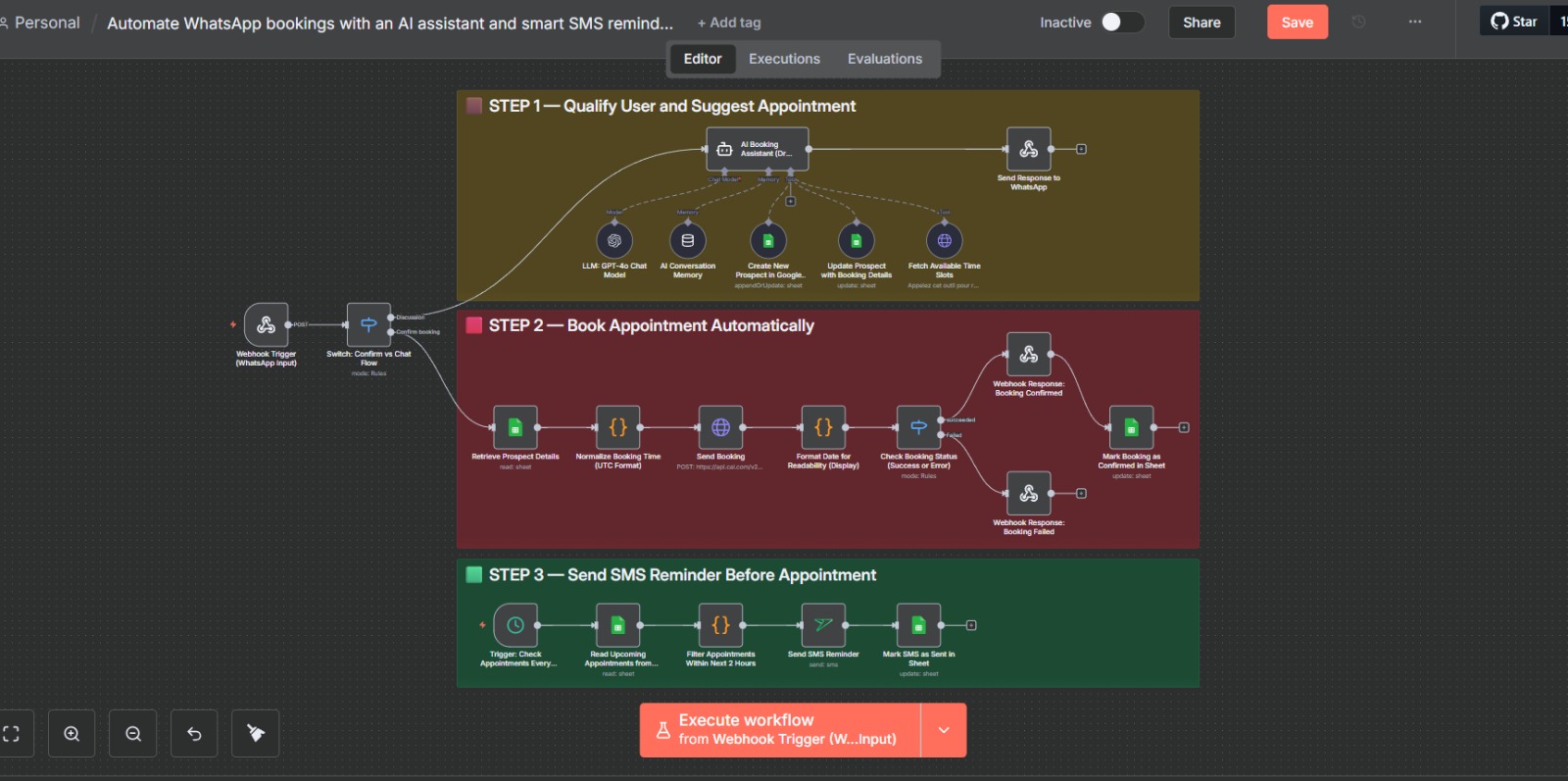
If the natural next step is a call, a consultation or a visit, the chatbot should be able to offer real time slots from your calendar and confirm a booking. Telling a visitor to "contact us to schedule" adds a step at exactly the point where they were ready to commit.
Know when to hand over
Some questions should go to a person: complaints, unusual requests, anything involving money or contracts. A good setup recognises these and passes the conversation on with its context, so the customer does not have to repeat themselves.
Treat it as a data-processing system
A chatbot collects personal data the moment someone types their name or email. That means it needs a clear privacy notice, a defined place where conversations are stored, a retention period, and a list of the providers that process the text. For businesses in the EU, those answers are part of GDPR compliance, not an optional extra.
How we approach it
Aiko, our Custom AI Concierge, is built around these points: it answers from the client's own content, captures leads, connects to calendars, and can be extended with a voice agent. If you are comparing options, the checklist above applies to any provider, including us.