Accelerating Post-Merger Integration for B2B: Streamlining Data & Operations with AI & Low-Code Automation

Accelerating Post-Merger Integration for B2B: Streamlining Data & Operations with AI & Low-Code Automation
In the dynamic world of B2B, mergers and acquisitions (M&A) are strategic maneuvers designed to fuel growth, expand market share, and enhance competitive advantage. However, the success of any M&A hinges critically on the effectiveness of post-merger integration (PMI). A common stumbling block in PMI is the complex and often chaotic process of merging disparate data systems and operational workflows. This is precisely where the power of AI low-code automation for B2B post-merger integration becomes not just beneficial, but essential. BMAIKR leverages cutting-edge AI and low-code solutions to transform the integration process from a daunting challenge into a streamlined, efficient, and value-generating opportunity.
The Perils of Inefficient Post-Merger Integration
When two or more companies merge, they bring with them their own unique data structures, IT infrastructures, business processes, and company cultures. Without a robust integration strategy, this can lead to:
Data Silos and Inconsistencies
Different CRM systems, ERP platforms, and databases often contain overlapping or conflicting information. Merging these without proper governance can result in data inaccuracies, making it difficult to gain a unified view of customers, operations, or financials. This lack of a single source of truth cripples decision-making and operational efficiency.
Operational Disruptions
Integrating workflows across departments like sales, marketing, finance, and customer support can be a monumental task. Manual reconciliation of processes, duplicated efforts, and incompatible systems lead to significant downtime, reduced productivity, and a negative impact on customer experience.
Loss of Key Talent and Morale Issues
A poorly managed integration process can create uncertainty and frustration among employees, leading to a decline in morale and the potential loss of valuable talent. Resistance to change and a lack of clear communication exacerbate these issues.
Missed Synergies and ROI
The anticipated cost savings and revenue synergies that drive M&A deals can be severely undermined by prolonged and inefficient integration. Delays and unforeseen complications eat into the projected return on investment (ROI), diminishing the strategic value of the acquisition.
Why BMAIKR’s AI & Low-Code Approach is Superior for PMI
At BMAIKR, we understand the intricate challenges of B2B post-merger integration. Our approach, centered around AI low-code automation for B2B post-merger integration, offers a distinct advantage by providing speed, accuracy, and scalability. We don’t just integrate systems; we build a foundation for future growth and agility.
Intelligent Data Harmonization with AI
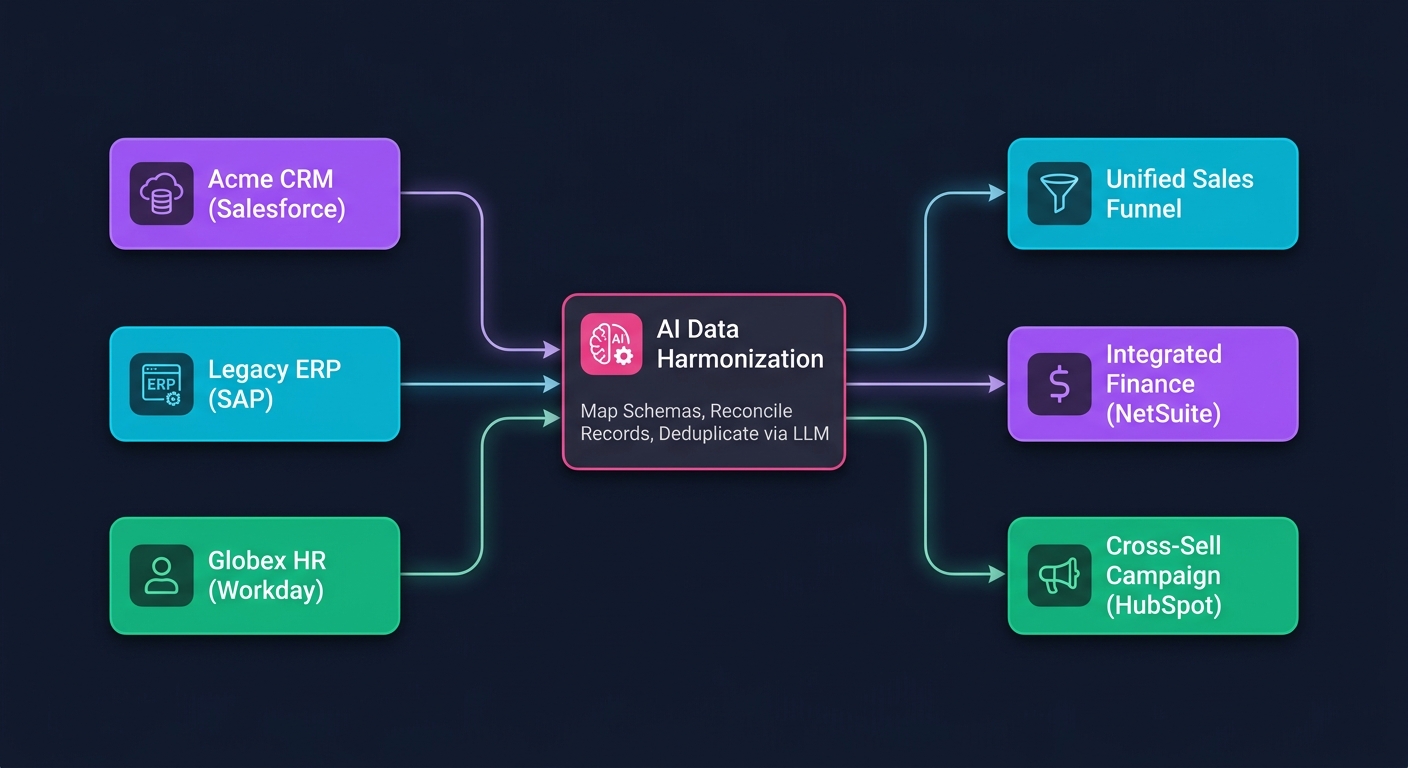
Our AI-powered solutions can analyze, cleanse, and harmonize data from disparate sources with remarkable speed and accuracy. We employ machine learning algorithms to identify data patterns, resolve duplicates, standardize formats, and enrich existing datasets. This ensures a unified, reliable data foundation for the merged entity, enabling:
- Accurate Customer 360 Views: Consolidate customer data from all sources for a comprehensive understanding of client relationships.
- Streamlined Financial Reporting: Integrate financial data for faster, more accurate reporting and compliance.
- Enhanced Operational Insights: Gain a clear picture of supply chains, inventory, and production processes.
Accelerated Workflow Automation with Low-Code
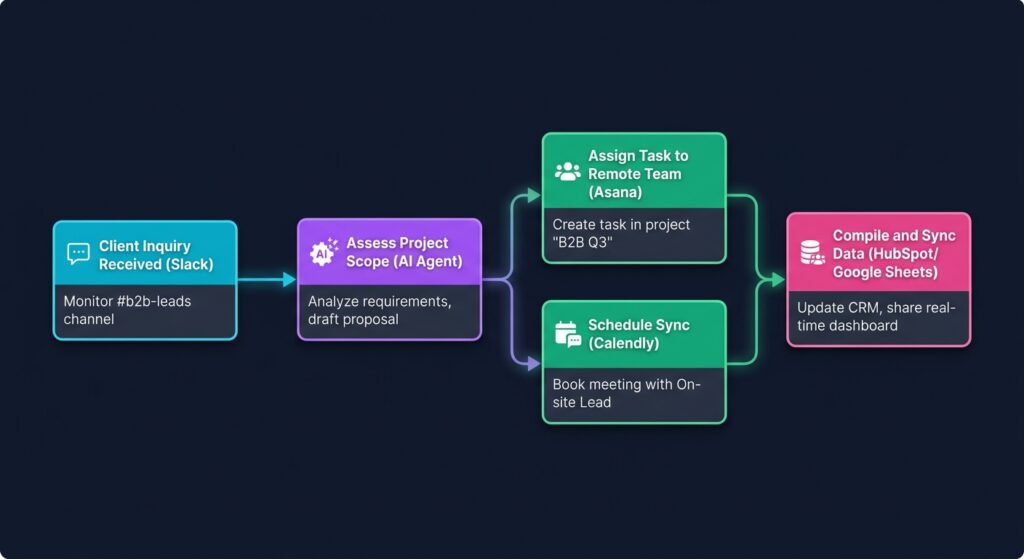
Low-code platforms, combined with AI, allow us to rapidly develop and deploy automated workflows that bridge the gaps between legacy systems and new processes. This significantly reduces the need for extensive custom coding, leading to faster implementation times and greater flexibility. Our low-code solutions facilitate:
- Rapid Process Integration: Quickly build and deploy automated workflows for sales, marketing, customer service, and back-office operations.
- Seamless System Interoperability: Connect disparate applications and databases without complex API development.
- Agile Adaptation: Easily modify and scale workflows as business needs evolve post-integration.
Expertise in B2B Digital Transformation
BMAIKR brings deep expertise in B2B environments. We understand the nuances of B2B sales cycles, customer relationship management, and operational complexities. Our team works closely with your stakeholders to ensure that the integration strategy aligns with your overarching business objectives. We specialize in transforming businesses through advanced technologies, including our comprehensive AI and Business Automation services, which are critical for optimizing post-merger operations.
Reduced Risk and Faster Time-to-Value
By automating complex integration tasks and providing clear visibility into data and processes, we significantly reduce the risks associated with M&A. Our agile methodology ensures that you start realizing the benefits of the merger much sooner, accelerating your time-to-value and maximizing the ROI of your strategic investment.
AI vs. Low-Code vs. Traditional Integration: Choosing Your Path
While our integrated AI and low-code approach is often the most powerful solution, understanding the individual strengths of each technology can help in appreciating the synergy. The best choice for your specific PMI challenge depends on your unique requirements, existing infrastructure, and strategic goals.
When to Prioritize AI-Driven Integration:
- Massive Data Volumes: When dealing with terabytes of data from multiple sources, AI excels at pattern recognition, anomaly detection, and intelligent data cleansing.
- Complex Data Relationships: For intricate datasets with many interdependencies, AI can uncover insights and relationships that manual methods would miss.
- Predictive Analytics Needs: If the goal is to leverage integrated data for forecasting, risk assessment, or customer behavior prediction, AI is indispensable.
- Unstructured Data: AI, particularly Natural Language Processing (NLP), is crucial for extracting value from unstructured data like documents, emails, and customer feedback.
When to Prioritize Low-Code Automation:
- Rapid Workflow Development: When speed is paramount and you need to quickly connect systems and automate business processes without extensive coding.
- Bridging System Gaps: For integrating off-the-shelf applications or legacy systems where custom API development is cost-prohibitive or time-consuming.
- Empowering Citizen Developers: Low-code platforms can enable business users with minimal coding knowledge to build and manage simple automations, fostering agility.
- Iterative Process Improvement: When you need to quickly prototype, test, and deploy process changes and then iterate based on feedback.
When Traditional Integration Might Still Play a Role:
Traditional, custom coding and integration platforms (like ESBs or iPaaS) still have their place, particularly for:
- Highly Complex, Mission-Critical Integrations: Where absolute control over every aspect of the integration logic is required, and the systems are deeply intertwined.
- Legacy System Modernization: In some cases, a complete rewrite or deep integration with highly specialized legacy systems might necessitate traditional development.
- Specific Compliance Requirements: Certain highly regulated industries might require granular control and audit trails that are best achieved through custom-built solutions.
However, even in these scenarios, AI and low-code can often augment traditional methods, adding layers of intelligence and agility. For instance, AI can analyze the data being integrated by a traditional system, and low-code can automate the surrounding business processes.
The BMAIKR Advantage: A Holistic Integration Strategy
Our strength lies in our ability to orchestrate these technologies. We don’t see AI and low-code as competing solutions but as complementary forces. We assess your specific PMI challenges and architect a solution that leverages the best of each. Whether it’s using AI to intelligently map data fields between two acquired companies’ ERP systems, or employing low-code to rapidly build a unified customer portal that pulls data from both legacy CRMs, BMAIKR delivers a comprehensive solution.
Our expertise extends to ensuring that your newly integrated systems are not only functional but also optimized for performance and scalability. We also understand the importance of user adoption and change management, ensuring that your teams are equipped and ready to embrace the new, streamlined environment. For businesses looking to enhance their online presence and customer engagement post-merger, our Digital Marketing services can be integrated to ensure a consistent and powerful brand message across all platforms.
Conclusion: Embrace the Future of B2B Integration
Post-merger integration is a critical juncture for any B2B organization. By embracing advanced technologies like AI and low-code automation, you can transform this complex process into a strategic advantage. BMAIKR is your trusted partner in navigating the intricacies of PMI, ensuring that your merged entity operates efficiently, innovates rapidly, and achieves its full growth potential. Don’t let integration challenges hinder your M&A success. Harness the power of AI low-code automation for B2B post-merger integration with BMAIKR.
Ready to streamline your post-merger integration and unlock new levels of operational efficiency? Contact BMAIKR today for a consultation and discover how our AI and low-code solutions can accelerate your success.