Beyond Green Reports: How AI & Automation Drive Eco-Efficiency in B2B Operations for Tangible Environmental Impact

Beyond Green Reports: How AI & Automation Drive Eco-Efficiency in B2B Operations for Tangible Environmental Impact
The Imperative for Eco-Efficiency: Moving Beyond Surface-Level Sustainability
In today’s business landscape, sustainability is no longer a niche concern but a core strategic imperative. While many B2B organizations have embraced ‘green reports’ and public commitments to environmental responsibility, the true challenge lies in translating these intentions into tangible, measurable impact. The focus is shifting from mere reporting to genuine eco-efficiency – optimizing operations to minimize environmental footprint while simultaneously enhancing productivity and profitability. This is where the transformative power of **AI automation strategies for eco-efficient B2B operations** becomes indispensable. By leveraging advanced technologies, businesses can unlock unprecedented levels of resource optimization, waste reduction, and energy conservation, driving both environmental stewardship and competitive advantage.
The Limitations of Traditional Approaches
For years, businesses have relied on manual processes, periodic audits, and basic data analysis to manage their environmental impact. While these methods have provided a foundational understanding, they are often:
- Reactive: They identify problems after they’ve occurred, making remediation costly and less effective.
- Labor-Intensive: Manual data collection and analysis are time-consuming, prone to human error, and lack scalability.
- Limited in Scope: They often fail to capture the intricate, real-time interdependencies within complex operational systems.
- Lacking Predictive Power: They cannot forecast future environmental impacts based on operational changes or external factors.
These limitations hinder the ability to achieve deep, systemic eco-efficiency. The ‘green reports’ become a snapshot rather than a dynamic, actionable roadmap. To truly make a difference, businesses need a more intelligent, proactive, and integrated approach.
Introducing AI & Automation: The Pillars of Modern Eco-Efficiency
Artificial Intelligence (AI) and automation are not just buzzwords; they are powerful tools that can fundamentally reshape how B2B operations interact with the environment. At BMAIKR, we understand that integrating these technologies is key to achieving sustainable growth. Here’s how they contribute:
1. Intelligent Resource Management
AI algorithms can analyze vast datasets related to energy consumption, water usage, raw material procurement, and waste generation in real-time. This allows for:
- Predictive Maintenance: AI can predict equipment failures that might lead to inefficient operation or material waste, enabling proactive maintenance and preventing downtime and resource wastage.
- Optimized Inventory: By forecasting demand with greater accuracy, AI minimizes overstocking, reducing the resources tied up in inventory and the potential for spoilage or obsolescence.
- Smart Energy Grids: AI can optimize energy consumption within facilities, shifting usage to off-peak hours or integrating renewable energy sources more effectively.
2. Streamlined Supply Chain Optimization
The supply chain is often a significant contributor to a company’s environmental footprint. AI and automation can revolutionize this area by:
- Route Optimization: AI-powered logistics platforms can calculate the most fuel-efficient routes for transportation, reducing emissions and fuel costs.
- Supplier Performance Monitoring: AI can analyze supplier data to identify those with better environmental practices, encouraging a more sustainable sourcing strategy.
- Demand Forecasting: More accurate demand predictions reduce the need for expedited shipping, which is often more carbon-intensive.
3. Waste Reduction and Circular Economy Enablement
AI can identify patterns and anomalies that lead to waste, enabling businesses to implement targeted reduction strategies. This includes:
- Process Optimization: AI can fine-tune manufacturing or service delivery processes to minimize material scrap and by-products.
- Waste Stream Analysis: AI-powered visual inspection systems can sort waste more effectively, increasing recycling rates and identifying opportunities for material reuse.
- Product Lifecycle Management: AI can help design products for longevity, repairability, and recyclability, supporting a circular economy model.
4. Enhanced Data Analysis and Reporting
Moving beyond static reports, AI provides dynamic, actionable insights. This means:
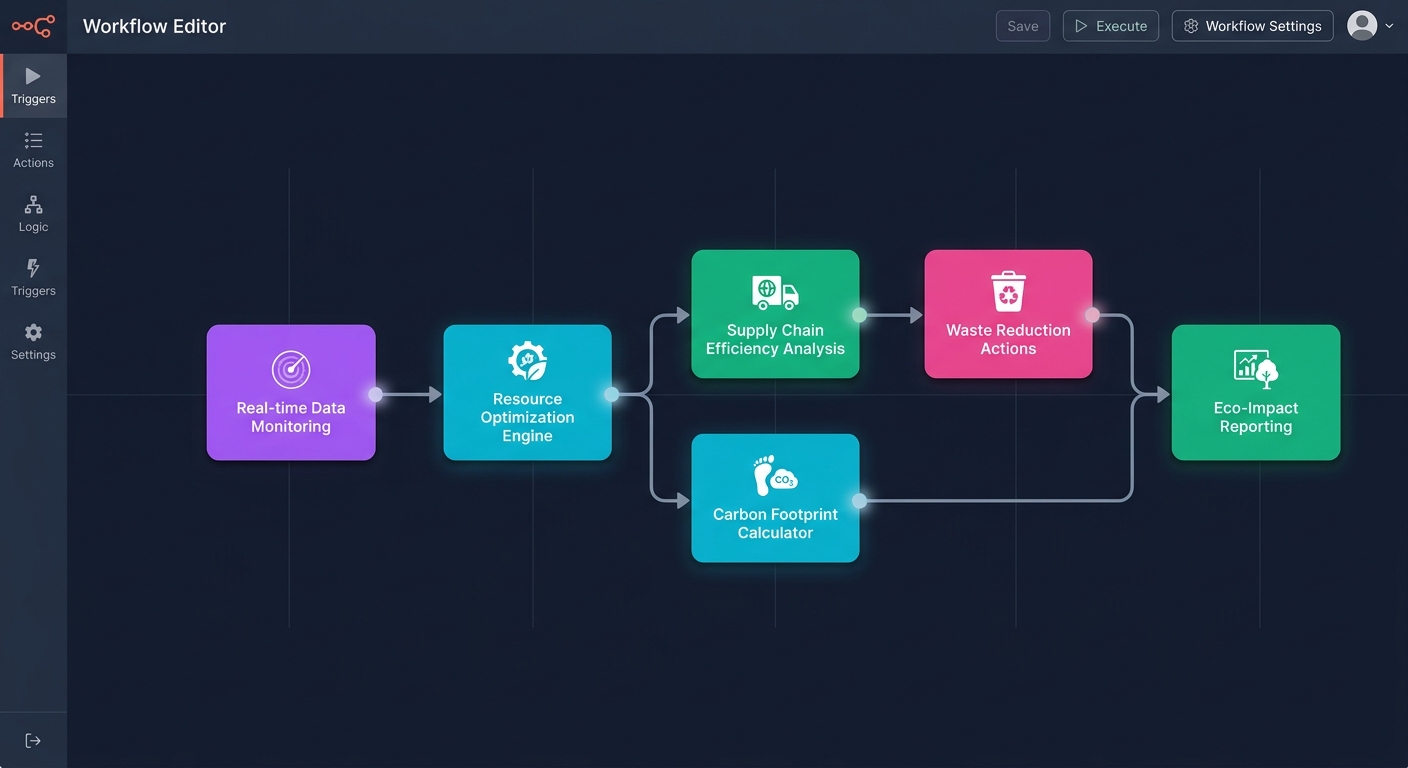
- Real-time Monitoring: Continuous data streams allow for immediate identification of inefficiencies and environmental deviations.
- Predictive Modeling: AI can simulate the environmental impact of proposed operational changes, allowing businesses to make informed decisions.
- Automated Reporting: AI can generate detailed, accurate environmental performance reports, freeing up human resources for strategic initiatives.
Why BMAIKR is Your Partner for Eco-Efficient Transformation
At BMAIKR, we don’t just implement technology; we craft strategic solutions tailored to your unique business needs. Our expertise in AI, Web Development, and Digital Marketing allows us to offer a holistic approach to achieving your sustainability goals. Here’s why partnering with us makes a difference:
1. Deep Expertise in AI and Automation
Our team comprises seasoned AI specialists and automation engineers who understand the intricacies of applying these technologies to real-world B2B challenges. We don’t offer one-size-fits-all solutions. Instead, we delve into your operations to identify the most impactful areas for AI integration, ensuring that your investment delivers measurable environmental and economic returns. Our focus on AI and Business Automation means we are at the forefront of developing intelligent systems that drive efficiency and sustainability.
2. Integrated Solutions for Maximum Impact
Eco-efficiency is rarely achieved through isolated technological implementations. It requires a cohesive strategy that often involves optimizing digital infrastructure and communication. Our capabilities in Web Development ensure that your digital platforms are not only user-friendly but also energy-efficient and capable of integrating with AI-driven systems. Furthermore, our Digital Marketing services can help you effectively communicate your sustainability achievements and engage stakeholders, building brand reputation and trust.
3. Data-Driven Strategy and Measurable Results
We believe in the power of data to drive informed decisions. Our approach begins with a thorough analysis of your current operations and environmental performance. We then leverage AI to build predictive models and identify key performance indicators (KPIs) that align with your eco-efficiency objectives. This data-driven methodology ensures that every solution we implement is designed to deliver tangible, quantifiable improvements, moving you beyond ‘green reports’ to demonstrable environmental impact.
4. Future-Proofing Your Operations
The regulatory landscape and market expectations around sustainability are constantly evolving. By adopting AI and automation now, you are not just addressing current environmental concerns but also future-proofing your business. Our solutions are designed to be scalable and adaptable, ensuring that your operations remain efficient and compliant as new challenges and opportunities emerge. We help you build resilience and a competitive edge in a world increasingly focused on environmental responsibility.
5. A Commitment to Tangible Environmental Impact
Our ultimate goal is to help your business achieve genuine, measurable environmental impact. We understand that sustainability is not just about compliance or public relations; it’s about making a positive difference. Whether it’s reducing carbon emissions, minimizing waste, or conserving resources, our AI automation strategies are geared towards creating a lasting positive effect on the planet, directly linked to your operational improvements.
Choosing Your Path to Eco-Efficiency: AI vs. Traditional Automation
While both AI and traditional automation can contribute to eco-efficiency, they offer different levels of sophistication and capability. Understanding these differences can help you choose the right approach for your specific needs:
Traditional Automation: The Foundation
Traditional automation involves using pre-programmed rules and logic to perform repetitive tasks. This is excellent for:
- Automating routine processes: Think of automated email responses, basic data entry, or simple manufacturing line tasks.
- Ensuring consistency: Tasks are performed the same way every time, reducing errors.
- Improving basic efficiency: Speeding up tasks that don’t require complex decision-making.
Eco-Efficiency Benefits: Can lead to reduced energy consumption through optimized machine operation cycles, less material waste from consistent production, and fewer human errors leading to rework.
Artificial Intelligence (AI) Automation: The Intelligence Layer
AI automation goes a step further by incorporating machine learning, natural language processing, and other AI capabilities. It excels at:
- Learning and adapting: AI systems can learn from data and adjust their behavior over time to improve performance.
- Complex decision-making: AI can analyze intricate patterns and make sophisticated judgments, such as optimizing energy grids or predicting equipment failures.
- Handling variability: AI can adapt to changing conditions and unexpected events more effectively than rule-based systems.
- Predictive analytics: AI can forecast future outcomes based on current data, enabling proactive interventions.
Eco-Efficiency Benefits: Offers deeper insights into resource consumption, enables predictive maintenance to prevent waste, optimizes complex systems like supply chains and energy usage in real-time, and facilitates the transition to circular economy models through advanced waste analysis and material management.
When to Choose Which:
- For straightforward, repetitive tasks with predictable outcomes: Traditional automation is often sufficient and cost-effective.
- For tasks requiring complex analysis, prediction, adaptation, and optimization in dynamic environments: AI automation is the superior choice.
- For a comprehensive eco-efficiency strategy: A hybrid approach, combining the strengths of both traditional automation and AI, is often the most powerful solution. For instance, using AI to analyze energy consumption patterns and then triggering traditional automation to adjust HVAC systems based on those insights.
The Future is Eco-Efficient, and It’s Powered by AI
The journey towards true eco-efficiency in B2B operations is no longer optional; it’s a strategic necessity for long-term viability and responsible corporate citizenship. While traditional methods provide a baseline, it is the intelligent application of AI and automation that unlocks the potential for profound, measurable environmental impact. By embracing **AI automation strategies for eco-efficient B2B operations**, businesses can move beyond the limitations of ‘green reports’ to actively shape a more sustainable future.
At BMAIKR, we are committed to empowering businesses with the technological solutions needed to thrive in this new era. We combine cutting-edge AI, robust web development, and strategic digital marketing to create integrated solutions that drive both operational excellence and environmental responsibility.
Ready to Transform Your Operations and Make a Real Environmental Impact?
Don’t let your sustainability goals remain on paper. Let BMAIKR help you implement intelligent AI automation strategies that deliver tangible results. Contact us today for a consultation and discover how we can help you achieve unparalleled eco-efficiency and drive sustainable growth for your business.