Unlock Strategic Advantage: Crafting AI-Powered B2B Competitive Intelligence Dashboards with Custom Web Development

Unlock Strategic Advantage: Crafting AI-Powered B2B Competitive Intelligence Dashboards with Custom Web Development
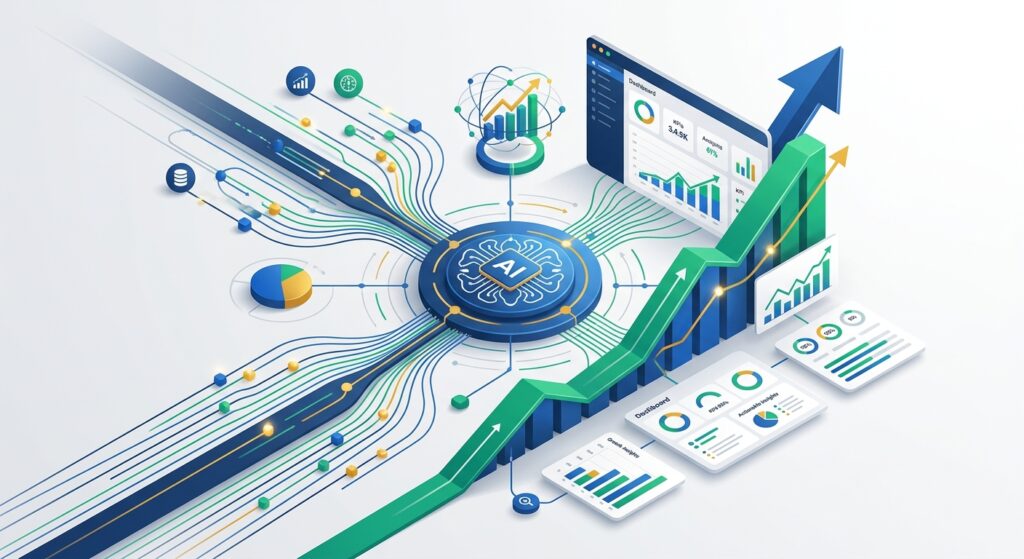
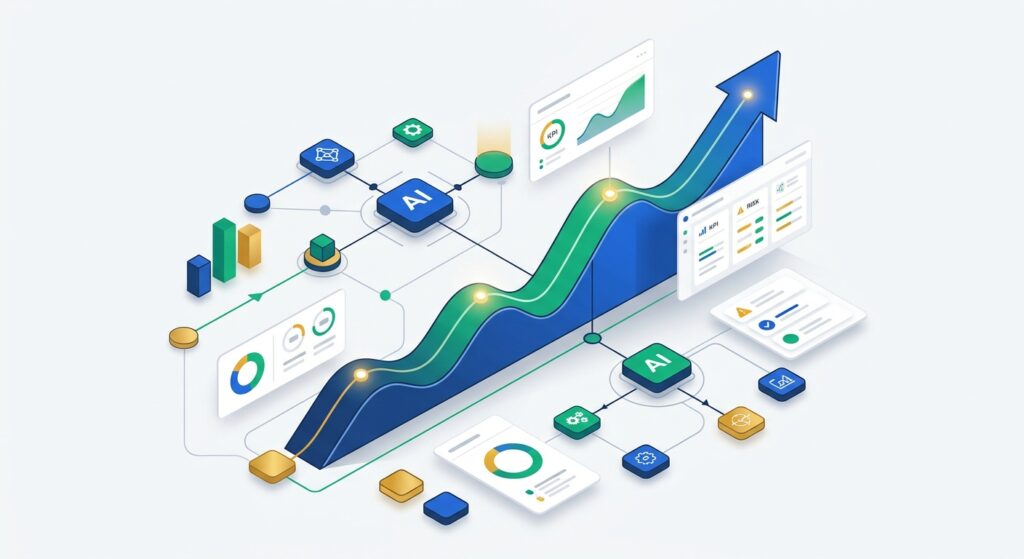
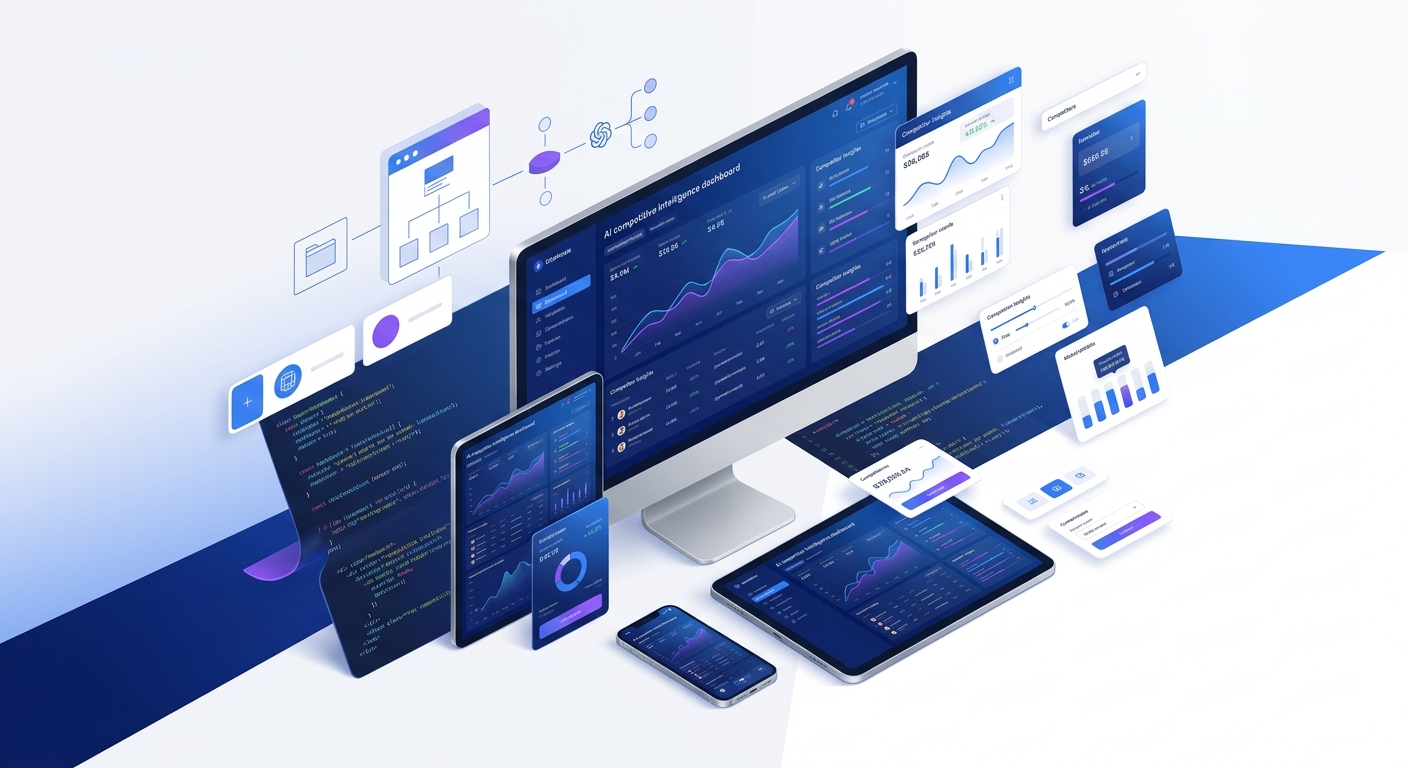
In today’s hyper-competitive B2B landscape, staying ahead of the curve isn’t just an advantage – it’s a necessity. Businesses that possess deep insights into their competitors’ strategies, market movements, and customer sentiments are the ones that thrive. This is where the power of custom B2B AI competitive intelligence dashboards development comes into play. By leveraging cutting-edge AI and bespoke web development, organizations can transform raw data into actionable intelligence, enabling them to make informed decisions, anticipate market shifts, and ultimately, secure a significant strategic advantage. This article explores the critical components of building such dashboards, the benefits they offer, and why a tailored approach is paramount for success.
The Evolving Need for B2B Competitive Intelligence
The traditional methods of competitive analysis – manual research, sporadic market reports, and gut feelings – are no longer sufficient. The digital age has accelerated the pace of business, creating an overwhelming volume of data that needs to be processed and understood in real-time. Competitors are constantly innovating, adjusting pricing, launching new products, and refining their marketing messages. Without a robust system to track these changes, businesses risk falling behind, missing crucial opportunities, and becoming vulnerable to disruptive forces.
B2B competitive intelligence (CI) is no longer a luxury; it’s a core strategic function. It involves the systematic collection, analysis, and dissemination of information about competitors, customers, and the market environment. The goal is to provide decision-makers with the insights they need to:
- Identify emerging threats and opportunities.
- Understand competitor strengths and weaknesses.
- Benchmark performance against industry peers.
- Inform product development and pricing strategies.
- Refine sales and marketing approaches.
- Anticipate market trends and shifts.
Why AI is Revolutionizing Competitive Intelligence
Artificial Intelligence (AI) is the game-changer in modern competitive intelligence. Its ability to process vast datasets, identify complex patterns, and automate analytical tasks far surpasses human capabilities. When integrated into B2B competitive intelligence dashboards, AI can:
- Automate Data Collection: AI-powered tools can continuously scrape and aggregate data from a multitude of sources, including competitor websites, social media, news articles, financial reports, patent filings, and industry forums.
- Analyze Sentiment: Natural Language Processing (NLP) can analyze customer reviews, social media mentions, and news articles to gauge public sentiment towards competitors and their products/services.
- Predict Trends: Machine learning algorithms can identify patterns and predict future market movements, competitor actions, and customer behavior based on historical data.
- Identify Key Themes: AI can cluster and categorize vast amounts of unstructured text data to highlight recurring themes in competitor messaging, product launches, or customer feedback.
- Detect Anomalies: AI can flag unusual activities or significant shifts in competitor behavior that might indicate a strategic change.
The integration of AI transforms CI from a reactive process to a proactive, predictive one. This allows businesses to not only understand what is happening but also to anticipate what is likely to happen next.
The Power of Custom Web Development for CI Dashboards
While off-the-shelf CI tools exist, they often lack the specificity and flexibility required by sophisticated B2B organizations. This is where custom web development becomes indispensable. A custom-built dashboard offers:
1. Tailored Data Integration
Every business has unique data sources and specific intelligence needs. Custom development allows for seamless integration of data from proprietary CRM systems, internal databases, niche industry platforms, and specialized third-party data providers, ensuring a holistic view.
2. Bespoke AI Model Implementation
Off-the-shelf AI solutions may not align perfectly with your specific CI objectives. Custom development enables the selection, fine-tuning, or even creation of AI models that are precisely suited to your analytical requirements, whether it’s advanced sentiment analysis for a niche market or predictive modeling for supply chain disruptions.
3. Intuitive User Interface (UI) and User Experience (UX)
A CI dashboard is only effective if it’s easy for stakeholders to use and understand. Custom development prioritizes creating an intuitive interface that presents complex data in a clear, digestible format, with customizable views and drill-down capabilities tailored to different user roles (e.g., marketing, sales, product development).
4. Scalability and Flexibility
As your business grows and your CI needs evolve, a custom-built solution can scale accordingly. It can be adapted to incorporate new data sources, new analytical features, and accommodate increasing user loads without the limitations often found in standardized platforms.
5. Enhanced Security and Control
Sensitive competitive intelligence data requires robust security. Custom development allows for the implementation of stringent security protocols and access controls, ensuring that your valuable insights remain protected and accessible only to authorized personnel.
By combining AI’s analytical prowess with the flexibility of custom web development, businesses can create powerful, dynamic B2B competitive intelligence dashboards that provide a true strategic edge.
Crafting Your AI-Powered CI Dashboard: Key Components
Building an effective AI-powered B2B competitive intelligence dashboard involves several critical stages and components:
H3: Defining Objectives and KPIs
Before any development begins, clearly define what you want to achieve. What specific questions do you need answered? What key performance indicators (KPIs) will measure success? This clarity guides the entire development process.
H3: Data Source Identification and Integration
Identify all relevant internal and external data sources. This could include:
- Publicly Available Data: Competitor websites, press releases, news articles, social media, job postings, patent databases, SEC filings.
- Third-Party Data: Market research reports, industry analytics platforms, financial data providers, review sites.
- Proprietary Data: CRM data, sales records, customer feedback, internal market research.
Custom web development ensures these disparate sources can be unified into a single, coherent data repository.
H3: AI Engine Development and Integration
This is where the intelligence is generated. Key AI functionalities include:
- Natural Language Processing (NLP): For analyzing text-based data like news, reviews, and social media posts to extract sentiment, key topics, and entities.
- Machine Learning (ML): For predictive analytics, trend identification, anomaly detection, and pattern recognition.
- Data Mining: For discovering hidden patterns and correlations within large datasets.
The choice and implementation of AI models will depend heavily on your specific objectives. For instance, if understanding customer perception is key, advanced NLP for sentiment analysis will be crucial. If anticipating market shifts is the goal, predictive ML models will be prioritized. This is where the expertise of an AI and Business Automation service provider becomes invaluable.
H3: Dashboard Design and Visualization
The front-end of your dashboard is critical for usability. It should feature:
- Interactive Charts and Graphs: Visualizing trends, comparisons, and key metrics.
- Customizable Dashboards: Allowing users to tailor views to their specific needs.
- Alerting Systems: Notifying users of significant changes or predefined triggers.
- Drill-Down Capabilities: Enabling users to explore data at granular levels.
A well-designed UI/UX ensures that the insights generated by the AI are easily accessible and actionable.
H3: Security and Access Control
Implementing robust security measures is non-negotiable. This includes data encryption, secure authentication, and role-based access control to protect sensitive competitive information.
Choosing the Right Path: Off-the-Shelf vs. Custom Development
The decision between using an existing CI tool and investing in custom development is a strategic one. Both have their merits:
Off-the-Shelf Solutions: The Quick Start
Pros:
- Faster Deployment: Can be implemented relatively quickly.
- Lower Initial Cost: Typically less expensive upfront than custom development.
- Pre-built Features: Offer a range of common CI functionalities.
Cons:
- Limited Customization: May not perfectly fit unique business needs or data structures.
- Integration Challenges: Can be difficult to integrate with proprietary systems.
- Scalability Issues: May not scale effectively as your business grows.
- Generic Insights: Insights might be less specific or actionable for your niche market.
These solutions are often best suited for smaller businesses or those with very standard CI requirements.
Custom Development: The Strategic Investment
Pros:
- Perfect Fit: Tailored precisely to your business objectives, data sources, and workflows.
- Seamless Integration: Connects effortlessly with your existing tech stack.
- Scalability: Designed to grow and adapt with your business.
- Unique Insights: Can incorporate specialized AI models for deeper, more relevant intelligence.
- Competitive Edge: Provides a unique advantage that competitors using generic tools cannot replicate.
Cons:
- Higher Upfront Cost: Requires a significant initial investment.
- Longer Development Time: Takes more time to build and deploy.
- Requires Expertise: Needs skilled developers and AI specialists.
For B2B companies serious about leveraging competitive intelligence as a strategic differentiator, custom development, powered by AI and robust web development, is often the superior choice. It ensures that your intelligence gathering and analysis capabilities are as sophisticated and agile as your business needs to be.
Partnering for Success with BMAIKR
Developing an AI-powered B2B competitive intelligence dashboard is a complex undertaking that requires a blend of AI expertise, web development proficiency, and a deep understanding of business strategy. At BMAIKR, we specialize in providing these integrated solutions. Our expertise in AI and Business Automation allows us to build intelligent systems that extract meaningful insights from your data, while our robust web development services ensure these insights are delivered through intuitive, powerful, and scalable dashboards.
We understand that every business is unique. That’s why we don’t offer one-size-fits-all solutions. Instead, we collaborate closely with you to understand your specific challenges, objectives, and competitive landscape. This allows us to design and implement a custom CI dashboard that truly empowers your decision-making and drives strategic advantage.
Conclusion: Future-Proof Your Strategy with Intelligent Insights
In the dynamic world of B2B, knowledge is power. AI-powered competitive intelligence dashboards are no longer a futuristic concept but a present-day imperative for businesses aiming for sustained growth and market leadership. By investing in custom development, you equip your organization with the ability to not only react to market changes but to anticipate and shape them. Embrace the power of AI and bespoke web development to unlock unparalleled strategic advantage.
Ready to transform your competitive intelligence? Contact BMAIKR today to discuss how we can build your custom AI-powered dashboard and give your business the strategic edge it deserves.