Future-Proofing Custom B2B Web Applications: Automating Operations, Maintenance, and Scaling


Future-Proofing Custom B2B Web Applications: Automating Operations, Maintenance, and Scaling
In today’s rapidly evolving digital landscape, custom B2B web applications are no longer a luxury but a necessity for businesses seeking to streamline operations, enhance customer engagement, and maintain a competitive edge. However, the initial development of a powerful application is only the first step. True long-term success hinges on the ability to effectively manage, maintain, and scale these critical assets. This is where the strategic implementation of automation becomes paramount. This article delves into how to future-proof your custom B2B web applications by focusing on automating operations, maintenance, and scaling, ensuring your investment continues to deliver value for years to come. We will explore the core principles, the benefits of proactive automation, and how to strategically choose the right tools and approaches to automate custom B2B web app operations and maintenance.
The Evolving Landscape of B2B Web Applications
Custom B2B web applications are designed to meet the unique needs of businesses, offering tailored solutions that off-the-shelf software often cannot. Whether it’s a sophisticated CRM, an intricate project management tool, or a specialized inventory system, these applications are the backbone of many modern enterprises. The challenge, however, lies in their lifecycle. As business needs change, user bases grow, and technological advancements emerge, these applications require constant attention. Neglecting their upkeep can lead to performance degradation, security vulnerabilities, and ultimately, obsolescence. Proactive automation is the key to mitigating these risks and ensuring your application remains a powerful, reliable tool.
Why Automate Custom B2B Web App Operations and Maintenance?
The benefits of automating operations and maintenance for custom B2B web applications are multifaceted and directly impact a company’s bottom line and operational efficiency. By investing in automation, businesses can achieve:
Enhanced Efficiency and Productivity
Manual tasks, such as data entry, report generation, user provisioning, and routine system checks, are time-consuming and prone to human error. Automating these processes frees up valuable human resources to focus on more strategic initiatives. Imagine a sales team no longer needing to manually input leads into the CRM; instead, leads are automatically captured and categorized, allowing them more time for client interaction. This boost in efficiency translates directly to increased productivity across the organization.
Reduced Operational Costs
Human error can lead to costly mistakes, from incorrect data processing to missed deadlines. Automation minimizes these errors, thereby reducing the cost associated with rectifying them. Furthermore, by optimizing resource allocation and reducing the need for extensive manual oversight, businesses can significantly lower their operational expenditures. Think about the cost savings associated with automated software updates and patch deployments, which prevent costly downtime and security breaches.
Improved Reliability and Uptime
Downtime is a killer for any B2B operation. Automated monitoring systems can detect potential issues before they escalate, triggering alerts or even initiating self-healing processes. This proactive approach ensures that your custom web application remains available and functional when your users need it most, minimizing disruptions to business workflows and maintaining customer satisfaction.
Enhanced Security
Security is a non-negotiable aspect of any web application. Automation can play a crucial role in maintaining a robust security posture. This includes automated security scans, vulnerability assessments, and the rapid deployment of security patches. By automating these processes, you can significantly reduce the window of opportunity for cyber threats to exploit weaknesses in your application.
Scalability and Adaptability
As your business grows, your web application needs to grow with it. Automation is fundamental to achieving seamless scalability. Automated deployment pipelines, load balancing adjustments, and resource provisioning ensure that your application can handle increased traffic and data volumes without performance degradation. This adaptability allows your business to respond quickly to market changes and growth opportunities.
Automating Operations: Streamlining Day-to-Day Workflows
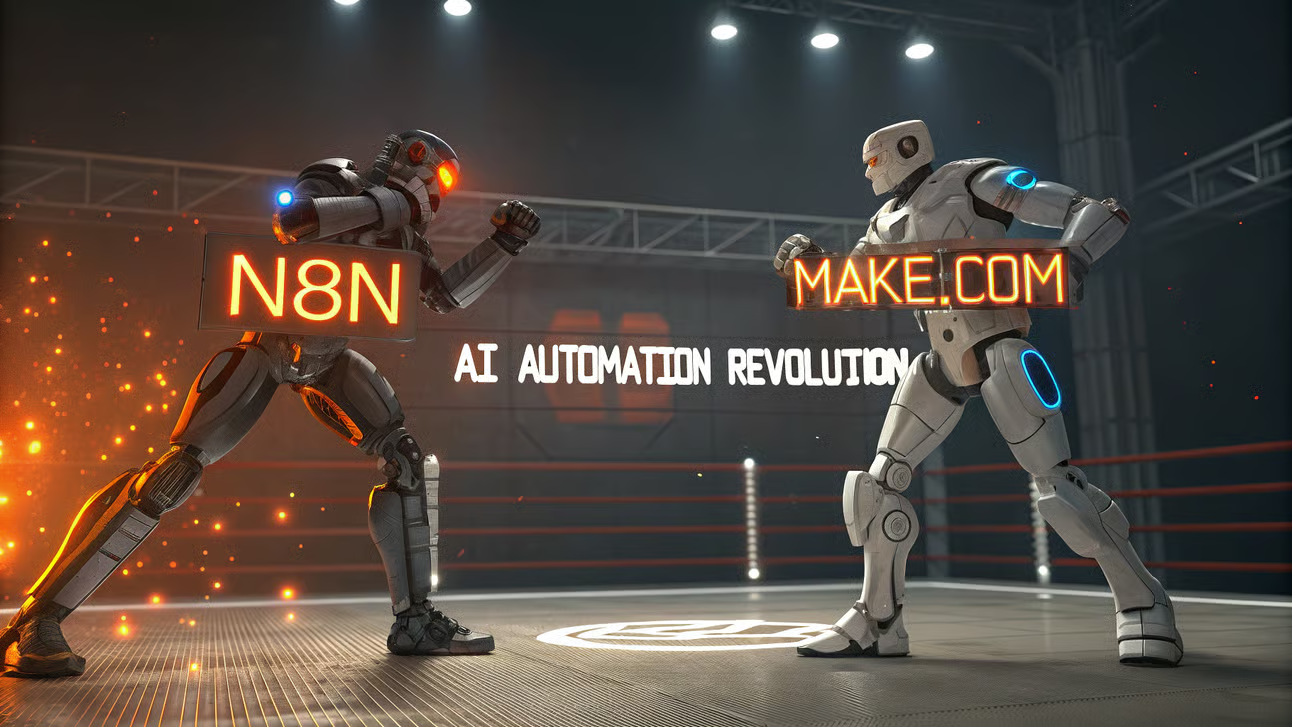
Operational automation focuses on the repetitive, rule-based tasks that occur daily within your custom B2B web application. This is where tools and platforms designed for workflow automation shine. For instance, integrating your web application with other business systems can automate data synchronization, lead management, and customer support processes. Consider the power of connecting your web application to a robust automation platform like Make.com (formerly Integromat) or n8n. These tools allow you to build complex workflows that trigger actions across different applications based on specific events within your custom app. This could involve automatically sending personalized follow-up emails to new users, updating inventory levels when an order is placed, or generating custom reports based on user activity. The ability to automate these operational tasks not only saves time but also ensures consistency and accuracy, which are vital for B2B operations.
For businesses looking to integrate their custom web applications with a wide array of other services, a powerful integration platform is key. These platforms act as the connective tissue, enabling seamless data flow and automated processes between disparate systems. This is where the expertise of a seasoned AI and Business Automation provider becomes invaluable. They can help design and implement sophisticated automation strategies that leverage the full potential of your custom application and its ecosystem.
Automating Maintenance: Ensuring Long-Term Health and Security
Application maintenance is often seen as a reactive necessity, but it can and should be a proactive, automated process. This involves automating tasks related to monitoring, updates, backups, and security.
Automated Monitoring and Alerting
Implement automated tools that continuously monitor your application’s performance, resource utilization, and error logs. These systems can detect anomalies, such as slow response times, high server load, or recurring errors, and trigger alerts to your IT team. Advanced systems can even initiate automated remediation steps, such as restarting a service or scaling up resources.
Automated Updates and Patch Management
Keeping your application’s underlying technologies (frameworks, libraries, databases) up-to-date is crucial for security and performance. Automated deployment pipelines (CI/CD) can streamline the process of testing and deploying updates and patches, minimizing manual intervention and reducing the risk of errors. This ensures that your application benefits from the latest security fixes and performance enhancements without significant downtime.
Automated Backups and Disaster Recovery
Regular, automated backups are non-negotiable. Ensure that your backup strategy is robust, with data being backed up frequently and stored securely off-site. Furthermore, automate the testing of your disaster recovery plan to ensure that you can restore your application and data quickly in the event of a catastrophic failure.
Automated Security Scans and Vulnerability Assessments
Integrate automated security scanning tools into your development and deployment workflows. These tools can identify common vulnerabilities, such as SQL injection or cross-site scripting (XSS) flaws, allowing your development team to address them before they can be exploited. Regular, automated vulnerability assessments provide an ongoing layer of security assurance.
Automating Scaling: Growing with Your Business
The ability to scale your custom B2B web application is critical for supporting business growth. Automation plays a pivotal role in making this process seamless and cost-effective.
Auto-Scaling Infrastructure
Cloud-native architectures and containerization technologies (like Docker and Kubernetes) enable automated scaling of your application’s infrastructure. These systems can automatically adjust the number of server instances or containers based on real-time demand, ensuring optimal performance without manual intervention. This means your application can handle sudden spikes in user traffic without crashing.
Automated Load Balancing
Load balancers distribute incoming traffic across multiple servers. Automated load balancing ensures that this distribution is dynamic and responsive to changing traffic patterns, preventing any single server from becoming overwhelmed. This is essential for maintaining consistent performance during peak usage periods.
Database Scaling Strategies
As your data volume grows, your database needs to scale. Automation can assist in implementing strategies like read replicas, sharding, or employing managed database services that offer auto-scaling capabilities. This ensures that your application’s data layer can keep pace with user demand and data complexity.
Choosing the Right Automation Tools and Strategies
The effectiveness of your automation strategy depends heavily on choosing the right tools and approaches. This is where a deep understanding of your specific business needs and technical infrastructure is crucial. At BMAIKR, we help businesses navigate this complex landscape.
Integration Platforms as a Service (iPaaS)
Platforms like Make.com and n8n are excellent for automating workflows and integrating different applications. They offer visual interfaces that make it easier to design and manage complex automation scenarios without extensive coding. These are ideal for automating operational tasks and data synchronization.
DevOps and CI/CD Tools
For automating maintenance and deployment, a robust DevOps strategy is essential. Tools like Jenkins, GitLab CI, GitHub Actions, and Azure DevOps enable automated building, testing, and deployment of your application. This is critical for ensuring frequent, reliable updates and patches.
Cloud Provider Services
Leveraging the automation capabilities of cloud providers like AWS, Azure, and Google Cloud is fundamental for scaling. Services such as auto-scaling groups, managed Kubernetes, serverless functions, and managed databases provide the infrastructure for automated scaling and resilience.
AI-Powered Automation
Artificial intelligence can take automation to the next level. AI can be used for predictive maintenance, intelligent anomaly detection, automated customer support (chatbots), and optimizing resource allocation. Integrating AI into your automation strategy can unlock significant efficiencies and insights.
Custom Scripting and Development
While off-the-shelf tools are powerful, sometimes custom solutions are required. Developing custom scripts or integrating specific automation modules directly into your web application can provide highly tailored solutions for unique operational or maintenance challenges. This is where expert Web Development services are essential to ensure these custom solutions are robust, secure, and scalable.
The BMAIKR Advantage: Your Partner in Automation and Future-Proofing
Building and maintaining a custom B2B web application that stands the test of time requires a strategic approach to automation. At BMAIKR, we specialize in helping businesses harness the power of AI, Web Development, and Digital Marketing to create and sustain high-performing digital assets. Our expert teams can:
- Assess your current application infrastructure and identify key areas for automation.
- Design and implement custom automation workflows using leading iPaaS solutions and custom development.
- Establish robust CI/CD pipelines for seamless and secure application updates and maintenance.
- Develop scalable cloud architectures that can grow with your business.
- Integrate AI-powered solutions to enhance operational efficiency and predictive capabilities.
- Provide ongoing support and optimization to ensure your application remains future-proof.
We understand that every business is unique, and a one-size-fits-all approach to automation simply doesn’t work. Our methodology involves a deep dive into your specific business objectives, operational challenges, and technical requirements to craft a tailored automation strategy that delivers tangible results. Whether you’re looking to automate lead nurturing, streamline internal processes, enhance security, or ensure your application can handle exponential growth, BMAIKR has the expertise to make it happen.
Conclusion: Embrace Automation for Sustainable Growth
Future-proofing your custom B2B web applications through automation is not just about staying current; it’s about building a resilient, efficient, and scalable foundation for sustained business growth. By automating operations, maintenance, and scaling, you minimize risks, reduce costs, enhance security, and empower your team to focus on strategic initiatives. The investment in automation is an investment in the longevity and continued success of your digital assets.
Don’t let your custom web application become a liability. Embrace the power of automation and ensure it remains a strategic advantage for your business.
Ready to Future-Proof Your Business?
Let BMAIKR help you unlock the full potential of your custom B2B web applications. Our expert team is ready to design and implement a tailored automation strategy that drives efficiency, security, and scalability for your business.
Contact us today for a free consultation and discover how we can help you automate your operations and secure your digital future.