Elevating B2B Product Strategy: Automating Feature Prioritization with AI-Powered Customer Feedback & Low-Code Tools

Elevating B2B Product Strategy: Automating Feature Prioritization with AI-Powered Customer Feedback & Low-Code Tools
In today’s rapidly evolving B2B landscape, the ability to strategically prioritize product features is paramount to success. Businesses that can accurately identify and deliver what their customers truly need, at the right time, gain a significant competitive edge. However, traditional methods of gathering and analyzing customer feedback for feature prioritization are often manual, time-consuming, and prone to bias. This is where the power of modern technology, specifically automating B2B product feature prioritization with AI and low-code platforms, comes into play. By leveraging artificial intelligence to process vast amounts of customer data and utilizing low-code tools for rapid prototyping and implementation, B2B companies can transform their product development cycles, ensuring they build products that resonate deeply with their target audience.
The Challenges of Traditional B2B Feature Prioritization
Before diving into the solutions, it’s crucial to understand the inherent difficulties in conventional feature prioritization. Product managers and development teams often face:
Siloed Feedback Channels
Customer feedback typically arrives through a multitude of channels: support tickets, sales calls, customer success interactions, social media, surveys, and direct feature requests. Consolidating and making sense of this disparate information is a monumental task.
Subjectivity and Bias
Without robust data analysis, prioritization can easily fall prey to the loudest voices, personal opinions, or the perceived importance of a particular client, rather than objective market demand or strategic value.
Time and Resource Constraints
Manually sifting through thousands of feedback entries, categorizing them, identifying trends, and then translating them into actionable product requirements consumes valuable time and resources that could be better allocated to actual development and innovation.
Difficulty in Quantifying Impact
It’s challenging to accurately predict which features will have the most significant impact on customer satisfaction, retention, or acquisition without a data-driven approach.
The AI Advantage: Unlocking Deeper Customer Insights
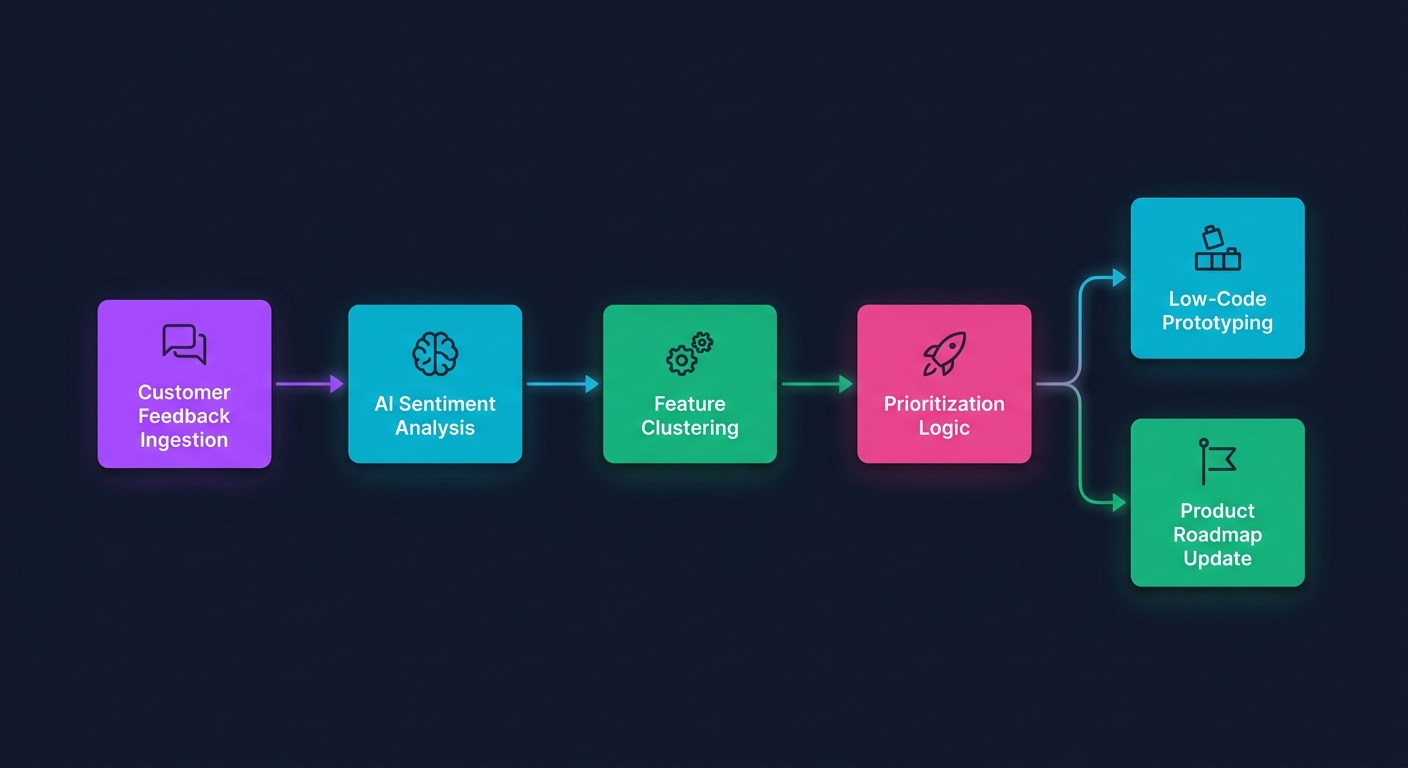
Artificial intelligence offers a transformative solution to these challenges. AI, particularly Natural Language Processing (NLP) and Machine Learning (ML), can process and analyze unstructured text data from customer feedback at an unprecedented scale and speed. Here’s how AI revolutionizes feature prioritization:
Automated Sentiment Analysis
AI algorithms can automatically detect the sentiment (positive, negative, neutral) associated with specific features or pain points mentioned in customer feedback. This allows teams to quickly gauge overall customer satisfaction regarding existing functionalities and identify areas causing frustration.
Topic Modeling and Trend Identification
NLP techniques can identify recurring themes and topics within large volumes of feedback. This helps in discovering emerging needs, common feature requests, and prevalent issues that might otherwise be buried in the data. For instance, AI can group similar requests like “need better reporting,” “customizable dashboards,” and “exportable analytics” into a single, high-priority theme.
Feature Request Clustering and Categorization
AI can automatically cluster similar feature requests, assign them to predefined categories (e.g., performance, usability, new functionality), and even identify duplicate requests. This significantly reduces the manual effort required to organize and understand the backlog of potential features.
Predictive Analytics for Impact
By analyzing historical data and customer behavior patterns, ML models can help predict the potential impact of implementing a new feature. This could include predicting improvements in customer retention, adoption rates, or even revenue growth, providing a data-backed rationale for prioritization decisions.
The Role of Low-Code Platforms in Agile Development
While AI provides the intelligence, low-code development platforms offer the agility and speed needed to act on those insights. Low-code tools abstract away much of the complex coding, allowing for faster development, iteration, and deployment of new features or even entirely new products.
Rapid Prototyping and Validation
Once AI has identified a high-priority feature, low-code platforms enable teams to quickly build functional prototypes. These prototypes can then be shared with a subset of customers for early validation, gathering crucial feedback before committing significant development resources.
Faster Iteration Cycles
The visual development interfaces and pre-built components of low-code platforms drastically shorten the time it takes to make changes and deploy updates. This iterative approach, informed by continuous AI-driven feedback analysis, ensures the product evolves in lockstep with customer needs.
Empowering Citizen Developers
Low-code can democratize development to some extent, allowing individuals with less traditional coding expertise but deep domain knowledge to contribute to building and refining features, further accelerating the process.
Why BMAIKR is Your Ideal Partner for AI-Powered Product Strategy
At BMAIKR, we understand the intricate relationship between data, technology, and successful product development. We specialize in harnessing the power of AI and modern development methodologies to help B2B companies achieve their strategic goals. Our expertise in automating B2B product feature prioritization with AI and low-code platforms is built on a foundation of deep industry knowledge and cutting-edge technological capabilities.
Our AI and Business Automation Expertise
We implement sophisticated AI solutions that go beyond basic sentiment analysis. Our approach involves:
- Custom AI Model Development: Tailoring AI models to understand the nuances of your specific industry and customer language.
- Data Integration and Harmonization: Connecting disparate feedback sources into a unified, analyzable data stream.
- Actionable Insights Generation: Translating raw AI analysis into clear, prioritized recommendations for your product roadmap.
- Continuous Learning Systems: Building AI systems that learn and improve over time as more data becomes available.
Our AI and Business Automation services are designed to streamline your operations and provide the intelligence needed for strategic decision-making, including product development.
Agile Web Development with a Strategic Edge
Our web development team is adept at leveraging low-code and traditional development approaches to build robust, scalable, and user-friendly applications. We focus on:
- Rapid Prototyping: Quickly bringing your product ideas to life for testing and validation.
- Iterative Development: Implementing features in agile sprints, allowing for flexibility and continuous improvement.
- Scalable Architectures: Building solutions that can grow with your business and adapt to future demands.
- Seamless Integration: Ensuring new features integrate smoothly with your existing tech stack.
We believe that effective Web Development should be driven by strategic insights, and our AI-powered approach ensures just that.
Data-Driven Digital Marketing Alignment
Understanding customer needs through feedback analysis also directly informs your marketing efforts. Our digital marketing strategies are built on the insights we uncover, ensuring your messaging and outreach are precisely targeted.
A Holistic Approach to Product Success
We don’t just offer individual services; we provide a holistic ecosystem. By combining AI-driven insights with agile development, we ensure that your product strategy is not only informed but also executable with speed and precision. This integrated approach minimizes the risk of developing features that don’t meet market demand, saving you time, money, and resources.
Choosing the Right Path: AI, Low-Code, or Both?
The decision to implement AI for feedback analysis, low-code for development, or a combination of both, depends on your specific business context, resources, and strategic objectives. Here’s a breakdown to help you decide:
When to Prioritize AI for Feedback Analysis
- High Volume of Unstructured Feedback: If you receive a large amount of text-based feedback from various sources (surveys, reviews, support tickets) and struggle to process it manually.
- Need for Deeper Customer Understanding: When you want to move beyond surface-level requests and understand the underlying needs, pain points, and sentiments of your customers.
- Desire for Objective Prioritization: If you aim to reduce subjectivity in your product roadmap decisions and rely on data-driven insights.
- Scalability of Feedback Processing: When your customer base is growing, and manual feedback analysis is becoming unsustainable.
AI excels at providing the intelligence to inform your product strategy. It helps you answer the ‘what’ and ‘why’ of customer needs.
When to Prioritize Low-Code Development
- Need for Rapid Prototyping and MVP Development: If you need to quickly test new product ideas or build Minimum Viable Products (MVPs) to gather market feedback.
- Agile Iteration and Updates: When you want to implement changes and new features quickly and frequently, responding rapidly to market shifts.
- Resource Constraints in Traditional Development: If you have limited access to highly specialized developers or want to accelerate development cycles with fewer resources.
- Internal Tooling and Workflow Automation: Low-code is excellent for building internal applications, dashboards, and automating business processes that support product management.
Low-code provides the agility to build and adapt. It helps you answer the ‘how’ and ‘when’ of product delivery.
The Power of Integration: AI + Low-Code
For most B2B companies aiming for a truly competitive product strategy, the most effective approach is the integration of both AI and low-code platforms. This synergy creates a powerful feedback loop:
- AI analyzes customer feedback to identify high-priority features and pain points.
- Low-code platforms enable rapid prototyping of these identified features.
- Early prototypes are tested with customers, generating new feedback.
- AI analyzes this new feedback to refine the feature or identify further improvements.
- Low-code allows for quick implementation of refined features, and the cycle continues.
This integrated approach ensures that your product development is not only data-informed but also incredibly agile, allowing you to stay ahead of the competition and consistently deliver value to your customers.
Conclusion: Future-Proofing Your Product Strategy
The future of B2B product strategy lies in intelligent automation and agile execution. By embracing AI for deep customer insight and low-code platforms for rapid development, companies can move beyond guesswork and manual processes to a more strategic, data-driven, and responsive product development lifecycle. Automating B2B product feature prioritization with AI and low-code platforms isn’t just about efficiency; it’s about building better products, fostering stronger customer relationships, and driving sustainable business growth.
Ready to transform your product strategy? At BMAIKR, we combine cutting-edge AI solutions with agile development expertise to help you build products that truly resonate with your market. Let us help you unlock the power of your customer data and accelerate your innovation.
Contact BMAIKR today for a consultation and discover how we can elevate your B2B product strategy.