Debugging Complex B2B Automation: Strategies for Faster Resolution and Enhanced Workflow Resilience

Debugging Complex B2B Automation: Strategies for Faster Resolution and Enhanced Workflow Resilience
In today’s fast-paced business environment, robust B2B automation workflows are no longer a luxury but a necessity. They streamline operations, enhance efficiency, and drive significant growth. However, even the most meticulously designed systems can encounter issues. When these complex B2B automation workflows falter, the impact can be substantial, leading to operational disruptions, missed opportunities, and frustrated stakeholders. This is where effective B2B automation workflow debugging strategies become paramount. This article delves into the intricacies of identifying, diagnosing, and resolving issues within your B2B automation systems, ensuring your business operations remain resilient and efficient.
The Inevitability of B2B Automation Hiccups
No matter how sophisticated your B2B automation solutions are, they operate within dynamic ecosystems. External factors, software updates, data inconsistencies, and unforeseen user interactions can all contribute to workflow disruptions. Recognizing that debugging is an inherent part of managing automated processes is the first step towards building a more resilient system. The goal isn’t to eliminate all errors, which is often an impossible task, but to minimize their occurrence and, more importantly, to resolve them swiftly and effectively when they do arise.
Common Pitfalls in B2B Automation Workflows
Understanding common failure points can significantly accelerate the debugging process. These often include:
- Data Inconsistencies: Mismatched data formats, missing fields, or incorrect values between integrated systems are frequent culprits.
- API Integration Issues: Changes in third-party APIs, authentication failures, or rate limiting can halt communication between services.
- Logic Errors: Flaws in the automation’s conditional logic, triggers, or sequence of actions can lead to unexpected outcomes.
- Permission and Access Problems: Automated processes may fail if the credentials or permissions used to access certain systems are revoked or incorrect.
- System Overload or Downtime: The underlying infrastructure or integrated applications might experience performance issues or temporary outages.
Our Approach to Building Resilient B2B Automation
At BMAIKR, we understand that robust B2B automation is built on a foundation of meticulous planning, development, and ongoing support. Our expertise in AI and Business Automation allows us to design workflows that are not only efficient but also inherently resilient. We prioritize:
Proactive Monitoring and Alerting
The most effective debugging starts before an issue impacts your operations. We implement comprehensive monitoring systems that track key performance indicators (KPIs) and system health in real-time. Automated alerts are configured to notify our team and your stakeholders immediately when anomalies are detected, allowing for preemptive intervention.
Robust Error Handling and Logging
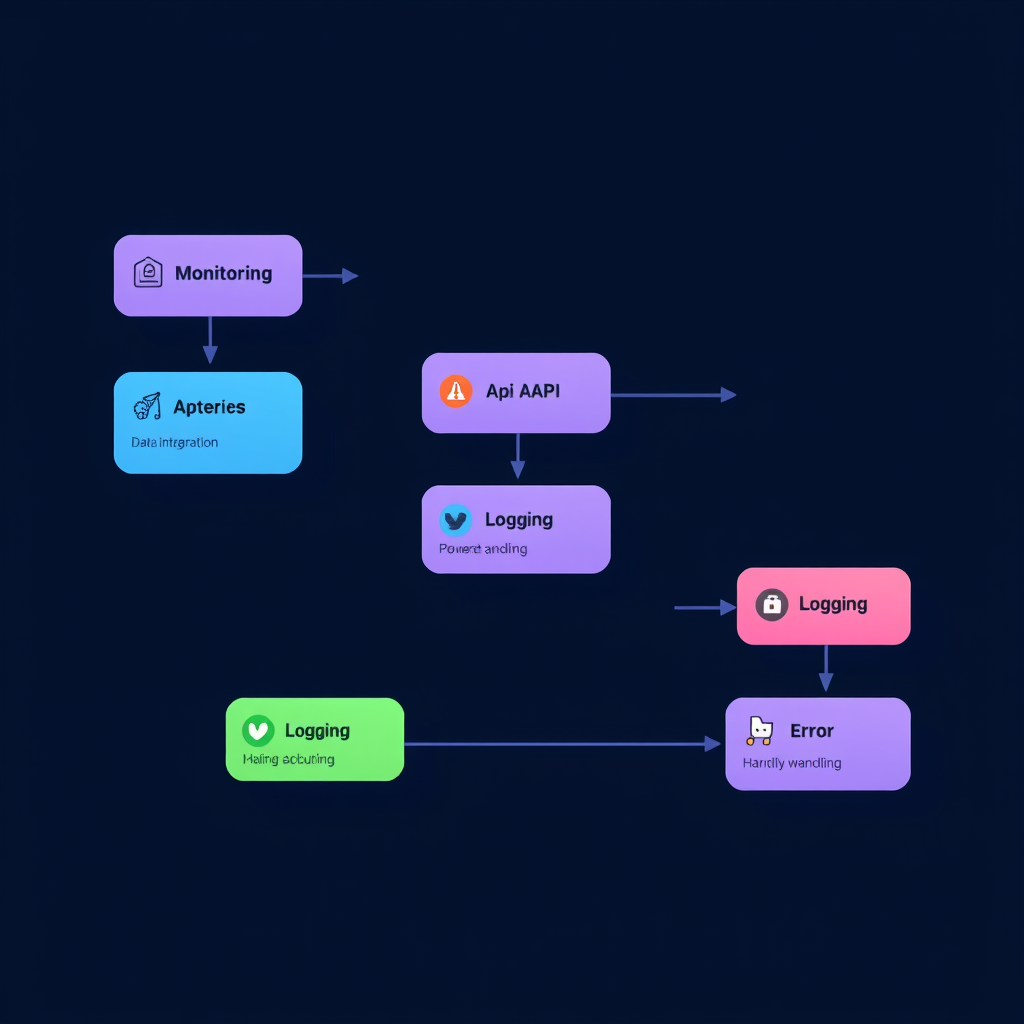
Our automation solutions incorporate detailed error handling mechanisms. Every step of a workflow is logged, providing a clear audit trail. This granular logging is invaluable during debugging, as it allows us to pinpoint the exact stage and cause of a failure. We design custom error handling routines that can gracefully manage common issues, such as retrying failed API calls or flagging data for manual review.
Modular Design and Scalability
We advocate for modular design principles in automation. Breaking down complex processes into smaller, manageable modules makes them easier to test, debug, and update. This approach also enhances scalability, ensuring that your automation can grow with your business without becoming unwieldy or prone to cascading failures.
Thorough Testing and Quality Assurance
Before any B2B automation workflow goes live, it undergoes rigorous testing. This includes unit testing, integration testing, and end-to-end scenario testing. Our quality assurance process is designed to uncover potential issues in a controlled environment, preventing them from affecting live operations.
Advanced B2B Automation Workflow Debugging Strategies
When issues do arise, a systematic approach is crucial. Here are advanced debugging strategies that BMAIKR employs:
1. The Power of Traceability: Deep Dive into Logs
The first and most critical step is to leverage detailed logs. Modern automation platforms provide extensive logging capabilities. We meticulously examine these logs to understand the sequence of events leading up to the failure. This involves:
- Timestamp Analysis: Correlating timestamps across different systems to identify the precise moment of failure.
- Error Code Interpretation: Understanding specific error codes returned by integrated systems or the automation platform itself.
- Contextual Data Review: Examining the data being processed at the time of the error to identify anomalies or malformed inputs.
2. Replicating the Environment: Isolating the Problem
Often, issues are difficult to reproduce in a live environment. We utilize staging or development environments that closely mirror the production setup. This allows us to:
- Trigger the Workflow with Specific Inputs: Intentionally use the data or conditions that are suspected to cause the error.
- Step-Through Debugging: Use debugging tools within the automation platform to pause execution at specific points and inspect variables.
- Simulate External Dependencies: Mock or simulate responses from external APIs to test how the automation handles various scenarios.
3. Root Cause Analysis: Beyond the Symptom
It’s essential to move beyond simply fixing the immediate symptom and identify the root cause. This might involve:
- Dependency Mapping: Understanding how different components and integrations rely on each other. A failure in one can cascade.
- Change Management Review: Investigating recent changes to integrated systems, APIs, or the automation platform itself.
- Performance Profiling: Identifying bottlenecks or resource constraints that might be causing timeouts or failures under load.
4. Utilizing AI for Anomaly Detection
Leveraging AI within our debugging process can be a game-changer. AI algorithms can analyze vast amounts of log data to identify patterns and anomalies that human analysts might miss. This can lead to faster detection of subtle issues and predictive insights into potential future problems. Our expertise in AI and Business Automation allows us to integrate such advanced capabilities into your workflows.
Choosing the Right Path: B2B Automation vs. Traditional Processes
While debugging complex automation is our focus, it’s also important to consider when automation is the right choice. For many businesses, the decision to automate is driven by the desire for efficiency and scalability. However, not all processes are suitable for automation, and sometimes, traditional, human-driven workflows still offer advantages.
When B2B Automation Shines
Automation is ideal for:
- Repetitive Tasks: Processes that involve performing the same actions repeatedly.
- High-Volume Operations: Workflows that need to handle a large number of transactions or data points.
- Time-Sensitive Processes: Tasks that require immediate execution or adherence to strict deadlines.
- Data-Intensive Operations: Workflows that involve collecting, processing, and analyzing large datasets.
- Standardized Decision-Making: Processes where decisions can be based on clear, predefined rules.
For these scenarios, investing in robust automation, supported by effective debugging strategies, yields significant ROI. Our Web Development services can also ensure that the interfaces and platforms your automation interacts with are seamless and efficient.
When Human Intervention Remains Key
Conversely, human oversight is crucial for:
- Complex, Nuanced Decision-Making: Situations requiring subjective judgment, empathy, or ethical considerations.
- Highly Unpredictable Scenarios: Processes where the variables are too numerous or unpredictable for rule-based automation.
- Creative or Strategic Tasks: Work that involves innovation, strategic planning, or artistic expression.
- Building and Maintaining Relationships: Client interactions that require genuine human connection and rapport.
The most effective businesses often find a hybrid approach, leveraging automation for efficiency while reserving human expertise for critical, high-value tasks. Understanding this balance is key to optimizing your overall operational strategy.
Conclusion: Building for Resilience
Debugging complex B2B automation workflows is an essential skill for any organization aiming for operational excellence. By adopting proactive monitoring, robust error handling, modular design, and advanced debugging strategies, businesses can minimize downtime and ensure their automated processes contribute positively to their bottom line. At BMAIKR, we are committed to building and supporting automation solutions that are not only powerful but also resilient and easy to manage.
Ready to optimize your B2B automation workflows and ensure they run smoothly? Contact BMAIKR today for expert consultation and implementation services. Let us help you build a more efficient, resilient, and future-proof business.