Beyond Static Manuals: Automating B2B Product Documentation with AI, Low-Code, and Custom Portals

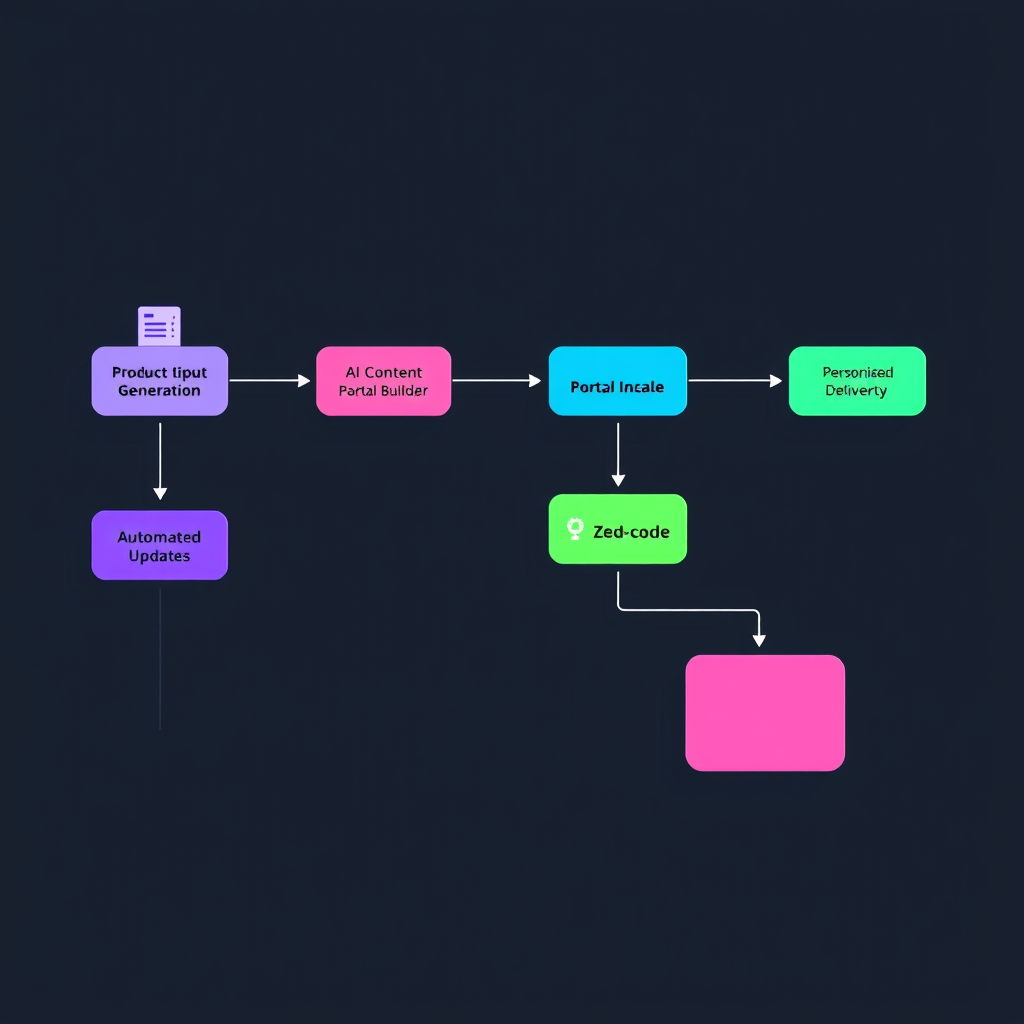
Beyond Static Manuals: Automating B2B Product Documentation with AI, Low-Code, and Custom Portals
In today’s fast-paced B2B landscape, static product documentation is a relic of the past. Businesses are increasingly seeking dynamic, accessible, and intelligent ways to manage and deliver product information. The challenge of automating B2B product documentation with AI and low-code portals is no longer a luxury but a necessity for staying competitive. Traditional methods, often involving lengthy PDFs and scattered knowledge bases, lead to inefficiencies, outdated information, and frustrated customers and internal teams. This article explores how a strategic blend of AI, low-code platforms, and custom portal development can revolutionize your B2B product documentation, making it a powerful asset rather than a cumbersome burden.
The Limitations of Traditional B2B Product Documentation
Before diving into the solutions, it’s crucial to understand why conventional approaches fall short:
1. Static and Outdated Content
Product features evolve, and so should documentation. Manual updates are time-consuming and prone to errors, leading to a disconnect between the product and its supporting materials. This can result in incorrect usage, support escalations, and a damaged brand reputation.
2. Poor Accessibility and Discoverability
Scattered documents across shared drives, email chains, or generic cloud storage make it difficult for users to find the information they need, when they need it. This lack of centralized access hinders onboarding, troubleshooting, and overall product adoption.
3. Lack of Personalization and Context
A one-size-fits-all approach to documentation rarely works in B2B. Different user roles, industries, and use cases require tailored information. Static documents cannot adapt to individual user needs, leading to information overload or insufficient detail.
4. Inefficient Support and Training
Support teams often spend a significant amount of time answering repetitive questions that could be addressed by readily available, clear documentation. Training new users or internal staff becomes a lengthy, manual process.
The Power of Automation: AI, Low-Code, and Custom Portals
The future of B2B product documentation lies in intelligent, automated systems. By leveraging AI, low-code development, and custom portals, businesses can transform their documentation from a static liability into a dynamic, interactive, and valuable resource. This approach directly addresses the pain points of traditional methods and unlocks new levels of efficiency and user satisfaction.
Leveraging AI for Smarter Documentation
Artificial Intelligence offers transformative capabilities for automating and enhancing B2B product documentation:
AI-Powered Content Generation and Summarization
AI tools can assist in drafting initial documentation, generating FAQs from support tickets, and summarizing lengthy technical guides into digestible overviews. This significantly speeds up the content creation process and ensures consistency.
Intelligent Search and Knowledge Retrieval
AI-driven search engines can understand natural language queries, providing users with more accurate and relevant results than traditional keyword searches. This means users can ask questions like “How do I integrate X with Y?” and receive precise answers, not just links to documents.
Automated Content Updates and Version Control
AI can monitor product changes and flag sections of documentation that need updating. In some cases, it can even suggest or automatically implement minor updates, ensuring your documentation stays current with minimal manual intervention.
Personalized Content Delivery
By analyzing user behavior and roles, AI can tailor the documentation presented to each user. A new user might see onboarding guides, while an advanced user might be directed to API documentation or advanced feature tutorials.
The Role of Low-Code Platforms
Low-code platforms provide a rapid development environment that empowers businesses to build custom applications and portals with minimal traditional coding. For product documentation, they offer:
Rapid Portal Development
Build interactive, user-friendly documentation portals quickly without extensive development resources. Drag-and-drop interfaces and pre-built components accelerate the creation of intuitive navigation and content layouts.
Integration Capabilities
Low-code platforms often come with robust integration capabilities, allowing you to connect your documentation portal with other business systems like CRMs, support ticketing systems, and product databases. This ensures a unified flow of information.
Customizable Workflows and Automation
Implement custom workflows for content review, approval, and publishing. Automate tasks such as notifications for content updates or user feedback collection.
Scalability and Flexibility
As your product suite grows and your documentation needs evolve, low-code platforms offer the flexibility to scale your portal and adapt its features without major overhauls.
Custom Portals: The Centralized Hub
A custom-built portal serves as the central nervous system for your B2B product documentation. It’s more than just a repository; it’s an interactive experience:
Unified Access Point
Consolidate all product-related information – user manuals, API docs, tutorials, FAQs, troubleshooting guides, release notes – into a single, easily navigable platform.
Enhanced User Experience
Design a portal that reflects your brand and provides an intuitive user journey. Features like advanced search, filtering, and contextual help improve user satisfaction and reduce support load.
Interactive Elements
Incorporate interactive elements such as embedded videos, code snippets, live demos, and feedback forms to make documentation more engaging and effective.
Role-Based Access and Personalization
Control who sees what content based on user roles, licenses, or specific agreements. This ensures users only access information relevant to them, enhancing security and clarity.
Analytics and Insights
Track user engagement with your documentation. Understand which articles are most popular, where users are struggling, and what content gaps exist. This data is invaluable for continuous improvement.
Why BMAIKR is Your Ideal Partner for Automating B2B Product Documentation
At BMAIKR, we understand the complexities of modern B2B product documentation and possess the expertise to implement cutting-edge solutions. Our integrated approach combines the power of AI, the agility of low-code development, and the strategic design of custom portals to deliver unparalleled results.
1. Expertise in AI-Driven Solutions
Our team of AI specialists can help you harness the power of artificial intelligence to automate content creation, enhance search capabilities, and personalize user experiences within your documentation. We identify the right AI tools and strategies to make your documentation intelligent and responsive.
2. Proficient in Low-Code Development
We leverage leading low-code platforms to rapidly build robust, scalable, and feature-rich documentation portals. This allows for faster deployment, greater flexibility, and cost-effectiveness compared to traditional development methods. Our proficiency in web development ensures that these portals are not only functional but also highly optimized and secure.
3. Custom Portal Design and Implementation
We don’t believe in one-size-fits-all. We design and build custom portals tailored to your specific product ecosystem, user base, and business objectives. From intuitive navigation to advanced interactive features, we ensure your portal is a true reflection of your brand and a powerful tool for your customers.
4. Seamless Integration Capabilities
Our solutions are designed to integrate seamlessly with your existing tech stack. Whether it’s connecting your documentation portal to your CRM, support system, or product databases, we ensure a unified and efficient flow of information across your organization.
5. Focus on Business Automation and Efficiency
We are passionate about driving efficiency through technology. Our solutions for AI and Business Automation are geared towards reducing manual effort, minimizing errors, and freeing up your valuable resources to focus on strategic growth and innovation.
6. Data-Driven Optimization
We implement robust analytics within your documentation portal to provide actionable insights into user behavior. This data allows for continuous improvement, ensuring your documentation remains relevant, effective, and aligned with user needs.
Choosing the Right Path for Your Business
The decision to automate and modernize your B2B product documentation involves choosing the right blend of technologies and strategies. Here’s a breakdown to help you decide:
Option 1: AI-Enhanced Existing Systems
Best for: Businesses with existing documentation infrastructure that want to improve search, content suggestions, or basic automation without a complete overhaul.
How it works: Integrate AI tools for intelligent search, content summarization, or automated tagging into your current knowledge base or document management system. This is a less disruptive, more incremental approach.
Consider if: Your current system is functional but lacks intelligent features, and you want to see immediate improvements in discoverability and efficiency.
Option 2: Low-Code Portal Development
Best for: Businesses needing a modern, interactive portal quickly, with moderate customization needs and a desire to reduce development time and cost.
How it works: Utilize low-code platforms to build a custom documentation portal with features like advanced search, user management, and content organization. Integrations with existing systems can be built using the platform’s connectors.
Consider if: You need a dedicated, branded portal experience and want to leverage rapid development to get a solution live faster.
Option 3: Fully Custom AI-Powered Portal
Best for: Enterprises with complex documentation needs, unique integration requirements, and a strategic vision for highly personalized and intelligent user experiences.
How it works: A comprehensive solution involving custom development for the portal’s architecture, deep integration of advanced AI models for content generation, personalized delivery, and predictive analytics, all built on a scalable infrastructure.
Consider if: Your product documentation is a critical strategic asset, and you require a bespoke solution that offers maximum control, scalability, and advanced AI capabilities.
The BMAIKR Advantage: Tailored Solutions for Your Success
Regardless of the path you choose, BMAIKR has the expertise to guide you. We assess your current situation, understand your long-term goals, and recommend the most effective strategy. Whether it’s enhancing your existing setup with AI, rapidly deploying a portal with low-code, or architecting a fully custom, AI-driven solution, we deliver results that drive efficiency, improve user satisfaction, and support your business growth.
Conclusion: Embrace the Future of B2B Product Documentation
The era of static, cumbersome product documentation is over. By embracing AI, low-code platforms, and custom portals, B2B companies can unlock new levels of efficiency, customer satisfaction, and competitive advantage. Automating B2B product documentation with AI and low-code portals is not just about managing information; it’s about empowering your users, streamlining your operations, and building stronger customer relationships.
Ready to transform your B2B product documentation from a static manual into a dynamic, intelligent asset?
Contact BMAIKR today for a consultation and let us help you build the future of your product information.